A wedding return gift for a couple is one piece a married pair shares, not two separate tokens. Think a home object they place together, or a his-and-hers set they wear as a pair: a crystal tree for the mantel, couple bracelets, a pyramid for the bedroom. The gift works because it belongs to both of them at once.
Key Takeaways
- Gift the pair, not two people: choose one shared object (home decor) or a matched two-piece set (his-and-hers) that reads as a unit.
- Best shared picks: crystal trees, a Rose Quartz pyramid for the couple's room, matching couple bracelets, an evil-eye piece for the new home.
- Work in three ₹ bands: token ₹499–999, considered ₹999–2,500, and heirloom ₹2,500–6,000+.
- Rose Quartz is the couple's stone by tradition, linked to love and harmony; pair it with an Amethyst calm piece for balance.
- This guide is about the pair as recipients; for by-relationship or creative picks, see our sibling guides linked below.
What Makes a Gift Work for a Couple, Not Two People
A couple's gift is defined by shared ownership: it lives in a space they both use or is worn as a matched pair, so neither partner has to 'own' it alone. That is the difference from a bridesmaids or groomsmen token. One object, two people, a single shared meaning: love, protection for the new home, or calm for a shared life.
Most return-gift lists just hand you two separate items. That misses the point of gifting a married pair. The stronger choice reads as a unit the moment they unwrap it. A crystal tree sits on their shelf. A pyramid rests on the bedside table between them. Couple bracelets are literally designed to be split and worn together.
Ask one question before you buy: where will both of them see or use this? If the honest answer is 'only one of them,' it belongs in a different guide. For creative one-offs, our unique wedding return gifts roundup covers pieces built to surprise rather than to share.
Shared Home Decor They Place Together
Shared home pieces are the safest couple gift because they enter the new household, not one person's wardrobe. In Indian tradition, a griha pravesh (housewarming) object carries a wish for the home itself. A crystal tree, a small pyramid, or an evil-eye hanging becomes a fixed part of the couple's daily space, seen by both every morning.
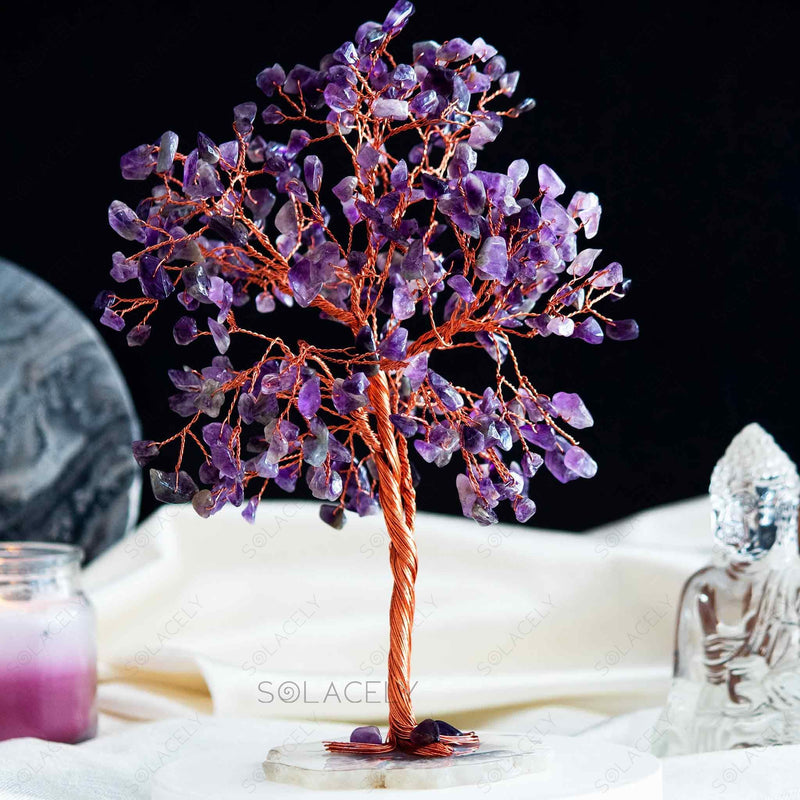
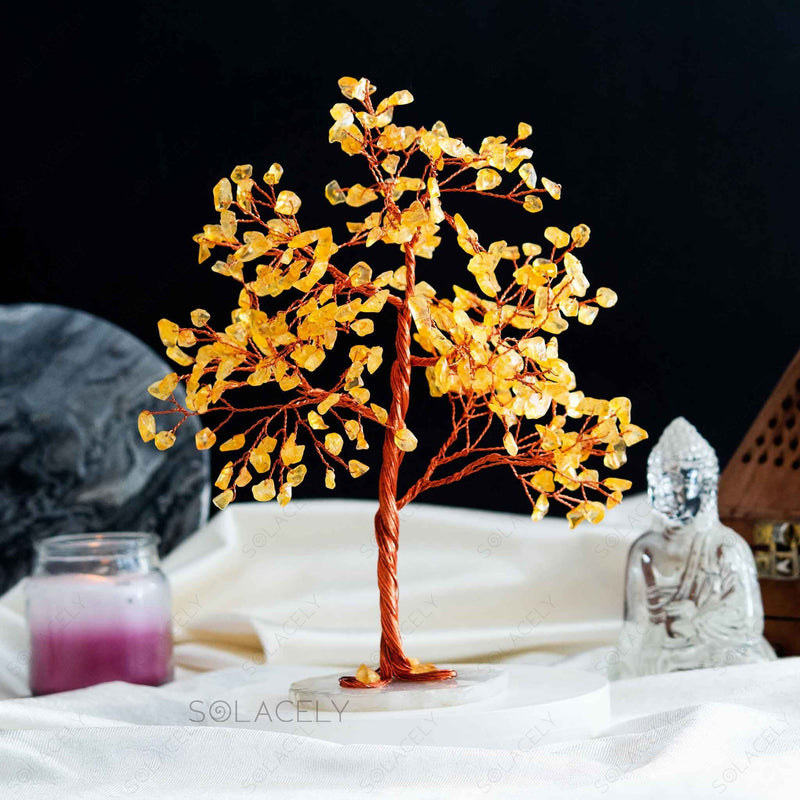
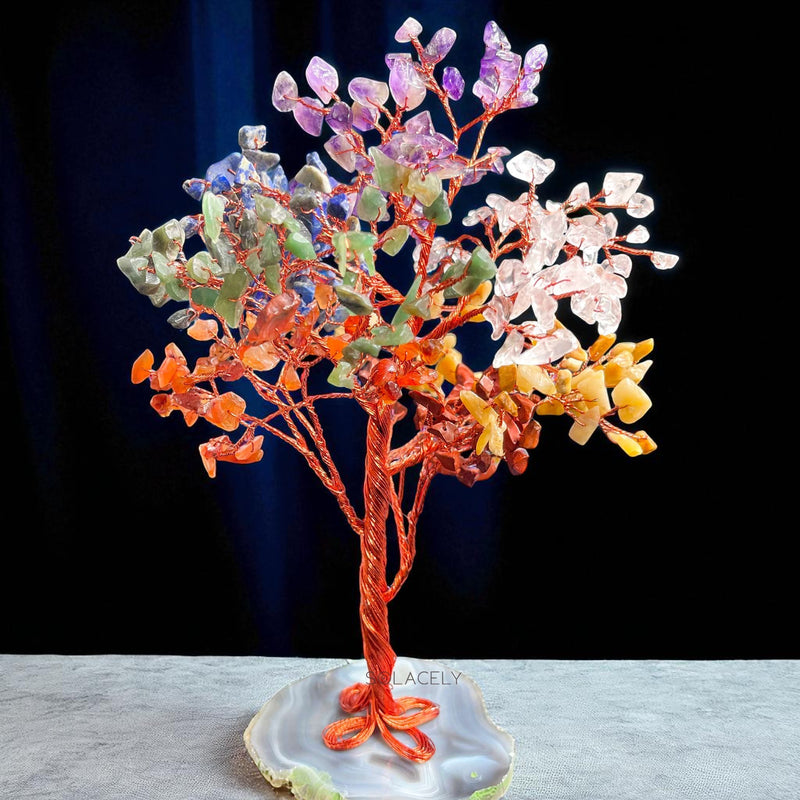
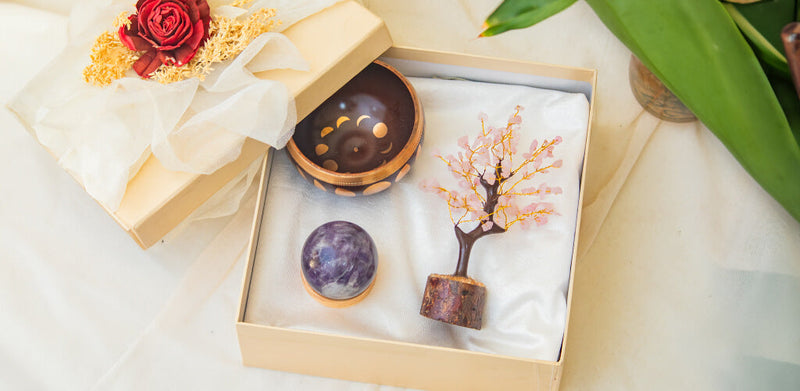
Crystal trees are the easiest win here. They read as decor first and intention second, so even a non-spiritual couple happily displays one. An amethyst tree suits a calmer palette; a citrine or mixed-stone tree brings warmth. Our overview of crystal trees walks through the stone options.
Pyramids sit in the same shared-object family. A Rose Quartz pyramid on the bedside table is a quiet love symbol both partners live with. If you want the full case for that shape as a return gift, our crystal pyramid wedding return gifts guide covers sizing and placement.
| Shared home piece | Reads as | Typical ₹ band | Best for |
|---|---|---|---|
| Small crystal tree | Decor + growth wish | ₹999–2,500 | Shelf, console, entryway |
| Rose Quartz pyramid | Love symbol | ₹899–2,000 | Bedside, couple's room |
| Evil-eye hanging | Home protection | ₹499–1,200 | Door, balcony |
| Amethyst cluster | Calm accent | ₹1,200–3,500 | Living room, study |
His-and-Hers and Matched Sets
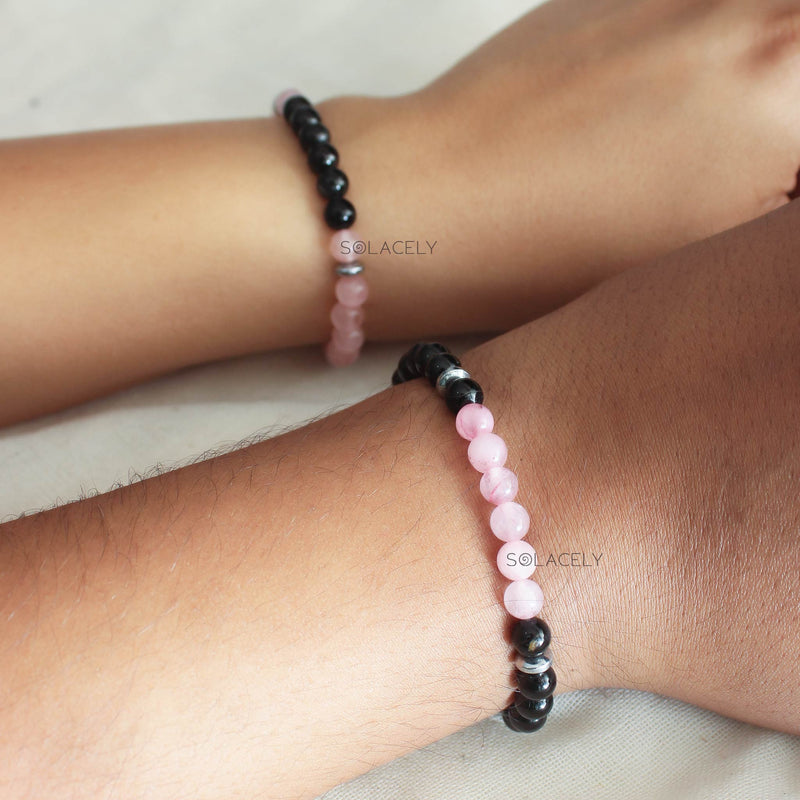
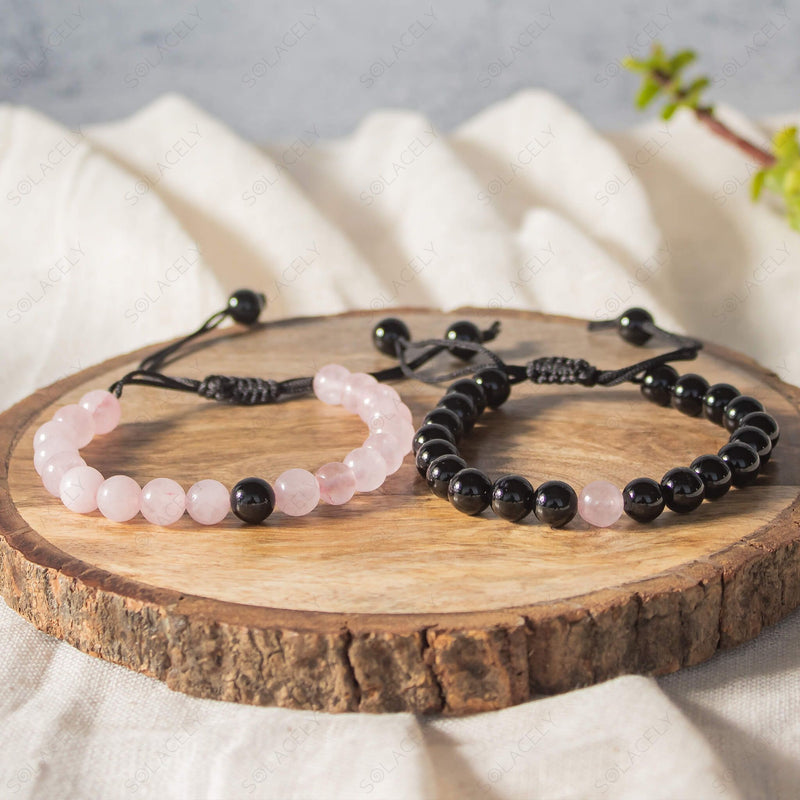
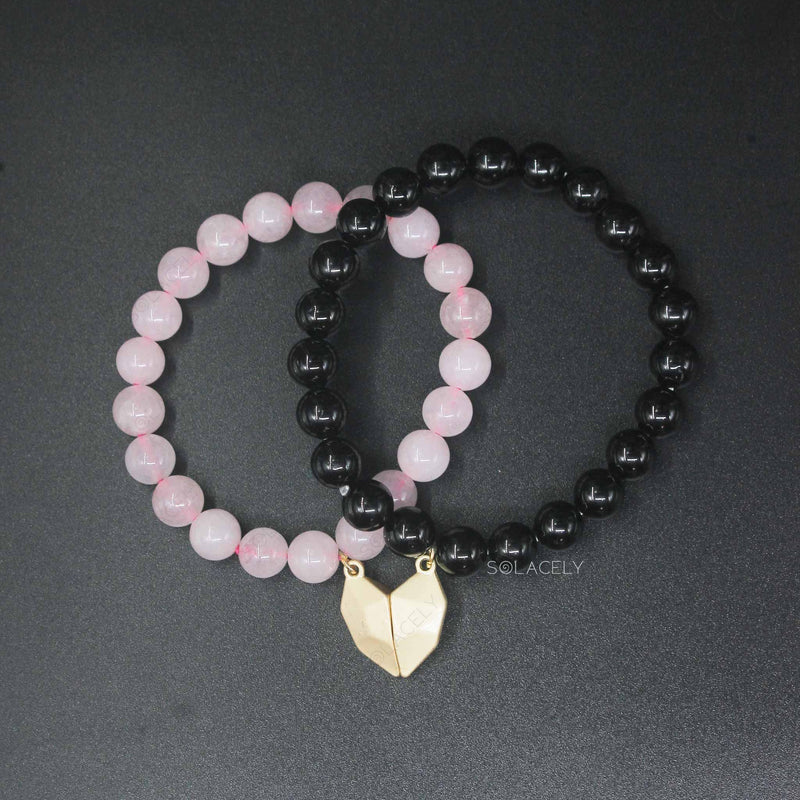
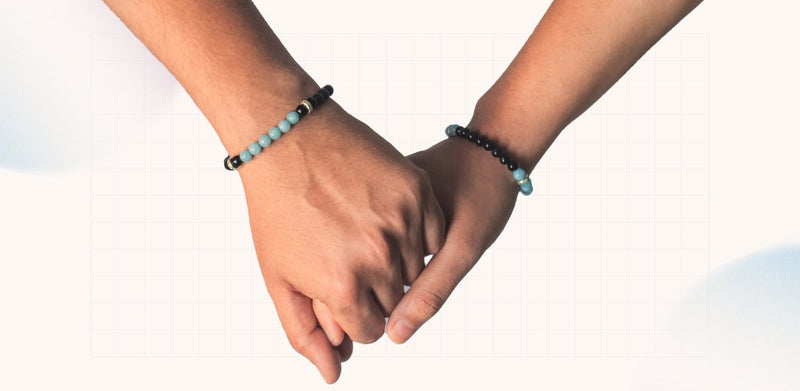
A matched set gives each partner a piece while keeping a single shared meaning, so the couple wears or carries the connection everywhere. Couple bracelets are the clearest example: two bands, often split-stone or complementary, designed to signal that they belong together. This is the wearable answer to a shared home object.
Couple bracelets travel where home decor cannot. One partner at the office, one at home, both still carrying the pair. Rose Quartz and Black Tourmaline is a common pairing, love and protection held between the two of them. Our couple bracelets guide explains the stone logic, and matching couple bracelets covers designs that mirror each other.
Keep sizing in mind. A stretch-cord bead bracelet forgives wrist differences far better than a fixed cuff, which matters when you're gifting a pair you can't measure. When in doubt, choose adjustable.
- Split-stone pair: one stone across two bracelets, halves of a whole.
- Complementary pair: Rose Quartz for one, Black Tourmaline for the other.
- Twin pair: identical bracelets, simplest and hardest to get wrong.
- Engraved pair: initials or a date, most personal, order early.
Choosing Stones by What You Wish the Couple
Stone choice lets you attach a specific wish to the gift, which is the whole appeal of crystals as a couple present. Rose Quartz is the traditional love stone and the default for a married pair. Amethyst signals calm, Black Tourmaline protection for the new home, and Citrine or Pyrite a wish for abundance as they build a life together.
You don't need to lecture the couple on metaphysics. A small tag naming the intention does the work: 'Rose Quartz, for love.' That single line turns a pretty object into a wish. Our meaningful wedding return gifts guide goes deeper on matching sentiment to stone.
| Stone | Traditional wish | Good as |
|---|---|---|
| Rose Quartz | Love, harmony | Pyramid, couple bracelet |
| Amethyst | Calm, rest | Tree, cluster |
| Black Tourmaline | Protection | Bracelet, home piece |
| Citrine | Abundance | Tree, tumble set |
| Pyrite | Confidence, wealth | Desk piece, cluster |
According to the Gemological Institute of America, rose quartz gets its pink colour from trace amounts of titanium, iron, or manganese, and has been carved into ornaments for centuries. The love association is cultural tradition, not a property of the mineral, but it's precisely that tradition that makes it the couple's stone.
Matching the Gift to Your Budget
Couple gifts sort cleanly into three ₹ bands, so decide the band first, then the piece. In India's gifting range, ₹499–999 covers a token shared piece, ₹999–2,500 buys a considered object like a tree or pyramid, and ₹2,500–6,000+ reaches heirloom territory: a large cluster or an engraved bracelet set the pair keeps for years.
The band usually follows how close you are to the couple. A guest gifting back at scale stays near the ₹499–999 token band. Close family or the wedding party can move up.
| Tier | ₹ band | Couple picks |
|---|---|---|
| Token | ₹499–999 | Evil-eye piece, small tumble set, twin bead bracelets |
| Considered | ₹999–2,500 | Crystal tree, Rose Quartz pyramid, matched bracelet pair |
| Heirloom | ₹2,500–6,000+ | Large amethyst cluster, engraved couple set, statement tree |
For a scaled-up close-family gift, our wedding return gifts for family guide covers presenting to a household rather than a single pair.
Caring for a Shared Crystal Piece
A couple gift only earns its place if it stays out on display, so a one-line care note keeps it from vanishing into a drawer. Crystals need almost nothing: a soft dry cloth for dust, no harsh chemicals, and a spot away from long direct sun for stones like Amethyst and Rose Quartz, whose colour can fade over months of bright exposure.
Quartz sits at 7 on the Mohs hardness scale, according to the Gemological Institute of America, so it resists everyday scratches but still chips if knocked off a hard edge. That matters for a shared bedside pyramid or a shelf tree in a busy home. Tell the couple to place it somewhere stable, not on a ledge above a tiled floor.
For pieces the couple wants to reset now and then, many follow a simple ritual: a few hours near moonlight, or a rinse under running water for water-safe stones. This is tradition and habit, not a functional requirement, so keep the instruction light. A gift shouldn't come with homework.
- Dust with a dry microfibre cloth; skip soap on porous or dyed pieces.
- Sun: keep Amethyst and Rose Quartz out of long direct sunlight to protect colour.
- Water: rinse only genuinely water-safe stones; avoid it for clusters with backing.
- Placement: a stable surface, away from edges and heavy foot traffic.
- Reset: optional moonlight or a quick rinse, as habit rather than requirement.
If the couple leans decorative rather than spiritual, frame the whole thing as beautiful home styling. A crystal tree or amethyst tree is genuinely lovely furniture first, meaning second, which is exactly why it survives on the shelf for years.
How to Present a Couple Gift
Presentation is what makes a shared gift land as one gesture rather than two items in a box. Pack the pair together: both bracelets in a single pouch, or the home piece with a tag addressed to both names. The couple should open one thing, feel one intention, and know it's meant for the two of them jointly.
A few small moves lift any couple gift:
- Address both names on the tag, not just the bride or groom.
- Name the intention in one line: 'Rose Quartz, for a home full of love.'
- Pack as a unit: matched pieces in one pouch or box, never split across two.
- Add a care line: how to wipe a crystal, so they actually keep it out.
- Skip the essay: one sentence of meaning beats a printed lore card.
Avoid the common mistakes: don't gift two unrelated items and call it a couple gift, don't pick a fixed-size cuff you can't measure, and don't over-explain the metaphysics. The gift should feel warm and effortless, not like a lecture.
Gifting a Couple You Do Not Know Well
Plenty of wedding gifting is for a colleague's daughter or a cousin you last saw a decade ago, and the honest answer is that you cannot personalise what you do not know. Do not guess. Guessing produces the gift that is technically thoughtful and completely wrong, such as a bold decor piece for a couple moving into a rented studio.
Default to neutral and useful instead. A well-made shared object with no strong style commitment, in a calm stone and a simple finish, suits almost any home. Skip anything that assumes a colour scheme, a faith, or a lot of shelf space, and skip anything that only works if the couple already likes crystals.
If you can, ask the person who invited you. One message to the parent or friend who knows the couple usually surfaces enough, whether they are setting up a first home, moving cities, or already drowning in decor, to point you at the right tier and format. That single question turns a safe gift into a considered one, and it costs nothing.
Sources
Frequently asked questions
About the author


Written by Chetna Sharma, crystal healing practitioner and co-founder of Solacely. Chetna has worked with healing crystals for over a decade and curates Solacely's protective stone collection.