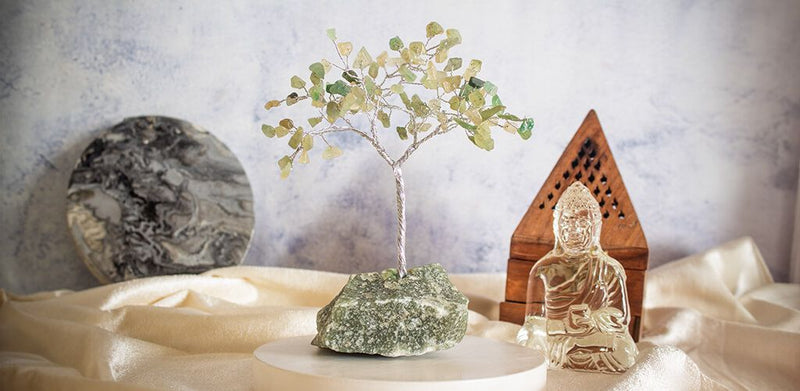
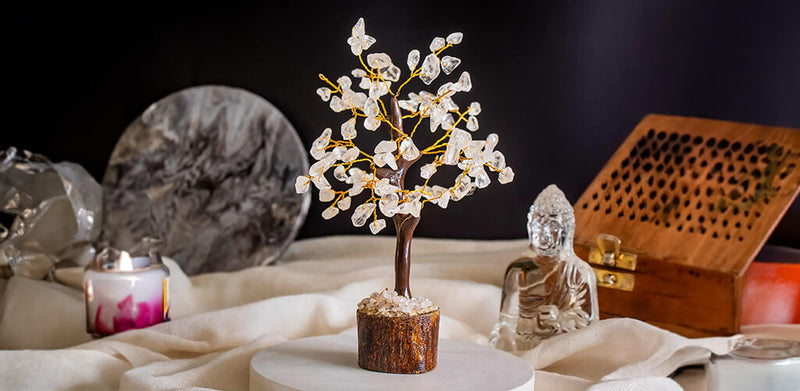
A crystal tree is a handmade decorative sculpture: dozens of small polished gemstone chips are wired onto twisted metal branches to look like leaves, then anchored in a stone base. It works as home décor and, n tradition, as an intention piece for a shelf, desk, or pooja corner. Most stand 15–25 cm tall.
Key Takeaways
- A crystal tree is a wire-branch sculpture with tumbled gemstone 'leaves' on an agate or crystal base, usually 15–25 cm tall.
- The leaves are most often quartz varieties: amethyst (calm), citrine (abundance), rose quartz (love), or clear quartz (clarity).
- Quartz is silicon dioxide and ranks 7 on the Mohs hardness scale, per the GIA, so the leaves resist everyday scratches.
- In Vastu-minded homes the north-east corner is popular for reflective pieces; there is no single rule, so place it where you'll enjoy it.
- Typical tiers: Entry (small gift), Mid range (premium), Premium (large or executive).
What Is a Crystal Tree?
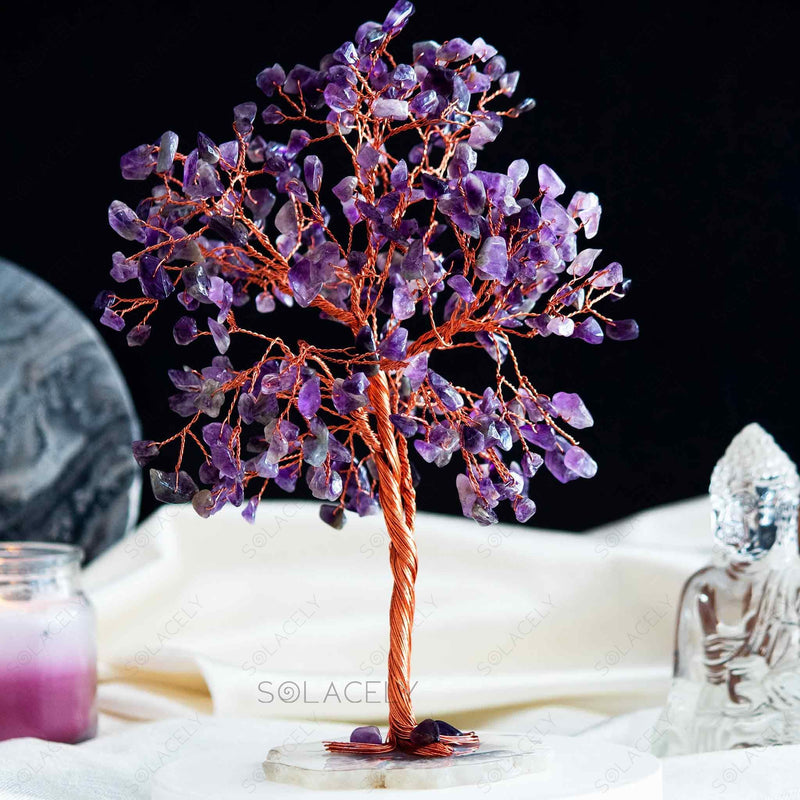
A crystal tree is a decorative sculpture where small tumbled gemstones are threaded onto flexible wire branches to mimic foliage, then fixed into a base, usually a slice of agate or a cluster of raw crystal. Each piece is one of a kind because natural stone varies in colour, size, and clarity.
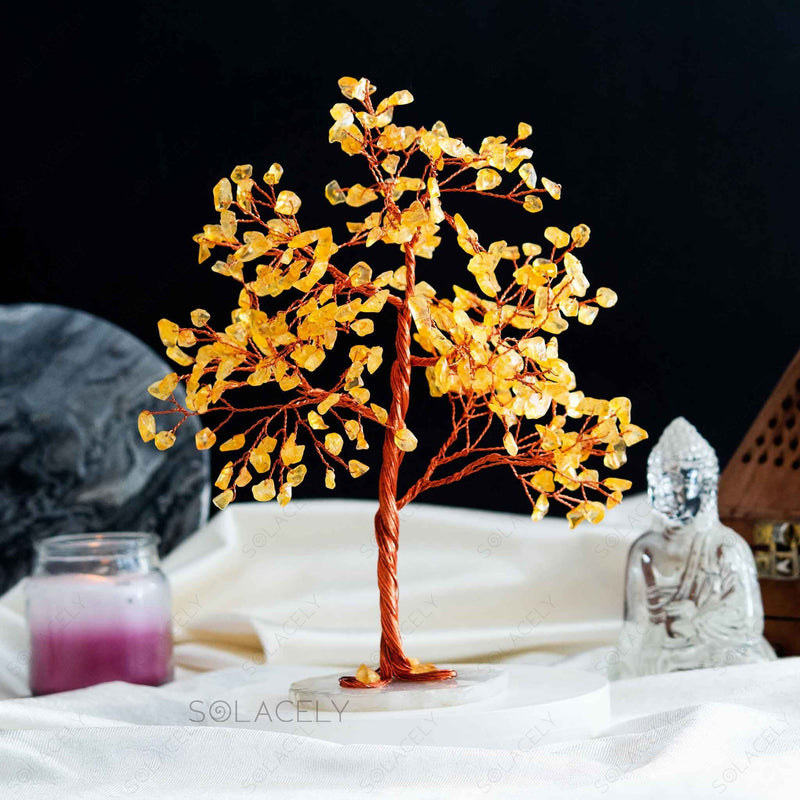
Think of it as a bonsai made of stone instead of leaves. The 'trunk' is twisted copper or aluminium wire, sometimes gold- or silver-toned. The canopy holds anywhere from 50 to 300 gemstone chips depending on size. Because the leaves are real mineral, the colour shifts subtly across a single tree.
People also call them gemstone trees, wish trees, or, when the stone is citrine, money trees. Whatever the name, the construction is the same. This guide is the hub for the whole family. If you want a single stone in depth, jump to our full guide on the amethyst tree or the citrine tree.
What the Stones Are, Actually
Most crystal-tree leaves are varieties of quartz, a mineral made of silicon dioxide (SiO₂). According to the Gemological Institute of America (GIA), quartz ranks 7 on the Mohs hardness scale, hard enough to resist scratching from dust and everyday handling. Different trace elements give each variety its colour.
The colour cause is what separates one tree from another. Amethyst gets its purple from iron plus natural irradiation. Citrine's golden tone comes from iron too, under different conditions. Rose quartz owes its pink to tiny mineral inclusions. Britannica notes quartz is one of the most abundant minerals in Earth's crust, which is why these trees stay affordable.
| Stone | Mineral | Colour cause | Traditional intention |
|---|---|---|---|
| Amethyst | Purple quartz | Iron + irradiation (GIA) | Calm, rest |
| Citrine | Golden quartz | Iron (heat conditions) | Abundance |
| Rose quartz | Pink quartz | Mineral inclusions | Love |
| Clear quartz | Colourless quartz | Pure SiO₂ | Clarity |
| Green aventurine | Quartz with fuchsite | Chromium mica flecks | Luck |
Because the leaves are genuine mineral, a well-made tree holds its look for years, though purple and pink stones can fade in constant harsh sunlight.
Types of Crystal Trees by Stone
Crystal trees are named for their leaf stone, and the stone sets both the colour and the tradition. The four most common are amethyst, citrine, rose quartz, and clear quartz, with seven-chakra and green aventurine close behind. Each suits a different room and a different intention.
Here's a quick way to choose by what you want the tree to signal:
- Amethyst (purple): calm and rest. Popular for bedrooms and study desks. See our detailed amethyst tree benefits guide for the tradition behind it.
- Citrine (golden): abundance and confidence. Often called the 'money tree' and gifted for new ventures. Our citrine tree guide covers placement and care.
- Rose quartz (pink): love and warmth. A gentle choice for living rooms and gifts between partners.
- Clear quartz (colourless): clarity and focus. The most neutral option, suits any room.
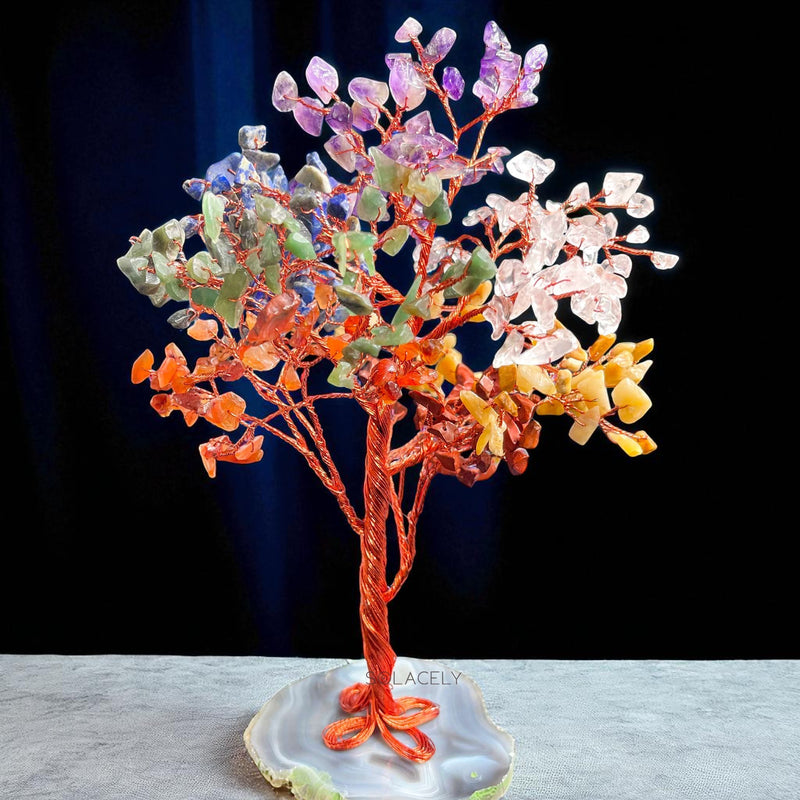
- Seven-chakra (multicolour): balance. Uses seven stones, one per chakra, for people who want variety in one piece.
- Green aventurine: luck and growth. A common desk piece for students and new businesses.
If you're unsure, amethyst and citrine are the safest first buys because their colours read as premium and their meanings are widely understood.
How a Crystal Tree Is Made
A crystal tree is built by hand in stages: the maker twists wire into a trunk and branches, attaches individual gemstone chips as leaves, then sets the trunk into a drilled stone base with resin. A single mid-size tree can take an artisan one to three hours, which is why no two are identical.
The usual sequence looks like this:
- Wire framing. Several strands of thin wire are twisted together, then split into branches, the way you'd shape a bonsai skeleton.
- Leafing. Each tumbled chip, drilled or wire-wrapped, is attached and bent into position so the canopy looks full from every angle.
- Basing. The trunk roots into an agate slice, crystal cluster, or resin base for weight and stability.
- Shaping and finishing. The maker fans out the branches, checks balance, and cleans stone dust off the leaves.
Handwork is why a heavier, denser canopy costs more, and why each tree has slight quirks. Our guide to crystal tree sculptures goes deeper into the craftsmanship and the wirework styles you'll see.
Crystal Tree Meaning (as Tradition)
In crystal tradition, the tree shape carries its own symbolism, growth, roots, and steadiness, while the leaf stone adds a specific intention. Together they read as 'grounded intention.' A crystal tree concentrates that idea into one sculptural object you can keep in view every day.
The tree form has deep roots across cultures. Trees appear as symbols of life and abundance in many traditions, from the kalpavriksha (wish-fulfilling tree) n mythology to the family tree in everyday speech. Pairing that shape with a meaningful stone is why these pieces feel more personal than plain décor.
n homes, people often keep a crystal tree in a meditation nook, a study, or near the entrance as a quiet visual cue. The stone chooses the mood: amethyst for calm, citrine for abundance, rose quartz for warmth. These meanings are cultural belief and crystal-lore custom, not medical fact, and are best held lightly, as intention rather than cure.
Where to Place a Crystal Tree (Vastu-Style)
Placement follows the intention behind the stone. In Vastu-minded homes, the north-east (the ishaan corner) is a popular spot for reflective and spiritual objects, while the south-east is often linked with prosperity, making it a common choice for citrine. There's no single binding rule, so comfort and daily visibility matter most.
A few practical spots that work well n homes:
- Bedside or dresser: an amethyst tree suits a restful, unhurried mood before sleep.
- Study or work desk: a small tree makes a calm focal point during long hours.
- Pooja or meditation corner: pairs naturally with a lamp, incense, or a diya.
- Entryway console: greets guests with a premium, jewel-toned accent.
- Living-room shelf: a rose quartz or citrine tree warms up a seating area.
For a room-by-room look at how these pieces sit on real shelves, our crystal tree décor guide shows styling ideas. Keep purple and pink stones out of constant direct sun to protect their colour.
How to Care for and Clean a Crystal Tree
Care is simple: dust the leaves gently, avoid soaking the base, and keep coloured stones out of long, harsh sunlight. In crystal tradition, people also 'cleanse' the piece periodically, meaning they reset its energy through smudging, sound, or moonlight rather than washing it.
Physical care first:
- Dust with a soft, dry brush or a clean makeup brush; the canopy traps fine dust.
- Don't submerge the base. Agate and resin bases can loosen if soaked.
- Wipe leaves with a barely damp cloth, then dry immediately.
- Rotate away from windows if you notice any fading over months.
- Reshape branches gently by hand if the canopy gets pushed out of place.
Traditional cleansing methods people use include passing the tree through sage or palo santo smoke, sounding a singing bowl nearby, or resting it on a selenite plate overnight. Full-moon 'charging' on a windowsill is common too, kept behind glass to avoid dew. These are customs, not maintenance requirements, and skipping them won't harm the tree.
How to Choose Quality and Spot a Fake
Judge a crystal tree on three things: stone authenticity, canopy density, and base quality. Real gemstone leaves feel cool, show uneven natural colour with faint zoning, and vary chip to chip. Dyed glass looks suspiciously uniform, feels warmer in the hand, and often shows a colour that's too vivid and even.
Quick checks before you buy:
| Signal | Real gemstone | Likely fake / glass |
|---|---|---|
| Temperature | Stays cool to the touch | Warms up fast in hand |
| Colour | Uneven, zoned, natural | Perfectly even, over-bright |
| Bubbles | None inside chips | Tiny air bubbles (glass) |
| Chip-to-chip | Each slightly different | Identical clones |
| Base | Solid, weighty stone | Light, hollow plastic |
Also weigh the tree in your hand. A quality piece has a dense canopy and a heavy, stable base so it won't topple. Sparse trees photograph poorly and feel cheap in person. If a 'natural' tree costs suspiciously little, the leaves are probably dyed glass rather than genuine quartz.
Crystal Tree Price Bands
Crystal tree prices are driven by size, canopy density, base quality, and stone type. Small desk trees sit at the budget end; large statement pieces with raw-crystal bases command a premium. Genuine natural stone always costs more than dyed-glass lookalikes.
| Band | Tier | What you get |
|---|---|---|
| Budget / small gift | Entry | 15–18 cm, lighter canopy, agate slice base |
| Premium | Mid range | 18–22 cm, fuller canopy, solid stone base |
| Luxury / executive | Premium | 22 cm+, dense canopy, raw crystal cluster base |
Spend up only when you want a large centrepiece for a hall or office.
Crystal Trees as a Gift
A crystal tree is a natural gift because it's beautiful, meaningful, and needs no wrapping fuss. It suits housewarmings (griha pravesh), Diwali, weddings, and work milestones, and the stone lets you match the wish to the person. Pair it with a short handwritten note on the meaning.
Some occasion ideas:
- Griha pravesh: an amethyst or clear quartz tree for a calm new home.
- Diwali: a citrine 'money tree' in the mid range, festive yet affordable.
- Corporate / executive: a desk-size tree with a stone base makes a tasteful client gift. Most tax systems exempt employee gifts up to a set value per financial year and tax the excess, so confirm the current treatment with your accountant.
- Weddings: a rose quartz tree as a lasting keepsake instead of consumables.
For smaller tokens or a matching set, a crystal car charm pairs nicely with a tree for someone with a new vehicle. Choose the stone by intention and the gift almost writes its own card.
Sources
- Gemological Institute of America (GIA), Quartz description and hardness: gia.edu/quartz
- Encyclopaedia Britannica, Quartz mineral: britannica.com/science/quartz
- Mindat.org, Quartz mineral data: mindat.org/min-3337.html
Frequently asked questions
About the author


Written by Chetna Sharma, crystal healing practitioner and co-founder of Solacely. Chetna has worked with healing crystals for over a decade and curates Solacely's protective stone collection.