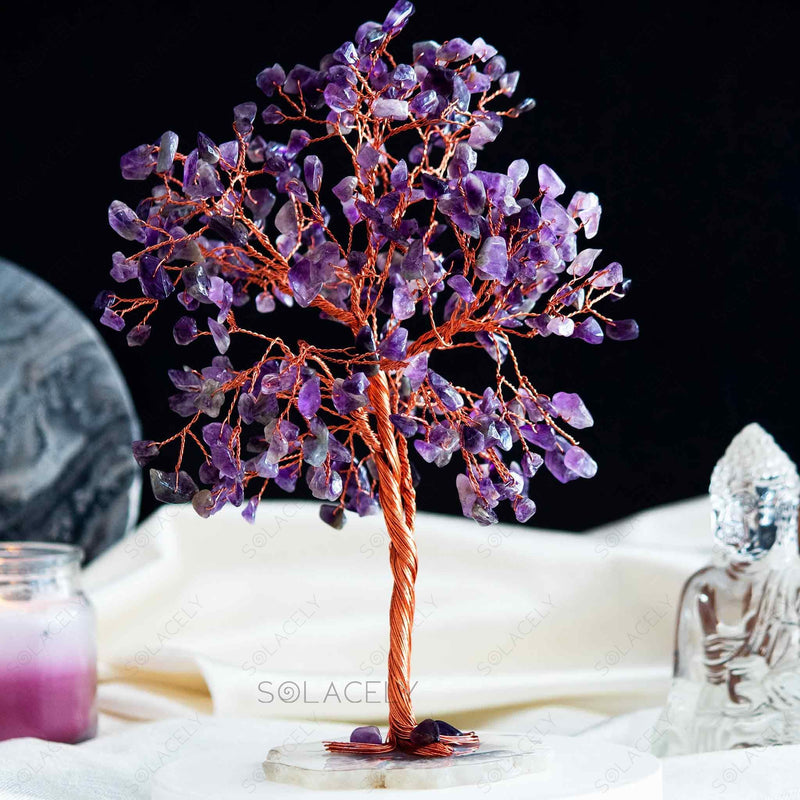
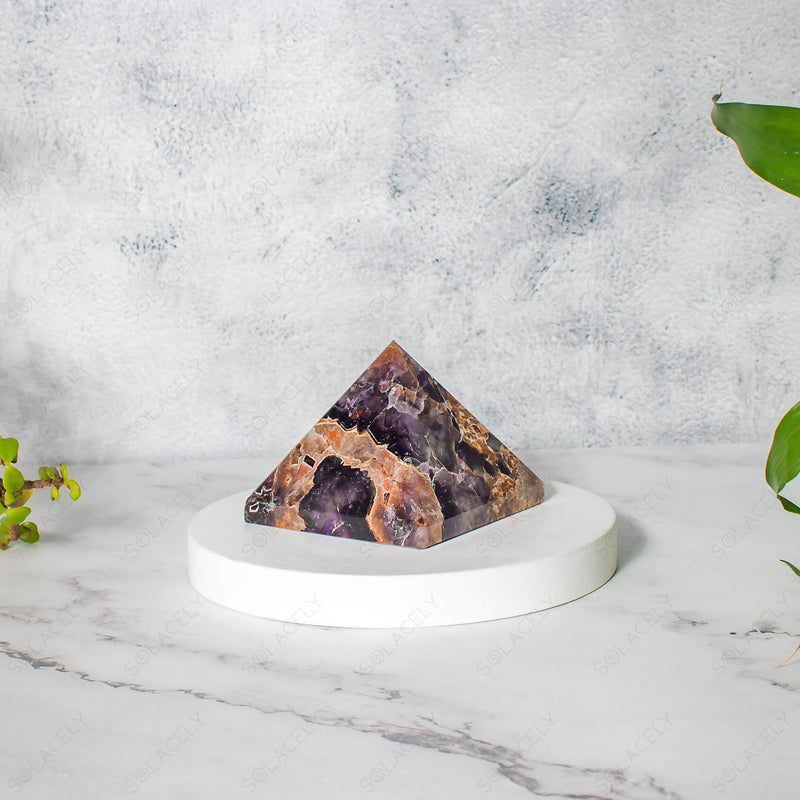
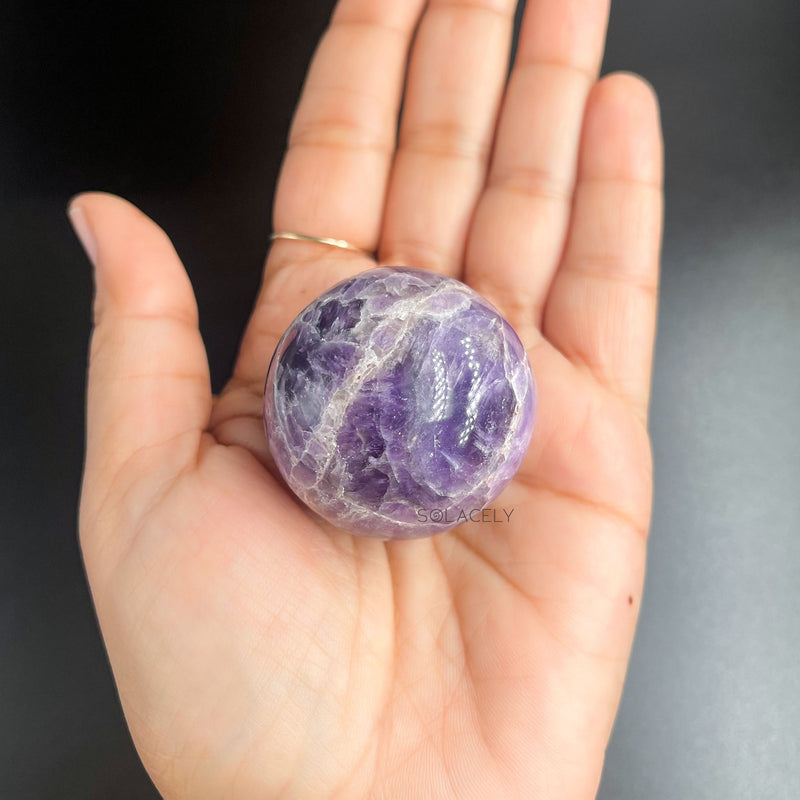
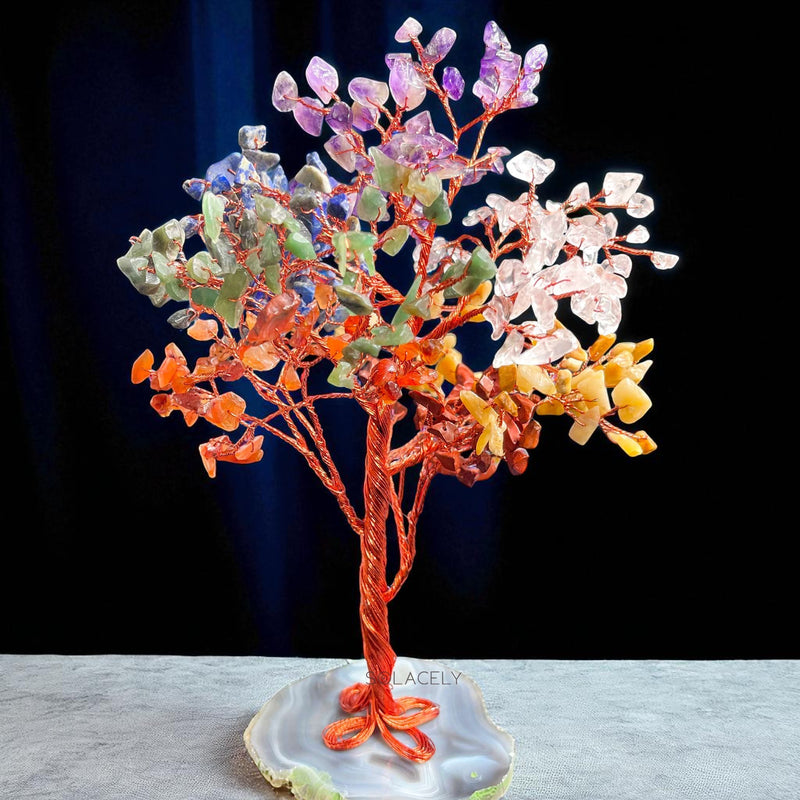
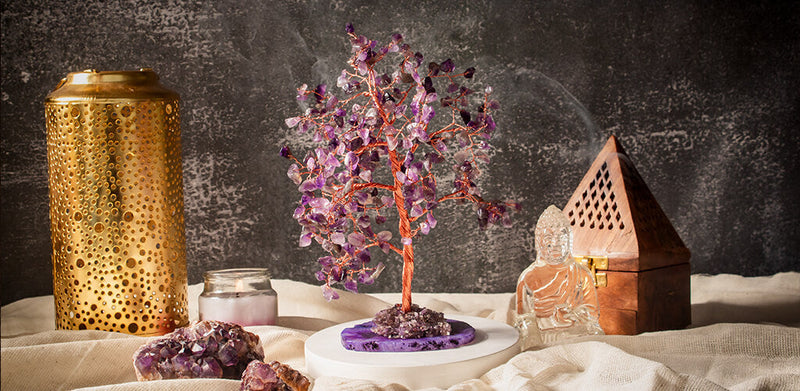
An amethyst tree is a wire sculpture whose branches hold dozens of small purple quartz chips. Its main benefits are practical and aesthetic: it works as a low-maintenance decor piece, a calming focal point for a desk or shelf, and, n tradition, a symbol of calm and steady intention. Most sit in the mid range.
Key Takeaways
- An amethyst tree is a decorative sculpture: a metal or wire trunk with branches tipped by tumbled amethyst (purple quartz) chips, usually mounted on a raw stone or agate base.
- Its real, verifiable benefit is aesthetic and symbolic. Amethyst is a variety of quartz coloured purple by iron and natural irradiation, per the GIA, not a medicine.
- n and Vastu-style tradition, amethyst is linked to calm and the north/north-east zone; placement guidance here is cultural belief, not scientific claim.
- Typical tiers: entry for small trees, the mid tier for mid-size, and the premium tier for large or premium pieces.
- It makes an inclusive, faith-neutral gift for housewarming (griha pravesh), Diwali, or a desk-warming, and needs almost no upkeep beyond an occasional dusting.
What is an amethyst tree, and what does it actually do?
An amethyst tree is a handcrafted ornament: a twisted metal or copper-wire trunk splits into branches, and each branch tip is threaded with small, tumbled amethyst chips so the whole thing reads as a bonsai made of gemstone leaves. The base is usually a slice of raw amethyst, agate, or quartz.
What it does is simpler than most listings suggest. It sits somewhere and looks good. The branches catch light, the purple reads as calm and considered, and the piece gives a shelf or desk a natural focal point without needing water, sun, or care. That is the honest, everyday benefit.
Beyond decor, its value is symbolic. People keep one because amethyst carries a long-standing association with calm and clear-headedness, and a small object that quietly signals that intention can be a nice thing to have in view. If you want the full background on the form itself, our guide to the amethyst tree covers how they are made and sized.
The real benefit: decor value that needs no upkeep
The strongest, most defensible benefit of an amethyst tree is decorative. It brings colour, texture, and a natural material into a room, holds its look for years, and asks nothing of you beyond the odd dusting. Unlike a real plant, it never wilts, and unlike most ornaments, the stone is genuinely natural.
Amethyst's appeal here is the colour. According to the Gemological Institute of America, amethyst is the purple variety of quartz, and its shade ranges from a soft lilac to a deep reddish-purple. That range means a tree can lean pastel and soft or rich and dramatic, so it suits both a minimal desk and a warmer, layered living room.
The purple also works with almost any palette. It sits well against neutrals, wood, brass, and cream, which is why interior stylists reach for it. If you are furnishing a shelf or console and thinking in terms of the overall look, our crystal tree decor guide covers how to place one within a wider styling scheme rather than in isolation.
The traditional meaning of amethyst (framed as belief)
n crystal tradition and the broader metaphysical world, amethyst is the stone of calm. It is associated with a settled mind, restful sleep, and clear thinking, and the crown chakra at the top of the head. These are cultural and spiritual associations, valued for reflection and intention, not medical effects.
The link between amethyst and clear-headedness is old. The name itself comes from the Greek 'amethystos,' meaning 'not drunk,' reflecting an ancient belief that the stone guarded against intoxication. Britannica notes amethyst has been prized as a gem since antiquity, which is part of why it carries such settled, temperate symbolism today.
An amethyst tree concentrates that symbolism into an object you can actually place and see. The tree shape adds its own layer: growth, steadiness, roots and branches, a small emblem of something rooted yet reaching. Treat the meaning as a lovely tradition to keep in view, not a claim about your health.
Where to place an amethyst tree (home, office, Vastu-style)
Placement is where the traditional meaning becomes practical. In Vastu-style and Feng Shui thinking, amethyst is linked to calm and clarity, so it is often suggested for the north or north-east of a home, a study, a bedside, or a work desk. This is traditional guidance for intention and ambience, not a rule with measurable effects.
The practical logic tracks the symbolism. A study or desk is where you want a settled, focused mood, so a small amethyst tree in view makes sense there. A bedside or a quiet corner suits the calm-and-rest association. An entryway or living-room shelf lets it act as a welcoming, grounding first impression.
Here is a simple placement guide that blends tradition with everyday sense.
| Placement | Traditional reasoning | Practical benefit |
|---|---|---|
| Study or work desk | Calm, focus, clear thinking | A pleasant focal point that signals a settled workspace |
| North / north-east zone | Vastu link to peace and wisdom | A natural spot for a display piece near an entry or altar |
| Bedside or quiet corner | Rest and settled mind | Soft colour and texture in a low-traffic, restful space |
| Living-room shelf or console | Welcoming, grounding energy | A styling anchor guests notice and remember |
| Meditation or puja area | Reflection and intention | A tactile object to focus on during quiet time |
A few placement habits help it look its best. Keep it out of harsh, all-day direct sun, since strong prolonged light can gradually fade amethyst's colour. Give it a clear background so the branches read cleanly. And keep it at eye level or just below, where the light can move through the chips.
Amethyst trees at work: the desk and office case
On a desk, an amethyst tree earns its place as a calm, tactile object among screens and paperwork. Its benefit at work is mood and focus by association: a small, natural focal point to rest your eyes on between tasks. It also personalises a workspace without clutter, which is why it is a popular desk-warming gift.
Offices are busy, bright, and a little impersonal, so a considered object stands out. An amethyst tree is compact, needs no care, and won't die like a desk plant on a long weekend. It signals a bit of intention and taste without saying much, which suits a professional setting.
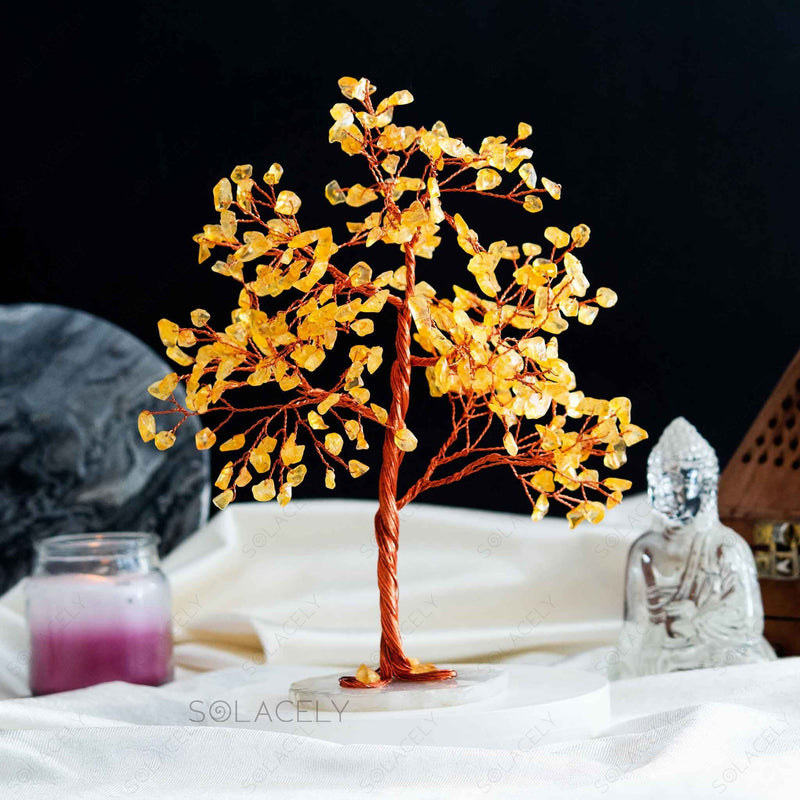
If you are choosing between stones for a work desk, amethyst leans calm while citrine leans confidence and abundance. Many people keep both, one for a settled mind and one for drive. Our citrine tree guide covers the golden-quartz counterpart if warmth and energy suit the space better.
Amethyst tree vs other crystal trees
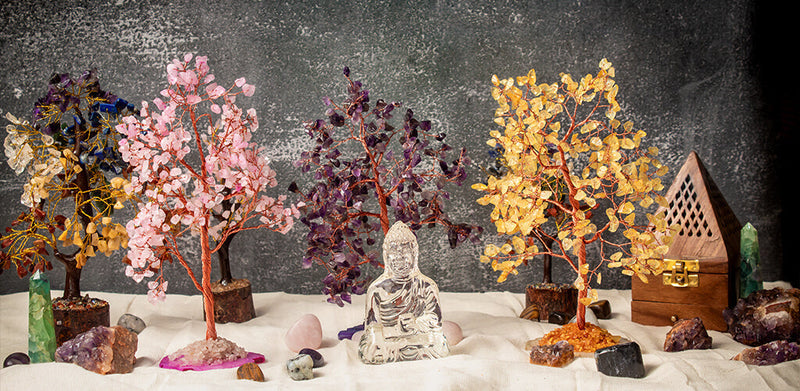
An amethyst tree is one option in a family of crystal trees, each built the same way but tipped with a different stone and intention. Choosing between them comes down to the colour you want and the traditional meaning you like, since the construction, care, and decor logic are essentially identical across the range.
The differences are mostly about hue and association. Amethyst reads calm and purple; citrine reads abundance and gold; rose quartz reads love and pink; green aventurine reads growth and luck. All are quartz-family stones, which is convenient, since one mineral family gives you a full spread of colours and meanings.
| Crystal tree | Colour | Traditional intention | Best placed |
|---|---|---|---|
| Amethyst | Purple | Calm, clarity, rest | Study, bedside, meditation area |
| Citrine | Golden-yellow | Abundance, confidence | Work desk, wealth corner |
| Rose Quartz | Soft pink | Love, warmth | Bedroom, living room |
| Green Aventurine | Green | Growth, luck | Entryway, new ventures |
| Seven Chakra | Mixed | Balance across chakras | Puja or meditation space |
If you want to compare the whole category before deciding, our overview of crystal trees sets the amethyst version alongside its siblings, and our crystal tree sculptures piece covers the larger, statement-size pieces.
Amethyst trees as gifts by tier
An amethyst tree is an easy, thoughtful gift because it is inclusive, needs no upkeep, and carries a warm intention without being religious or personal. It suits a housewarming (griha pravesh), a Diwali hamper, a new job or promotion, or a simple thank-you. Small trees sit at the entry tier, so it scales across occasions and budgets.
The gifting appeal is that it feels considered without being a gamble. It is faith-neutral, works in any decor, and the recipient doesn't have to maintain it. Pairing it with a small card naming the stone and its calm association turns a pretty object into a small, remembered gesture, which matters for festive and corporate gifting alike.
Here's how the tiers typically shake out .
| Tier | Typical piece | Best for |
|---|---|---|
| Entry | Small 15–20 cm tree, agate base | Desk-warming, secret-santa, add-on to a hamper |
| Mid range | Mid-size tree, better chip quality | Housewarming, Diwali, a considered personal gift |
| Premium | Large or premium statement tree | Guest of honour, executive gift, centrepiece |
A short buyer's checklist keeps a gift purchase on track:
- Check the chips are natural amethyst, with gentle colour variation rather than a flat, dyed-looking purple.
- Look at the base: a solid agate or raw-quartz base sits flat and feels substantial in the hand.
- Count the branches: fuller trees with more, tighter chips look far more premium than sparse ones.
- Confirm the wire is neatly wrapped, with no loose ends or chips that fall off when handled.
- Match the size to the spot, a 15 cm tree for a desk, a larger one for a console or centrepiece.
How to care for an amethyst tree
An amethyst tree needs almost no care, which is a genuine part of its appeal. Dust it gently every couple of weeks, keep it out of prolonged direct sunlight to protect the colour, and reshape the branches with your fingers if they get knocked. That is essentially the whole routine.
Cleaning is simple. Wipe the chips with a soft, dry brush or a barely damp cloth, then dry it fully. Avoid soaking it, since the branches are wire and the base can hold water in crevices. Harsh chemicals aren't needed and can dull the polish on the tumbled stones.
Two things protect it long-term. First, sunlight: the GIA and Mindat both note that amethyst's colour can fade with prolonged exposure to strong light, so keep it off a hot, sun-blasted windowsill. Second, handling: pick it up by the trunk or base rather than the branches, so the chips and wire stay put.
Sources
- Gemological Institute of America — Amethyst (purple quartz) description and colour: gia.edu/amethyst
- Encyclopaedia Britannica — Amethyst (gem and name origin): britannica.com/science/amethyst
- Mindat.org — Amethyst variety of quartz, properties and light sensitivity: mindat.org/min-198.html
Frequently asked questions
About the author


Written by Chetna Sharma, crystal healing practitioner and co-founder of Solacely. Chetna has worked with healing crystals for over a decade and curates Solacely's protective stone collection.