The solar plexus is the third chakra, sitting just above the navel, and in yogic and crystal tradition it governs personal power, self-worth and the will to speak. When meetings leave you quiet and second-guessing, it is the centre practitioners work with, using citrine, pyrite, tiger's eye, carnelian and sunstone.
Key takeaways
- The solar plexus chakra, manipura, sits above the navel and is associated with personal power and self-worth.
- Citrine, pyrite, tiger's eye, carnelian and sunstone are the five stones traditionally kept for it.
- Yellow and gold are its colours, which is why so many of its stones are warm-toned.
- A short ritual before the meeting does more than a stone carried without intention.
- Wear it on the right wrist when you want to project, and the left when you want to draw confidence in.
What the solar plexus chakra governs
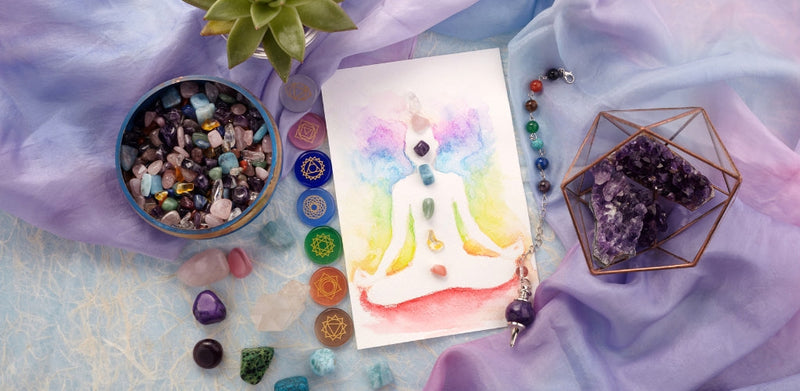
Manipura, the solar plexus chakra, is the third of the seven and sits in the soft space above the navel. In tradition it is the seat of personal power: the sense of being entitled to your own opinion, the willingness to take up room, and the steadiness to hold a position when someone pushes back.
Its colour is yellow, its element is fire, and the stones associated with it are almost all warm and golden for exactly that reason. Practitioners describe a settled solar plexus as feeling like a low steady warmth behind the ribs, and an unsettled one as a hollowness or a knot in the same place.
That physical location is part of why the association has lasted. The gut is where nerves are felt, and the chakra sits precisely there. Our fuller guide to the chakra system covers all seven centres in order.
Why confidence dips in meetings
Meetings concentrate everything the solar plexus is associated with into twenty minutes. There is a hierarchy in the room, a limited amount of speaking time, and a real cost to being wrong out loud. Most people who go quiet in meetings are perfectly confident in a one-to-one conversation an hour later.
What people describe is remarkably consistent: the thought arrives fully formed, then the moment passes while you decide whether it is worth saying, and someone else says a version of it. Afterwards the feeling is less about the idea and more about yourself, which is exactly the territory the third chakra covers.
Crystal practice does not pretend to change the room. What it offers is a small, physical, repeatable act of preparation, and something on your wrist that reminds you mid-meeting what you decided that morning. That is a modest claim, and it is the true one.
The five solar plexus crystals
These five are the classic solar plexus set. Each is kept for a slightly different flavour of confidence, so choose by the sentence that best describes what actually goes wrong for you in the room.
| Stone | Traditionally kept for | Choose it when |
|---|---|---|
| Citrine | Self-esteem, optimism, warmth | You talk yourself out of contributing |
| Pyrite | Drive, follow-through, resolve | You agree to things you meant to push back on |
| Tiger's eye | Steady nerve, clear decisions | You lose your thread when challenged |
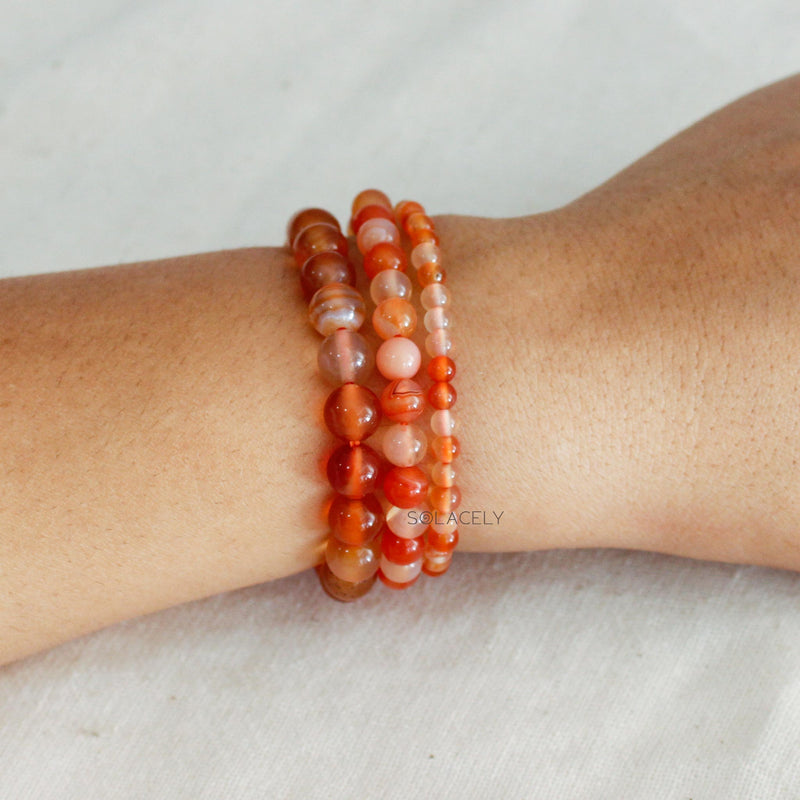
| Carnelian | Courage, warmth, momentum | You freeze at the moment of speaking |
| Sunstone | Self-worth and visible presence | You feel invisible in a large room |
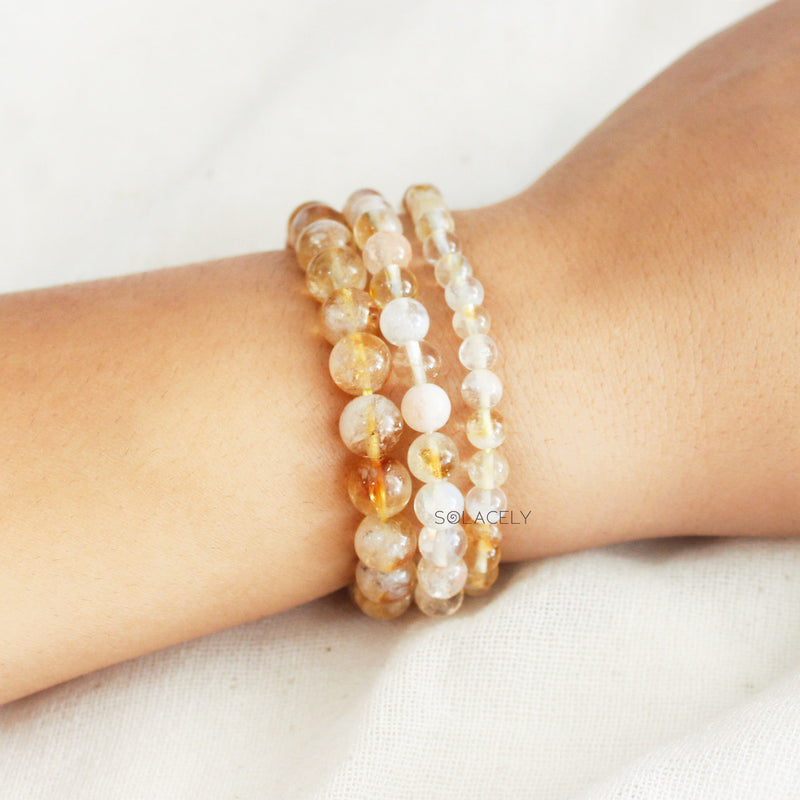
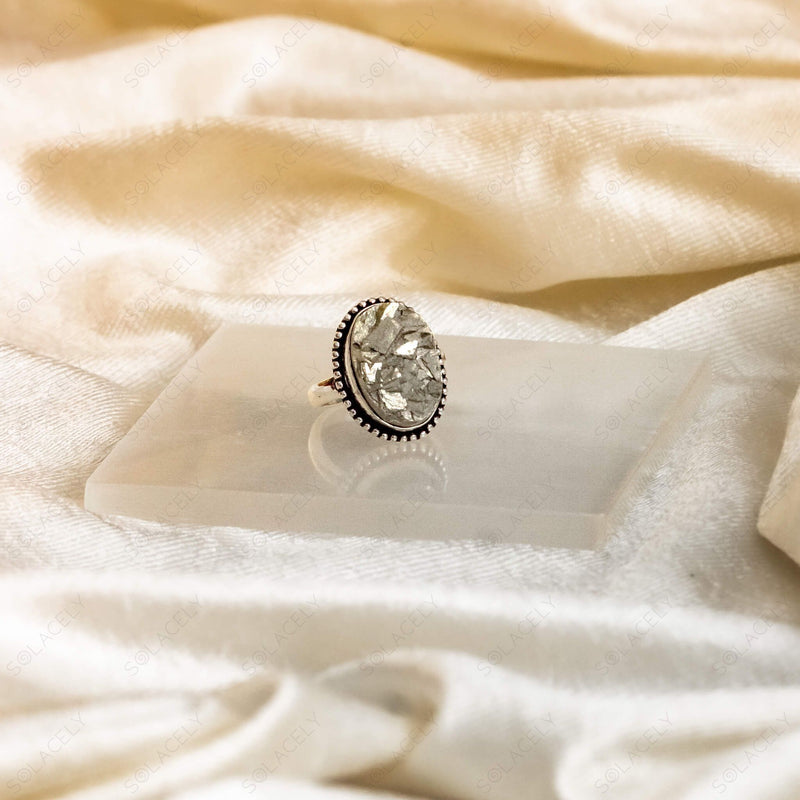
Citrine is the usual starting point, long the stone of confidence and good cheer, and our guide to citrine meaning and properties covers it in full. Pyrite is the harder-edged one, kept for resolve rather than warmth, and our note on pyrite meaning and properties sets out the tradition.
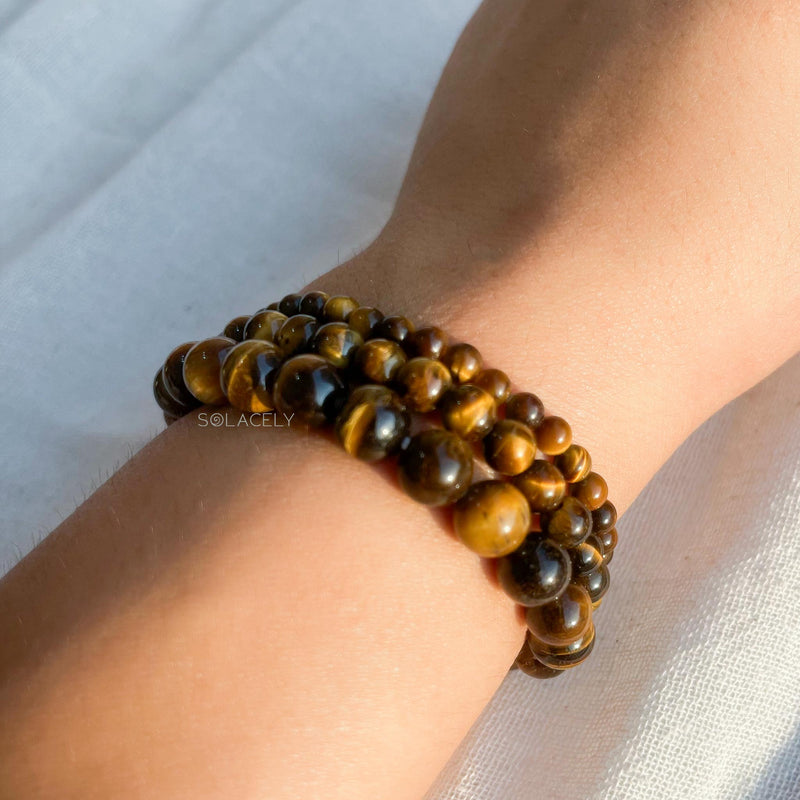
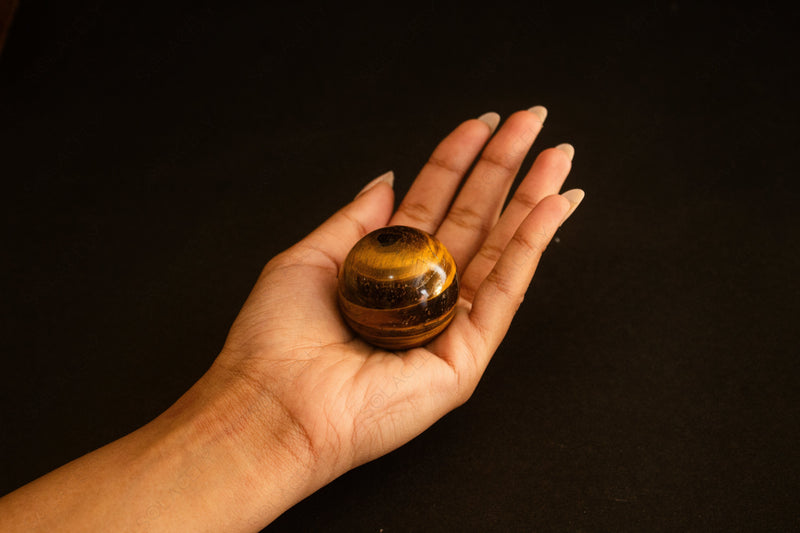
Tiger's eye is the one most often recommended for meetings specifically, traditionally kept for holding a steady line under pressure. Our guide to tiger's eye meaning and properties goes into it.
A short practice before the meeting
Five minutes, done properly, beats a stone carried absent-mindedly all week. Sit down somewhere you will not be interrupted, hold the stone against the soft space above your navel, and breathe slowly into that spot for a minute or two until you feel it warm.
Then say, out loud or silently, the one specific thing you intend. Not "be more confident" but "I am going to say the thing about the timeline". Specificity is what makes this work as preparation rather than a vague wish, and it gives the stone something concrete to remind you of.
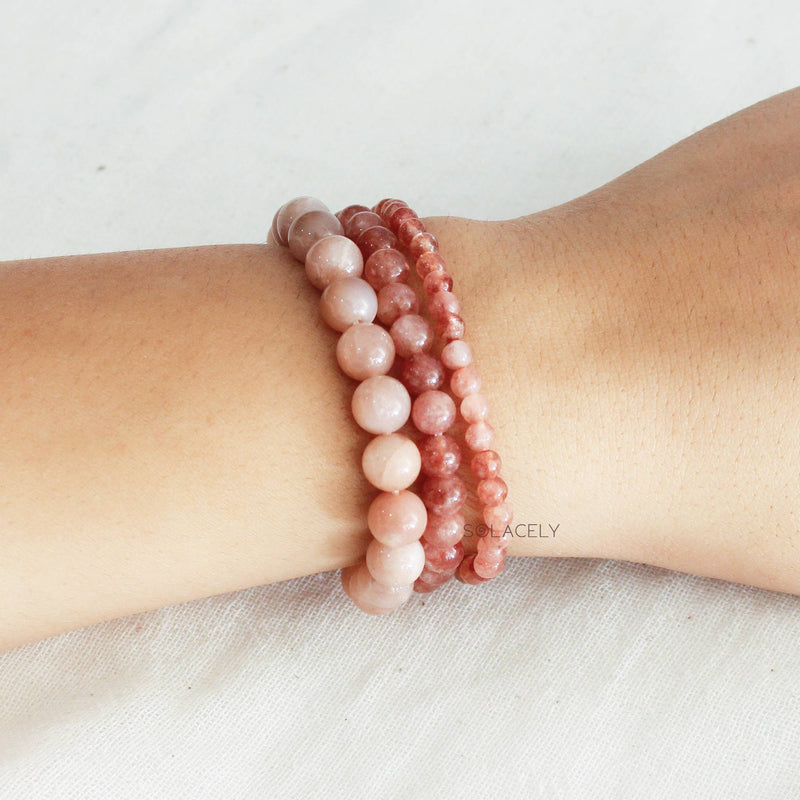
Put the bracelet on last, and let that be the closing gesture. In crystal tradition the right wrist is the giving side, for projecting outward, and the left is the receiving side, for drawing something in. For a meeting where you intend to speak, the right wrist is the usual choice.
In the room itself
Keep the stone where you can touch it. A bracelet you can turn on your wrist, or a small tumble in your pocket, gives you a physical anchor at the exact moment the thought arrives and the doubt follows. Turning a bead is invisible to everyone else and takes a second. Some people like something to hold onto in the room. A pyrite bracelet for confidence is a quiet anchor, worn where you can feel it.
Use it as a cue for one behaviour rather than a general mood. Many people set the rule that touching the stone means speaking within the next two contributions, which converts a vague intention into something with an edge on it. The stone holds the promise you made yourself that morning.
Sitting up straight and breathing into the belly rather than the chest is worth pairing with it, because the solar plexus is where both the tradition and the physiology point. None of this is complicated, and its usefulness comes almost entirely from doing it the same way each time.
Common mistakes
The commonest is buying all five stones at once. A bowl of confidence crystals on a desk stops being noticed within a week. One stone, worn every day, keeps working precisely because it stays in your field of view and on your skin.
The second is skipping the intention. A crystal on a wrist with nothing attached to it is jewellery, and lovely jewellery at that, but the tradition is built around the pairing of stone and stated purpose. The thirty seconds of naming what you want is the part that carries.
The third is expecting it to happen in one meeting. People who work with the solar plexus set describe it as a slow shift over weeks, noticed first by other people, and usually in small things: speaking a little earlier, finishing a sentence you would once have trailed off.
Building it over weeks
Give it a full cycle of meetings before you judge it. Wear the same stone, keep the same short ritual, and note afterwards what you actually said. A line in a notebook after each meeting is the simplest way to see a change you would otherwise talk yourself out of noticing.
Cleanse the stone weekly, or after any meeting that went badly, since that is what the tradition prescribes for a working stone. Sound, moonlight and incense smoke all suit citrine and tiger's eye. Keep citrine out of long hours of hard sun, which fades it, and keep pyrite completely dry.
If confidence at work is affecting your sleep, your health or your enjoyment of your job, that is worth talking to someone about, and a doctor or a workplace counsellor is the right route for that. Our wider guide to crystals for confidence covers the stones beyond the solar plexus set.
Chakra work and crystals are part of a long-standing spiritual and cultural tradition. They are not a medical device or treatment, and they do not diagnose, treat, cure or prevent any condition, including anxiety, social anxiety or any difficulty at work. Nothing here replaces advice from a doctor, therapist or other qualified professional. If low confidence is affecting your health, sleep or daily life, please speak to someone. Small beads and tumbles are a choking risk for babies and young children.
Sources
- National Institute of Mental Health, Caring for your mental health
- Geology.com, Pyrite: properties and care
Written by Chetena Sharma. Reviewed by the Solacely editorial team.
Frequently asked questions
About the author


Written by Chetna Sharma, crystal healing practitioner and co-founder of Solacely. Chetna has worked with healing crystals for over a decade and curates Solacely's protective stone collection.