Carnelian, tiger's eye, red jasper, black onyx, bloodstone and garnet are the stones most often carried for courage. All six are traditionally worn for nerve at a specific moment: a confrontation, a first day, a difficult conversation. They are carried as focus objects for the minutes when you have to act.
Key takeaways
- The six traditional courage stones are carnelian, tiger's eye, red jasper, black onyx, bloodstone and garnet.
- Courage stones are chosen for a moment of action. Calming stones and heart stones do a different job, and mixing the two intentions muddles both.
- Four of the six are quartz-family stones, hard enough at 6.5 to 7 on the Mohs scale for daily wear without babying them.
- Black onyx is chalcedony with a deep, even black finish, a look the stone trade has produced since antiquity.
- A carried stone anchors a pre-event routine. Holding it and breathing out slowly is the part people repeat before every hard thing.
- Courage stones sit with the root and sacral centres rather than the heart, which is why the traditional lineup is red, black and grounded.
- Every use described here is traditional belief, not medical fact.
What does a courage stone actually do?
A courage stone is carried for a moment you already know is coming. That is the distinction worth holding on to. It is not a mood stone and not a comfort stone. You put it in a pocket before the meeting, the audition, the scan appointment or the conversation you have been putting off for a fortnight.
Courage is not the absence of fear. It is doing the thing while the fear is still running, and the traditional stone lineup reflects that. These are hot, grounded, mostly red and black minerals, associated with the root and sacral centres rather than the heart or crown. If your need is softer than that, two neighbouring guides fit better: crystals for emotional healing covers processing what has already happened, and crystals for good vibes covers everyday atmosphere rather than a single hard hour.
There is also a difference between courage and confidence, and people conflate them constantly. Confidence is a background belief about your own competence, built slowly. Courage is a decision made in about four seconds. Different stones, different practice, different guide: for the slower version see crystals for confidence.
Which crystals are traditionally used for courage?
Six stones come up repeatedly across crystal traditions, and they divide neatly into two groups. Carnelian, red jasper, bloodstone and garnet are the warm ones, associated with drive and physical nerve. Tiger's eye and black onyx are the cool ones, associated with steadiness under pressure.
| Stone | Traditional role | Best moment for it |
|---|---|---|
| Carnelian | Motivation, drive, dispelling hesitation | Starting something you keep delaying |
| Tiger's eye | Grounded nerve, clear judgement | High-pressure decisions and negotiations |
| Red jasper | Endurance and stamina | Long ordeals rather than short ones |
| Black onyx | Composure, boundaries, willpower | Confrontation and holding a line |
| Bloodstone | Resolve and physical courage | Medical appointments, physical tests |
| Garnet | Commitment and warmth | Speaking honestly to someone you love |
Carnelian
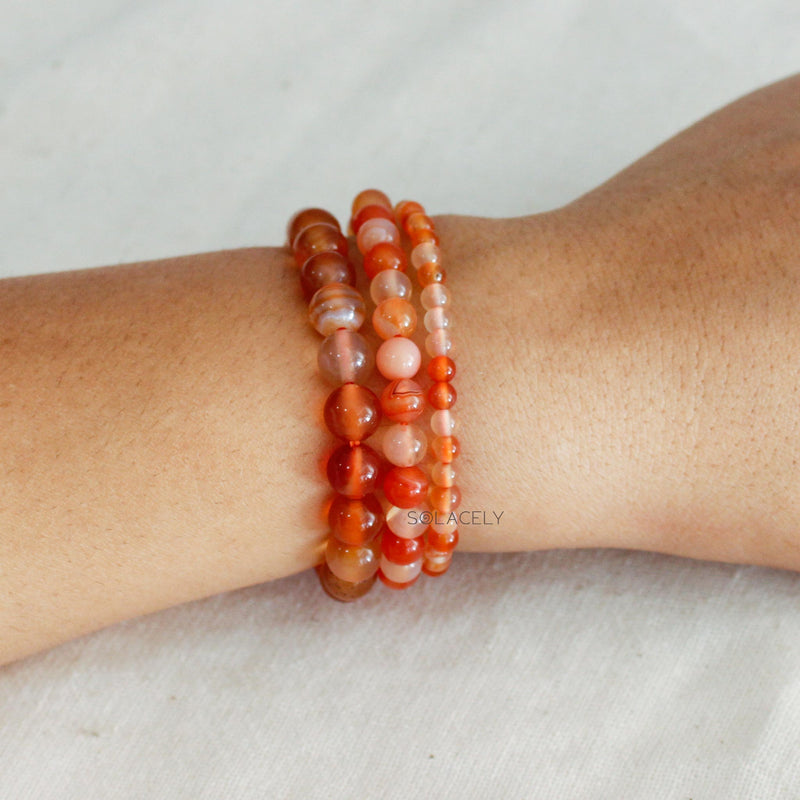
Carnelian is an orange to reddish variety of chalcedony, the microcrystalline form of quartz that mineralogy groups with agate and jasper. Roman engravers cut it into signet rings because it takes detail well and does not stick to hot wax. Its traditional job is starting: it is the stone for people whose fear shows up as procrastination.
Tiger's eye
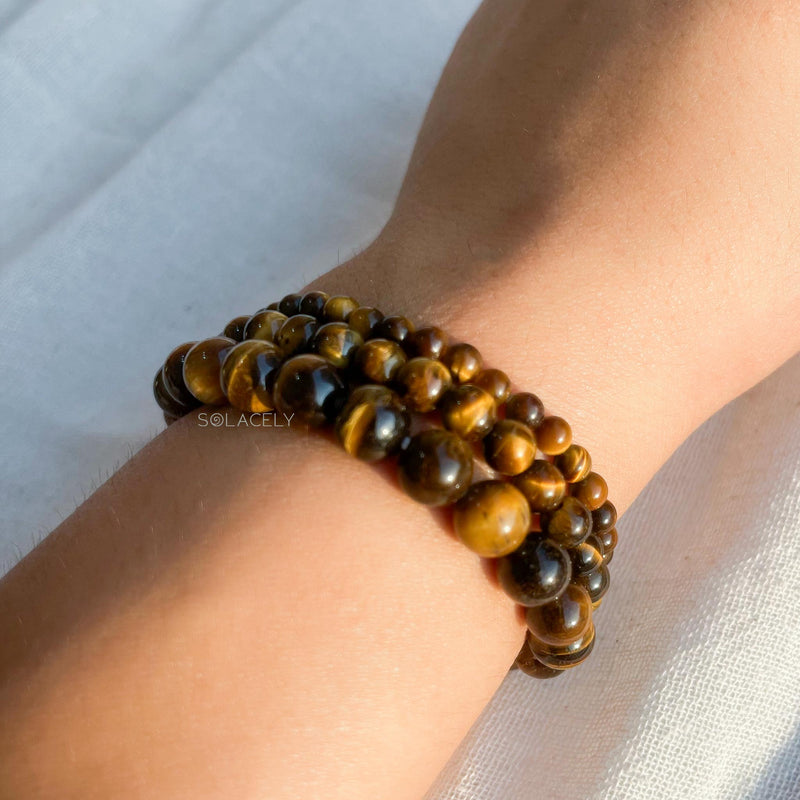
Tiger's eye is quartz that has replaced fibrous crocidolite, which is why light rolls across it in a band. In practice it is the courage stone for anyone who goes vague under pressure. Traditional use points it at the solar plexus, and it is the one most often carried into salary conversations and negotiations.
Red jasper
Red jasper is opaque, iron-rich chalcedony, and its traditional role is endurance rather than a burst of nerve. Practitioners reach for it when the hard thing lasts three months rather than three minutes: a long legal process, a training block, a stretch of caring for someone else.
Black onyx
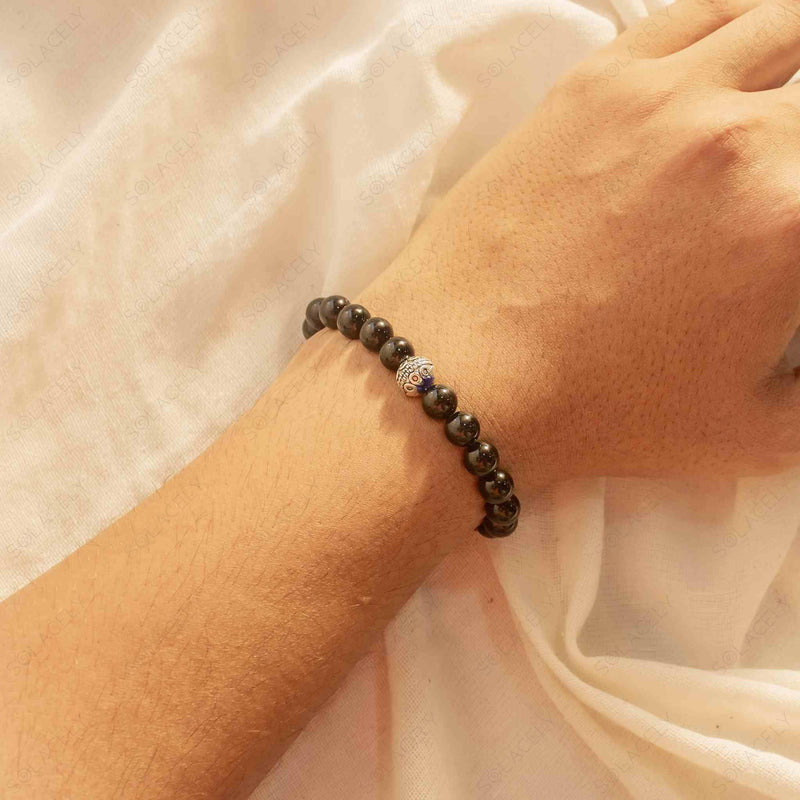
Black onyx is chalcedony, the same quartz family as carnelian and agate, finished to the deep even black it is known for. Producing that colour is craft the stone trade has practised since antiquity, and Roman and Greek carvers prized onyx for cameos because of it. Its traditional use is composure and boundary holding, which makes it the confrontation stone of the group.
Bloodstone
Bloodstone, or heliotrope, is dark green chalcedony flecked with red iron oxide. Roman soldiers reportedly carried it, and medieval Europe associated it with staunching bleeding and with physical bravery. People today most often carry it into medical settings, which is a modern echo of a very old habit.
Garnet
Garnet is not a quartz at all but a family of silicate minerals, rated between 6.5 and 7.5 on the Mohs scale in standard gemmological references. Travellers in medieval Europe carried it for safe passage. Its courage is the warm kind: the nerve to commit rather than the nerve to fight.
How do you use a crystal before a difficult moment?
Keep the routine short enough that you will actually do it under pressure. Two minutes is the realistic ceiling, and the whole point is repetition, so the same sequence before every hard thing beats an elaborate ritual you perform twice and abandon.
Here is a version that works in a car park, a corridor or a toilet cubicle, which is where most of these moments actually happen.
- Hold the stone in your closed hand. Notice the weight and the temperature. That contact is the attention cue the whole routine hangs on.
- Breathe out longer than you breathe in. Four counts in, six or eight out, for six rounds.
- Name the thing. One plain sentence: I am going to ask for the raise. Vagueness is what makes waiting unbearable.
- Say what you will do, not how you will feel. Feelings are not under your control in the next ten minutes. Actions are.
- Pocket the stone and go. Keep the ritual short so it moves you toward the moment rather than away from it.
The breathing element earns its place here. The US National Center for Complementary and Integrative Health notes that relaxation techniques including breathing exercises have been studied for anxiety and stress, and that they are generally considered safe for healthy people. The stone is the cue that reminds you to do it, and that pairing of object and breath is what practitioners mean when they talk about working with a courage stone.
For a worked example of the same routine applied to one specific high-stakes hour, our guide to crystals for job interview success runs through the timings in detail.
Do crystals really make you braver?
People describe a courage stone as keeping the intention in view at the moment it is hardest to hold on to, and that is where the momentum comes from. Carrying something in the hand before a difficult hour is one of the oldest human habits we have records of, and crystal practice sits squarely inside that tradition.
A coin, a rosary, a lucky shirt and a carnelian tumble all belong to the same family of objects. They mark a moment, they cue a rehearsed routine, and they carry the weight of every previous time you did the hard thing while holding them. Athletes build the same kind of cue on purpose, and it is why the stone gets stronger with use rather than weaker.
The one thing worth saying is that a courage stone is meant to move you forward. If you find yourself extending the ritual to put off the conversation, shorten it. Hold the stone, take the six breaths, then go. Practitioners are unanimous that the practice belongs immediately before the action, not instead of it.
Are courage stones durable enough for daily carry?
Mostly yes, which is convenient given the point is to carry them. Carnelian, tiger's eye, red jasper, black onyx and bloodstone are all quartz-family stones sitting around 6.5 to 7 on the Mohs hardness scale that standard hardness references document. Garnet is comparable at 6.5 to 7.5.
A few practical points. Black onyx and carnelian both keep their colour best away from long sun exposure and from solvents such as acetone, so take a bracelet off before nail varnish remover or household cleaners come out. Bracelets strung on elastic fail at the cord long before the beads do, so check the tension every few months rather than waiting for the scatter across a supermarket floor.
Cleaning is simple: warm water, mild soap, soft brush, dry fully. For energetic cleansing, moonlight, sound or a rest on selenite suit all six. If you want the wider set of stones associated with stamina rather than nerve, our guide to crystals for strength covers that ground. Solacely's carnelian and tiger's eye bracelets are built for this kind of everyday carrying rather than display.
The properties described here reflect traditional and cultural belief around crystals. They are not medical claims and are not a substitute for professional care. Crystals do not treat anxiety, panic or any other health condition. If fear is affecting your daily life, please speak to a doctor or a qualified mental health professional.
Sources
Written by Chetena Sharma. Reviewed by the Solacely editorial team.
Frequently asked questions
About the author


Written by Chetna Sharma, crystal healing practitioner and co-founder of Solacely. Chetna has worked with healing crystals for over a decade and curates Solacely's protective stone collection.