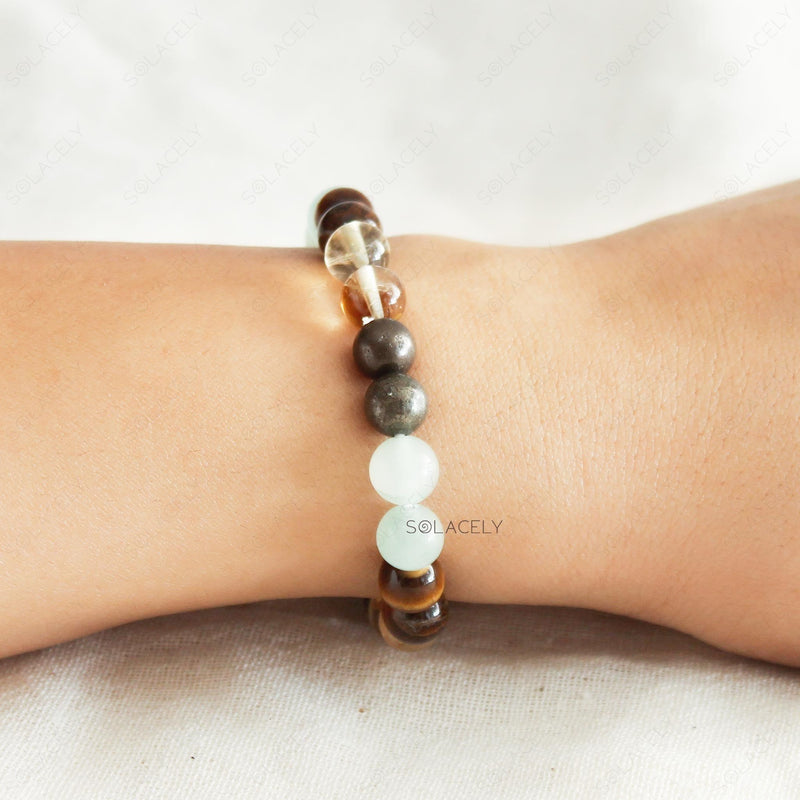
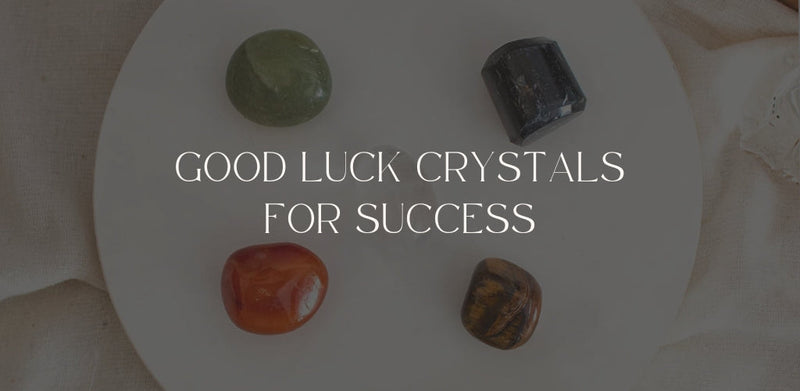
The five crystals traditionally kept for luck at work are citrine, pyrite, green aventurine, tiger's eye and lapis lazuli. Each is matched to a different moment: the search, the interview, the pay conversation, the difficult team. Choosing by situation rather than by general luck is what makes the practice useful.
Key takeaways
- Standard five: citrine and pyrite for self worth, green aventurine for opportunity, tiger's eye for interview nerve, lapis lazuli for clear speaking.
- Citrine and pyrite are solar plexus stones. Their tradition is earning and valuing your work.
- For interviews, wear it rather than carry it, so you are not fidgeting in the room.
- Keep it in your sightline at the desk, or in a drawer you open often if the office is formal.
- Pyrite must stay dry. Never cleanse it with water or salt.
- The practice sits alongside applying, asking and preparing.
Which stone for which situation
Generic luck lists are unhelpful because job situations are not generic. Looking for work, asking for a raise and surviving a difficult team are three different problems, and the tradition distinguishes between them.
| Situation | Traditional stone | Why |
|---|---|---|
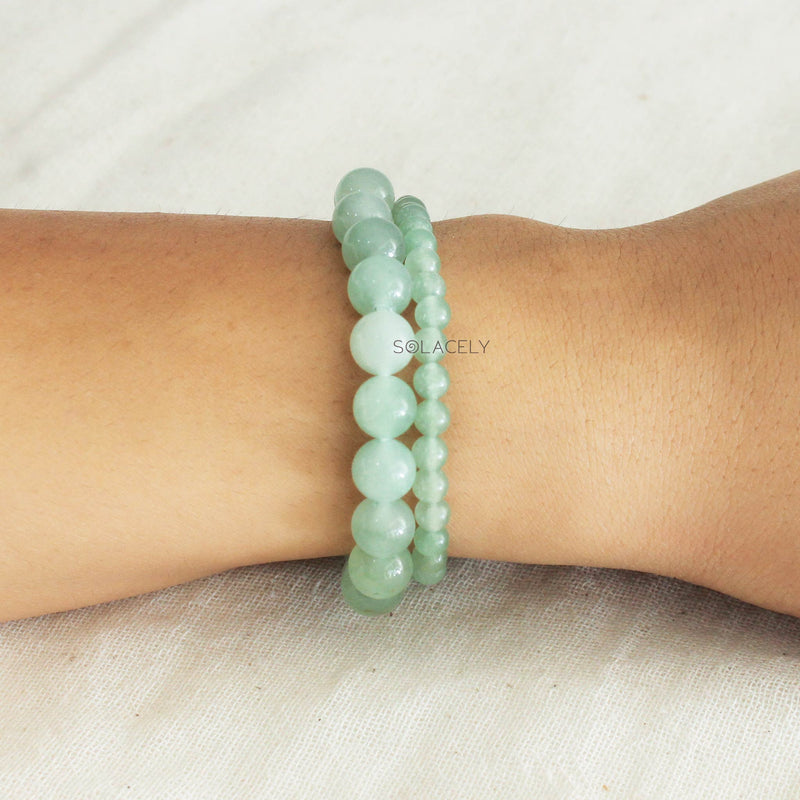
| Job hunting | Green aventurine | Long associated with opportunity and new openings |
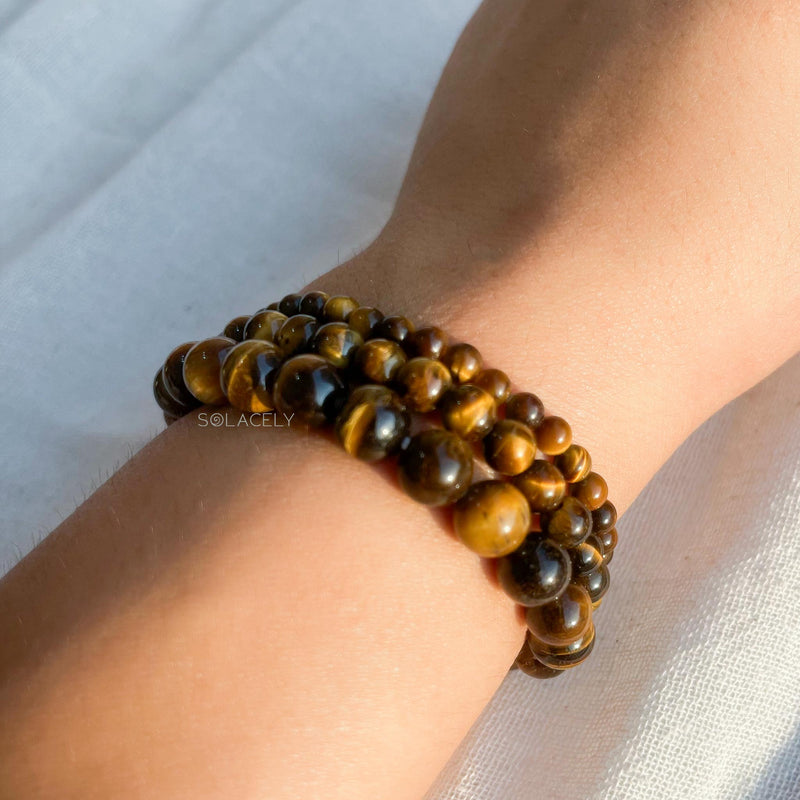
| Interviews | Tiger's eye | The courage stone, kept for holding your nerve |
| Asking for a raise | Pyrite or citrine | Solar plexus, self worth, charging properly |
| Presenting or pitching | Lapis lazuli | Throat chakra, clear and measured speech |
| Difficult colleagues | Black tourmaline | The boundary stone, placed between you and the source |
Notice how much of this is about self presentation rather than luck arriving. That framing is what makes the tradition practical, and it is why citrine and pyrite dominate the list.
What the practice gives you
Three things, and they matter most over a long search. It keeps a specific goal visible when motivation drifts. It creates a fixed moment of composure before something difficult, and composure genuinely affects how you come across. And it turns a vague ambition into a named one, because you cannot set an intention on a stone without deciding what the intention actually is.
Using one before an interview
Wear it rather than carry it. A bracelet stays put, whereas a tumble in a pocket becomes something to fidget with under a table, which is the opposite of what you want.
The useful moment is the corridor, not the room. Two minutes before you go in, hold the bracelet or press a thumb against the stone, and take ten breaths: in for four, out for six. The longer exhale is what steadies your voice, and slow breathing of this kind is well supported for managing situational stress.
Then leave it alone. Once you are in the room, the stone has done its job.
At the desk
Placement is a question of discretion as much as tradition. In a relaxed office, a small tumble beside the keyboard sits in your sightline and draws no attention. In a formal one, a drawer you open several times a day works nearly as well, since the point is regular contact rather than constant display.
Citrine is the traditional desk stone, from the old habit of keeping a piece in a till or cash box. Pyrite serves the same function with a harder edge to it. Our guides to crystals for positive energy at work and crystals for business success cover office setups in more detail.
Asking for more money
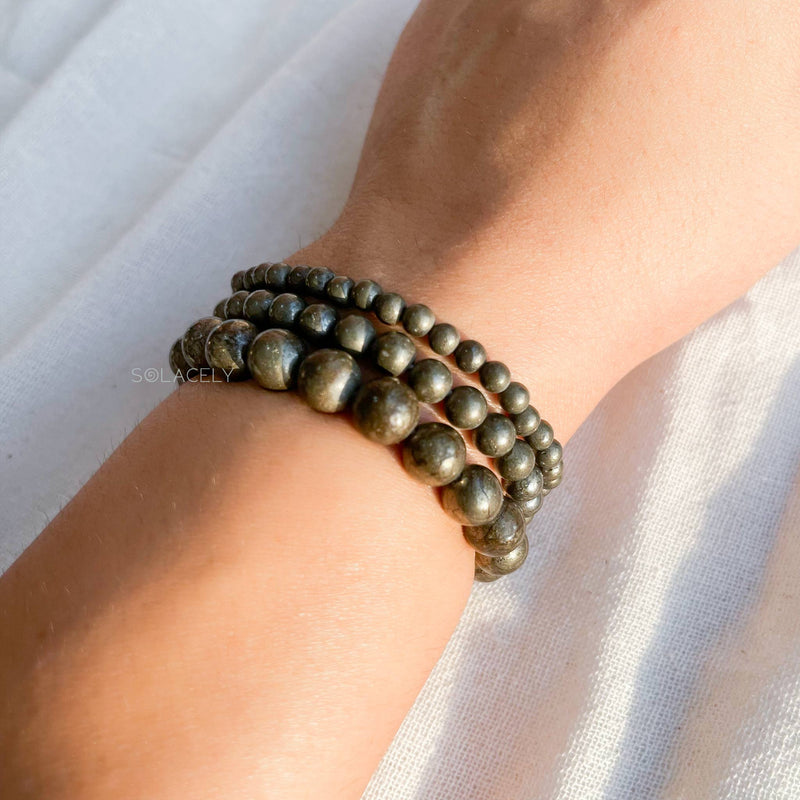
This is where the tradition is most specific and most useful. Pyrite and citrine are both solar plexus stones, and the solar plexus is associated with will and self worth rather than fortune. That points exactly at the thing most people struggle with in a pay conversation: believing the number is reasonable before they say it out loud.
Used well, the practice doubles as rehearsal. Name the figure. Say it once each morning while putting the piece on. By the time you are in the meeting, you have said the number often enough that it sounds ordinary in your own mouth.
One care note. Pyrite is iron sulfide and oxidises in damp conditions, so keep it away from water and never salt cleanse it. Our guide to pyrite ring benefits and care covers that fully.
Who this suits
It suits someone in a long job search who needs something to hold the goal steady, or someone with a specific conversation coming that they keep deferring. The ritual gives shape to a stretch of time that otherwise has very little of it.
For the broader picture, see good luck crystals for success and crystals for success.
The uses described here reflect traditional and cultural crystal practice. They are not medical claims and are not a substitute for professional healthcare, career, financial or legal advice.
Sources
Written by Chetena Sharma. Reviewed by the Solacely editorial team.
Frequently asked questions
About the author


Written by Chetna Sharma, crystal healing practitioner and co-founder of Solacely. Chetna has worked with healing crystals for over a decade and curates Solacely's protective stone collection.