The crystals most kept for money are citrine for confidence and trade, pyrite for drive, green aventurine for opportunity, and jade for steady accumulation. Each is traditionally associated with a different part of earning, so the useful choice depends on which part you are working on.
Key takeaways
- Citrine, pyrite, green aventurine and jade are the four money stones kept most often.
- Citrine is the merchant's stone, from the practice of keeping a piece where money was handled.
- Pyrite is kept for earning through effort rather than luck, and must be kept dry.
- Green aventurine is the opportunity stone, traditionally carried when taking a chance.
- Placement traditions put money stones in the southeast corner of a room, or wherever money is handled.
Choosing by the part of earning you are working on
Money is not one problem, and the four stones here are traditionally kept for four quite different aspects of it. Naming which one you are actually working on makes the choice straightforward.
Citrine is for the confidence to charge properly and to put yourself in front of people. Pyrite is for the effort itself, the starting and the following through. Green aventurine is for opportunity, the willingness to take a chance. Jade is for keeping and growing what arrives.
Most people only need one or two. For the wider prosperity picture, crystals for prosperity covers what else belongs alongside, and crystals for business success narrows to enterprise specifically.
Citrine, the merchant's stone
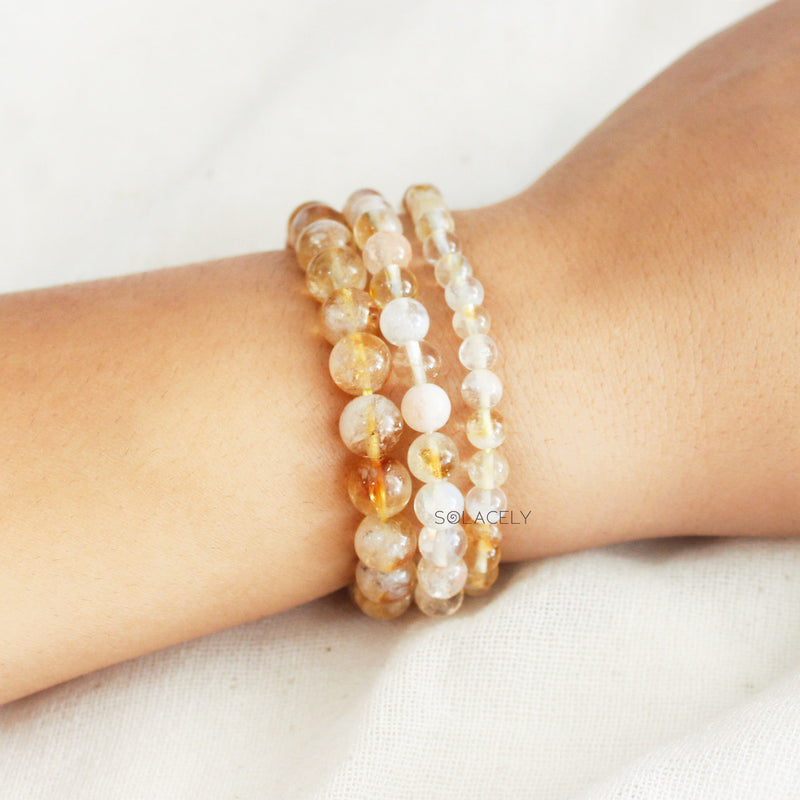
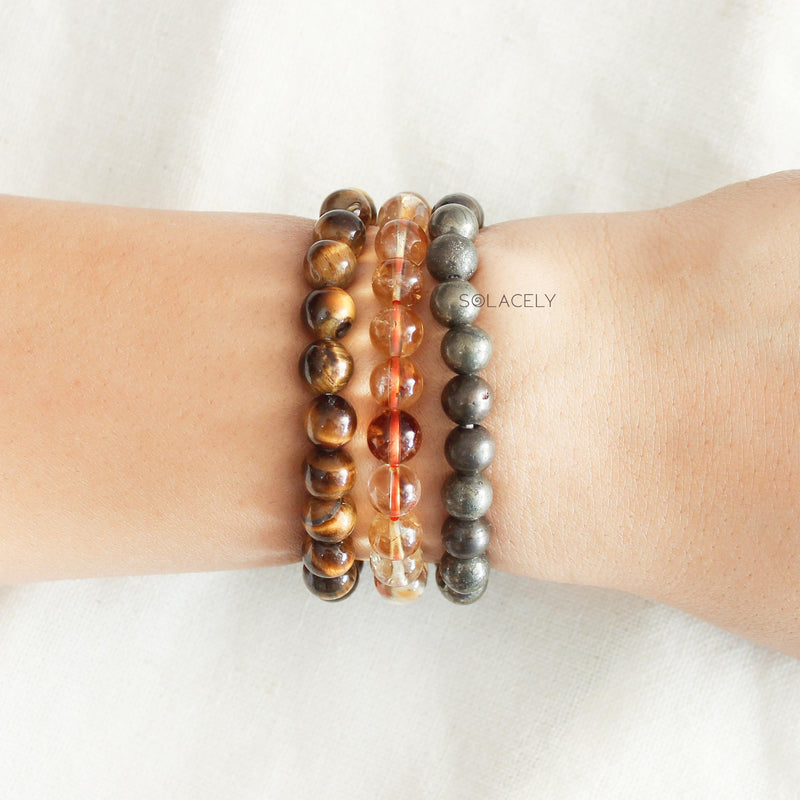
Citrine has carried a reputation for prosperity for centuries, and the name most often attached to it says exactly why. The merchant's stone comes from the old practice of keeping a piece of citrine in a till, a cash box or a purse, where money physically changed hands.
What it is traditionally kept for is the human side of earning rather than the arrival of money itself: confidence, warmth, optimism, and the willingness to ask for what something is worth. That is a large part of most people's actual difficulty with money.
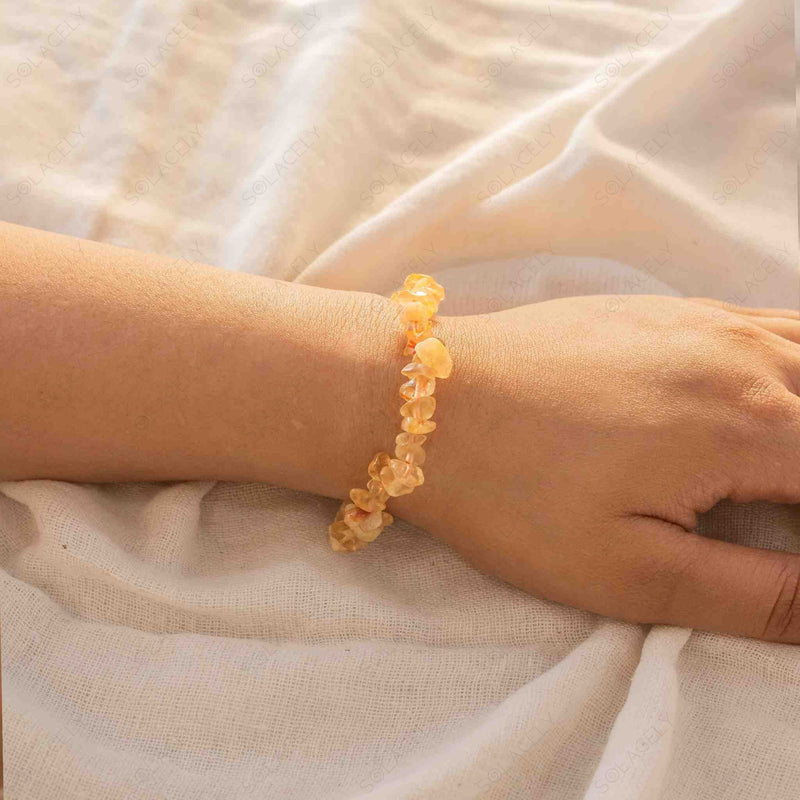
Practically it is one of the easiest stones to keep. A warm golden quartz at 7 on the Mohs scale, it takes daily wear in a bracelet or a pendant comfortably. Keep it out of long direct sunlight, which is the only real care note. The citrine guide covers it fully.
Pyrite, green aventurine and jade
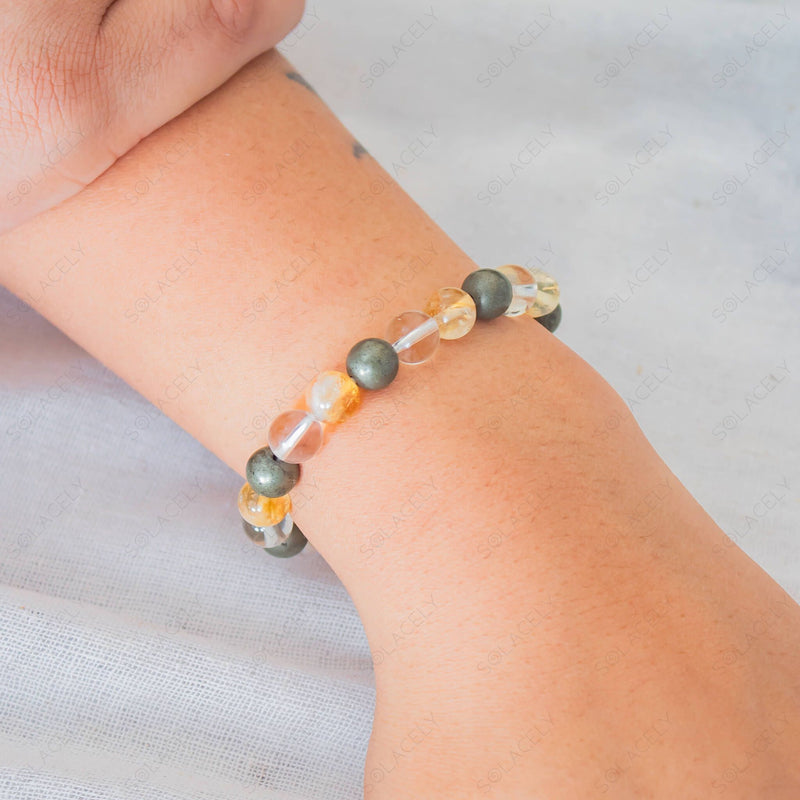
Pyrite is the effort stone. Brassy, dense and satisfying to pick up, it is traditionally kept for enterprise and for backing yourself, and its associations are with earning through work rather than through fortune. Its one firm requirement is dryness: never water or salt cleanse it, and keep it off a humid shelf. If you would rather wear pyrite close to the skin than keep it on a desk, a bracelet keeps the intention in view.
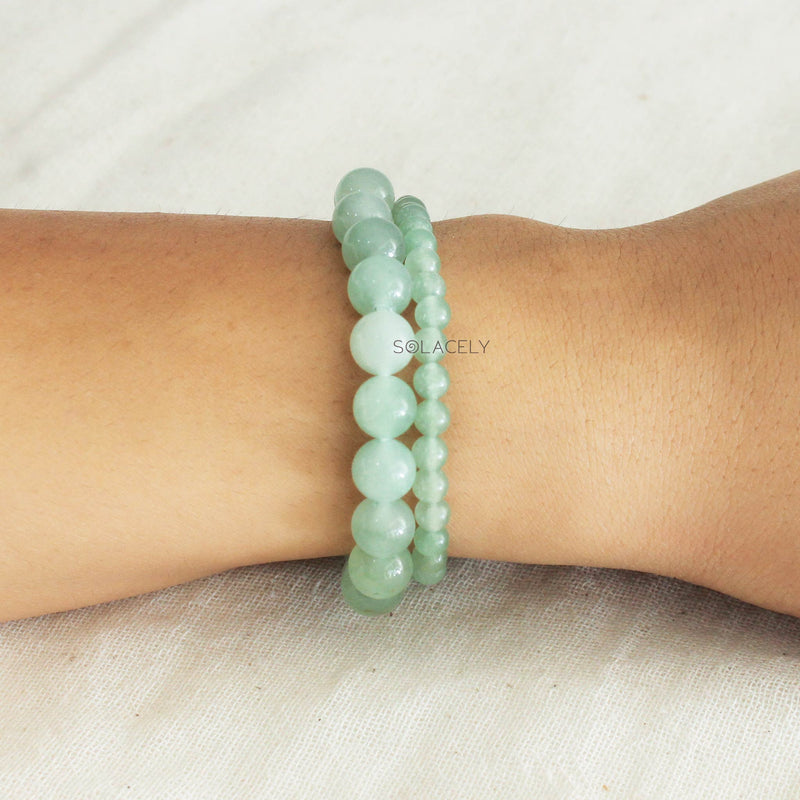
Green aventurine is the opportunity stone, often called the stone of chance. It is traditionally carried when something needs to be attempted rather than planned, which makes it the natural choice before an interview, a pitch, or the first month of something new.
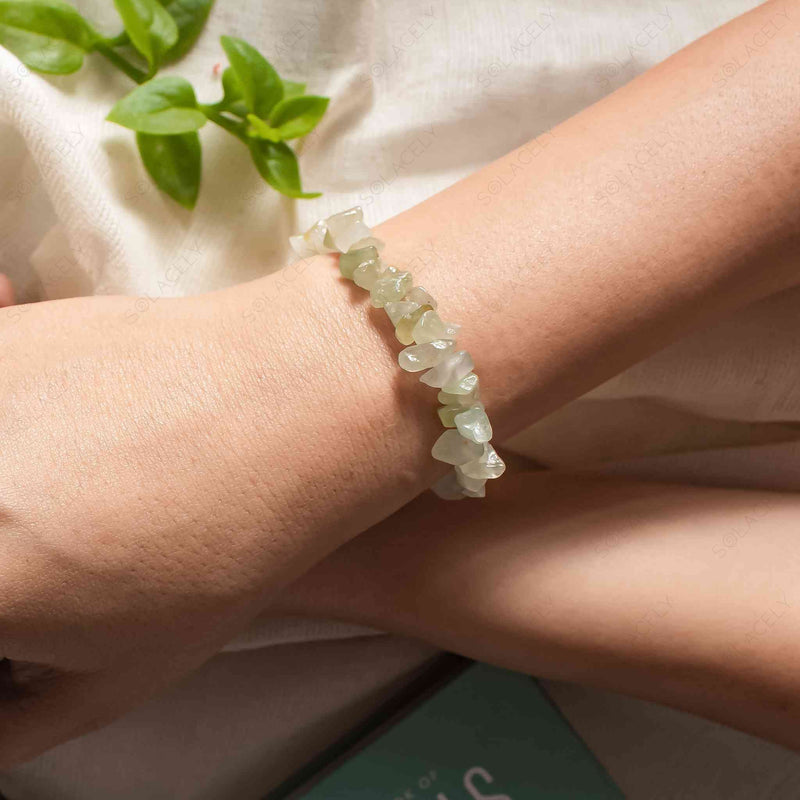
Jade is the long game. Across Chinese tradition especially it has been kept for prosperity that accumulates through steadiness rather than arriving suddenly, and it is exceptionally tough, which suits a stone meant to be worn for years rather than a season.
Matching the stone to the situation
| What you are working on | Stone | Where it is traditionally kept |
|---|---|---|
| Charging properly, asking for more | Citrine | Where money is handled: till, desk, purse |
| Starting and following through | Pyrite | On a desk, kept dry |
| Taking a chance | Green aventurine | Carried in a pocket on the day |
| Keeping and growing it | Jade | Worn, or placed in the wealth corner |
| A new venture | Citrine with pyrite | Together on the working desk |
The southeast corner of a room is the classic feng shui placement for wealth objects, and an entrance is the usual alternative. Both are worth knowing, though where you actually handle money matters more in practice.
How money stones are traditionally used
The practices are small and repeatable, which is why they survive.
- In a purse or till. The oldest citrine practice, and still the most common.
- On the desk where invoices go out. Pyrite, held briefly before sending the number.
- Carried on the day. Green aventurine in a pocket for an interview or a pitch.
- Worn continuously. Jade, for the long, slow intention rather than a single event.
- In the southeast corner. A citrine cluster or a crystal tree, following feng shui placement.
What ties all of these together is placing the stone where the actual decision happens. A money stone in a drawer is doing nothing; the same stone beside the thing you keep putting off is a daily reminder.
Caring for money stones
Citrine, green aventurine and jade all take warm water, mild soap, a soft brush and a full dry without complaint. Keep citrine and any warm quartz out of long direct sunlight, which softens colour over months.
Pyrite is the exception, and it is worth repeating because it is the most commonly damaged stone in this group. Dry cloth only. No water, no salt, no humid shelf, and take any pyrite jewellery off before washing your hands. Kept dry it holds its brassy shine indefinitely.
Jade needs no special handling beyond avoiding ultrasonic cleaners on treated pieces. For energetic cleansing, moonlight, sound or a rest on selenite suit all four, and none of them need salt. The pyrite guide covers that stone in detail.
What this practice offers
A money stone works the way any deliberate object works: it keeps an intention in view at the moment it matters. Kept beside the invoice you have not sent or the message you have not answered, it is a genuinely useful daily prompt.
What it does not replace is the practical side. Pricing properly, invoicing on time, asking for the raise, keeping records that let you see where things stand. Those are what change the number, and any stone is company alongside them rather than a substitute.
Held that way, the tradition is a warm and long standing one, and there is nothing wrong with wanting something on the desk that reminds you what you are working toward.
Crystal trees and clusters for the home
Beyond worn pieces, the money stones are commonly kept as decor, and two formats come up most often. A citrine or green aventurine crystal tree is the classic prosperity object, with gemstone chips wired onto a trunk and set on an agate base, and it is usually placed in the southeast corner or near an entrance.
Clusters and geodes are the other choice, and they suit a room where you want the stone to be a presence rather than an ornament. A citrine cluster on a shelf in a home office is one of the most common placements there is.
Whichever format, the practical advice is the same. Put it somewhere you pass daily rather than somewhere impressive, keep it dusted so it stays looking deliberate, and give it a stated reason rather than treating it as decoration that happens to be a crystal.
Building a small money set
One or two stones is usually enough, and adding more tends to dilute rather than strengthen the intention.
- Starting a business. Citrine and pyrite together, on the working desk.
- Freelancing and pricing work. Citrine alone, kept where you write invoices.
- Job hunting. Green aventurine carried on interview days.
- Saving toward something. Jade, worn continuously for the long intention.
The properties described here reflect traditional and cultural belief around crystals. They are offered for reflection and wellbeing and are not financial advice, medical advice, or a treatment for any condition. For decisions about money, debt or investment, please speak with a qualified financial adviser. Keep small stones away from young children, and never place crystals in drinking water.
Sources
Written by Chetena Sharma. Reviewed by the Solacely editorial team.
Frequently asked questions
About the author


Written by Chetna Sharma, crystal healing practitioner and co-founder of Solacely. Chetna has worked with healing crystals for over a decade and curates Solacely's protective stone collection.