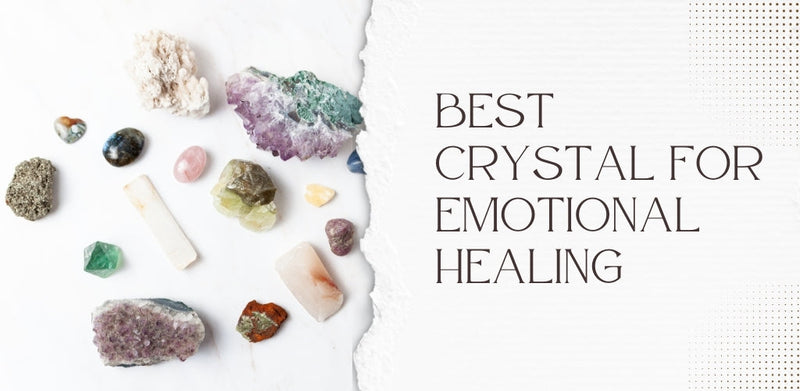
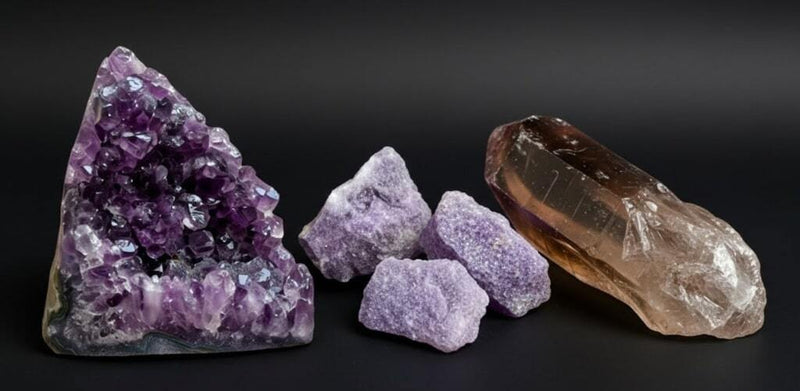
Crystals cannot treat, cure, heal, or diagnose any skin condition. Acne, eczema, psoriasis, rosacea, and every other skin problem are medical issues that need a dermatologist and evidence-based care, not gemstones. The only honest role a crystal can play is as a calming object in a relaxation ritual, and because stress can worsen conditions like acne, eczema, and psoriasis, that gentle stress relief may indirectly help your skin, alongside real treatment, never instead of it.
Key Takeaways
- No crystal can treat, cure, or diagnose acne, eczema, psoriasis, rosacea, or any skin condition. See a dermatologist for real skin problems.
- The only honest benefit is indirect: crystals used in a calm ritual may reduce stress, and stress is a known trigger that can worsen skin conditions.
- Never put crystals or crystal-infused water on broken, inflamed, or infected skin; many stones are porous, unhygienic, or contain unsafe minerals.
- Watch for red flags: a changing mole, a spreading or infected rash, or skin that is severely painful all need prompt medical care.
- Use crystals as gentle self-care around proper treatment, cleansers, moisturisers, and prescribed medicines, not as a replacement for any of it.
Can crystals help with skin issues?
Let us be completely honest, because your skin deserves it. Crystals cannot heal skin conditions. There is no scientific evidence that any stone clears acne, calms eczema, fades scars, or treats psoriasis, rosacea, or any dermatological problem. Skin conditions are medical, driven by genetics, hormones, the immune system, bacteria, and your skin barrier, and they respond to proper treatment, not to gemstones.
So why do people search for crystals for skin issues at all? Usually because skin problems are stressful and visible, and stress genuinely affects skin. That is the one real, indirect connection worth understanding. A calming crystal ritual will not touch a breakout directly, but if it helps you relax, and stress is one of your triggers, it may support your skin in a small, roundabout way, always alongside real treatment.
The most important step for any skin concern is to see a qualified doctor or dermatologist. If you want to explore the calming side of crystals as gentle self-care, our guide to crystals for overthinking and our note on crystals for different purposes are more honest starting points than any skin-clearing claim.
Why crystals cannot treat skin conditions
Skin conditions have real, well-understood causes, and a stone does not act on any of them. Acne forms when pores clog with oil and dead skin and bacteria multiply, which is why dermatologists reach for cleansers, retinoids, and sometimes antibiotics. According to the U.S. National Library of Medicine (MedlinePlus), acne is a common condition best managed with proven skincare and medical treatment, none of which a crystal provides.
Eczema and psoriasis are driven by the immune system and a disrupted skin barrier. MedlinePlus explains that eczema (atopic dermatitis) makes skin dry, itchy, and inflamed, and is managed with moisturisers, medicated creams, and trigger avoidance, while psoriasis is a long-term immune condition that speeds up skin-cell turnover and needs medical treatment. A gemstone cannot calm an overactive immune response or repair a skin barrier.
Rosacea, fungal infections, and hormonal breakouts each have their own medical logic too. The pattern is clear: real skin conditions respond to real dermatology. Believing a crystal can substitute is not only ineffective, it can delay the treatment that actually works, and with skin, delay sometimes means scarring or a condition getting harder to control.
The only honest role: stress relief that may help skin
Here is the one genuine, evidence-informed link. Stress affects the skin. When you are stressed, your body releases hormones like cortisol that can increase oil production and inflammation, which is why many people notice acne flare-ups, eczema itching, or psoriasis patches worsen during stressful periods. Reducing stress will not cure these conditions, but for many people it removes one trigger that makes them worse.
This is where a crystal can play a small, honest part. Not through its energy, but as the focus of a calming ritual. Holding a smooth, cool stone while you breathe slowly is a simple mindfulness practice, and the U.S. National Center for Complementary and Integrative Health notes that mindfulness and relaxation techniques can help many people manage stress. Less stress may mean fewer stress-driven flare-ups, indirectly and modestly.
So if a crystal helps you slow down, unwind before bed, or step out of an anxious spiral about your skin, that is a real, if indirect, benefit. It works exactly the same way a warm bath, a walk, or a few minutes of deep breathing would. The stone is a pleasant cue for calm, and calm is genuinely good for stressed skin. That is the whole honest story, no more.
Crystals people traditionally associate with skin and calm
Tradition links certain stones with skin, beauty, or calm, and it is fine to enjoy those associations as long as you remember they are belief, not medicine. The table below lists common choices and the honest, indirect way each might fit a calming routine, never a treatment.
| Crystal | Traditional association | Honest, indirect role |
|---|---|---|
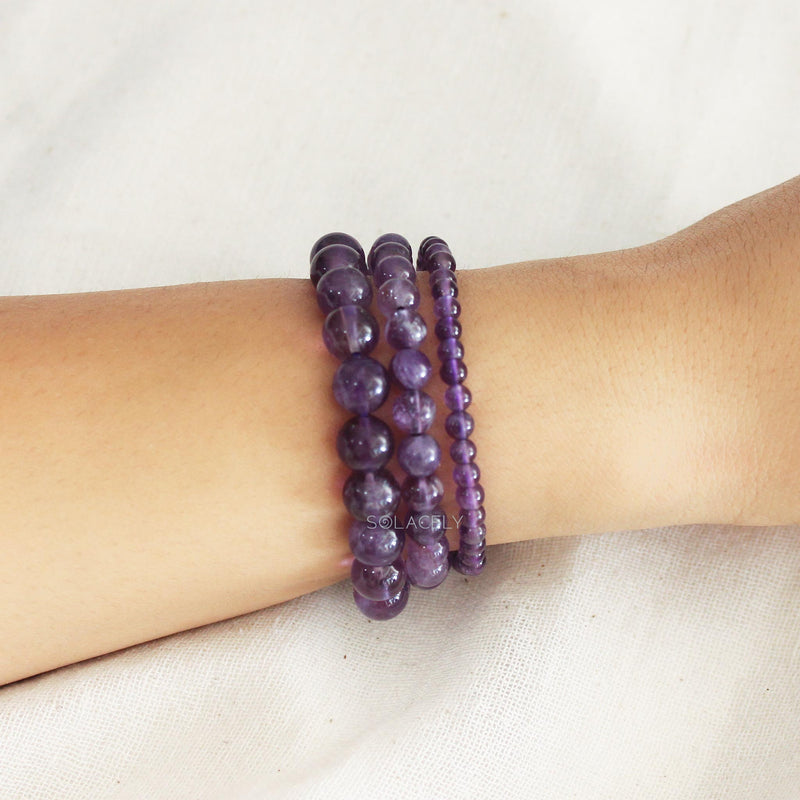
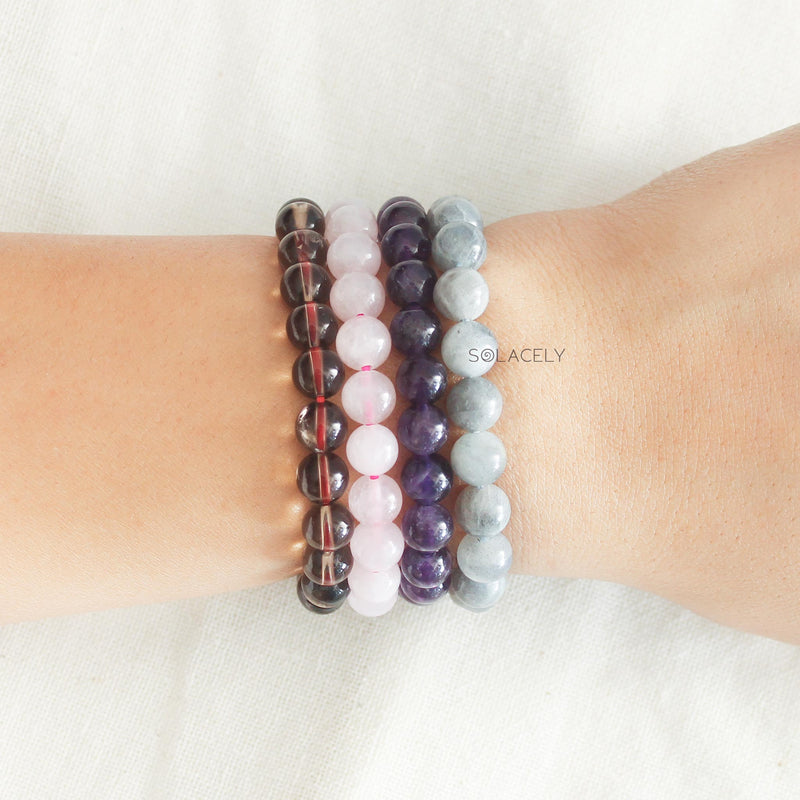
| Amethyst | Calm, easing stress | A soothing stone for a wind-down ritual |
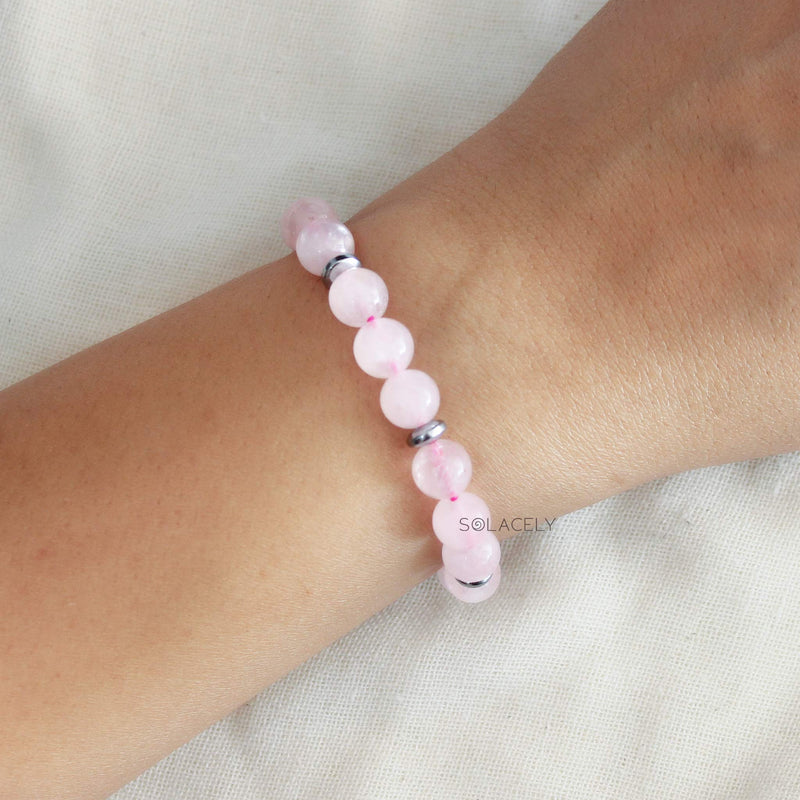
| Rose quartz | Self-love, gentleness | Supports kinder self-talk about your skin |
| Blue lace agate | Soothing, cooling calm | A gentle focus when skin worry runs high |
| Jade | Beauty, wellbeing (as a roller) | A cool massage tool, hygiene and care matter |
| Clear quartz | Clarity, intention | A focus stone for a calm skincare routine |
Notice that even the traditional roles are about calm and self-image, not clearing skin. Rose quartz, for instance, is loved for gentleness, which is why our guide to crystals for emotional healing and our piece on rose quartz for compassion suit the self-kindness that living with a skin condition often needs.
Important safety warnings for skin and crystals
This part matters, so please do not skip it. Putting crystals directly on your skin, especially broken, inflamed, or infected skin, carries real risks, and some popular practices are genuinely unsafe. Never treat a skin problem by placing stones on it or washing it with crystal-infused water.
- Hygiene. Many crystals are porous and hold bacteria. Pressing one on acne, a rash, or open skin can introduce germs and make things worse, not better.
- Unsafe minerals. Some stones contain copper, aluminium, or other substances you should not soak in water and put on skin. Malachite, for example, contains copper and should never be used to make water you apply to skin. Never drink or apply crystal elixirs on the assumption they are safe.
- Broken or infected skin. Never place any crystal on cuts, open acne, weeping eczema, or an infected rash. This is an infection risk.
- Delaying care. The biggest danger is using crystals instead of seeing a doctor. A treatable condition can worsen or scar while you wait for a stone to work.
- Allergies and irritation. Rough or coated stones and residues can irritate sensitive or reactive skin.
If you enjoy a cool jade or quartz roller as a gentle massage tool, keep it scrupulously clean, never use it on active breakouts or broken skin, and stop if your skin reacts. When in doubt, keep crystals off your skin entirely and simply hold them as calming objects instead.
When to see a doctor about your skin
Skin problems are common, and most are treatable, which is exactly why they are worth taking to a professional rather than a stone. Please see a dermatologist or doctor for any persistent, painful, spreading, or distressing skin condition. Some signs need prompt medical attention, so watch for these red flags.
- A changing mole. A mole or spot that changes size, shape, or colour, or that bleeds or will not heal, needs prompt medical review to rule out skin cancer.
- A spreading or infected rash. A rash that spreads quickly, oozes, crusts, or comes with fever needs medical care, not crystals.
- Severe or painful skin. Intensely painful, blistering, or widespread skin problems should be seen promptly.
- No improvement. Acne, eczema, or any condition that will not clear with over-the-counter care deserves a dermatologist who can prescribe what works.
- Emotional impact. If your skin is affecting your confidence or mood, that is a real reason to seek help, both dermatological and, if needed, emotional support.
None of this is a reason for shame; skin conditions are extraordinarily common. It is simply a reason to get the right help. Crystals can sit alongside that care as a calming ritual, and the emotional side of living with visible skin issues is real, which is why gentle self-kindness, like the theme in our guide to crystals for emotional healing, can be a supportive companion to proper treatment.
How to use crystals as calming self-care for skin stress
If you would like crystals to support you while you treat your skin properly, use them for the stress side, gently and safely. Keep them off active skin and let them be a cue for calm. Here are honest ways to do that.
- Hold one and breathe. When skin worry spikes, hold a smooth stone, feel its coolness, and take slow breaths to settle.
- Keep one by your skincare shelf. Let a calming stone remind you to be patient and gentle with your routine, not to pick or over-scrub.
- Use it in a wind-down ritual. Stress often peaks at night; a bedtime moment with a calming stone can help you relax and sleep, which helps stressed skin.
- Pair it with self-kindness. Hold a stone and offer yourself a kind line, since harsh self-talk about skin adds stress.
- Keep it clean and off your face. Treat crystals as calming objects for your hands, not treatments for your skin.
The goal is simple: less stress, more patience, and steady, proper skincare. The stone supports the mood; your dermatologist and your routine care for the skin. For more on using calming stones as a mindfulness anchor, our step-by-step on how to cleanse and charge crystals keeps your stones clean and pleasant to handle.
Common mistakes with crystals and skin
A few misunderstandings can turn a harmless calming habit into something that actually sets your skin back. Keep these in mind so crystals stay a safe, gentle part of self-care.
- Using crystals instead of treatment. The biggest mistake. Skin conditions need dermatology; a stone is never a substitute and delay can cause harm.
- Applying stones to active skin. Placing crystals on acne, rashes, or broken skin risks infection. Keep them off your face and body.
- Drinking or applying crystal elixirs. Many minerals are unsafe in water. Never assume a crystal-infused water is safe to drink or put on skin.
- Ignoring red flags. A changing mole or a spreading, infected rash is a medical matter, not something to meditate away.
- Expecting visible results. Crystals will not clear or fade anything. Expecting them to only leads to disappointment and lost time.
Sources
- National Library of Medicine (MedlinePlus) - Acne: https://medlineplus.gov/acne.html
- National Library of Medicine (MedlinePlus) - Eczema (Atopic Dermatitis): https://medlineplus.gov/eczema.html
- National Library of Medicine (MedlinePlus) - Psoriasis: https://medlineplus.gov/psoriasis.html
- National Center for Complementary and Integrative Health (NIH) - Relaxation Techniques: What You Need To Know: https://www.nccih.nih.gov/health/relaxation-techniques-what-you-need-to-know
Frequently asked questions
About the author


Written by Chetna Sharma, crystal healing practitioner and co-founder of Solacely. Chetna has worked with healing crystals for over a decade and curates Solacely's protective stone collection.