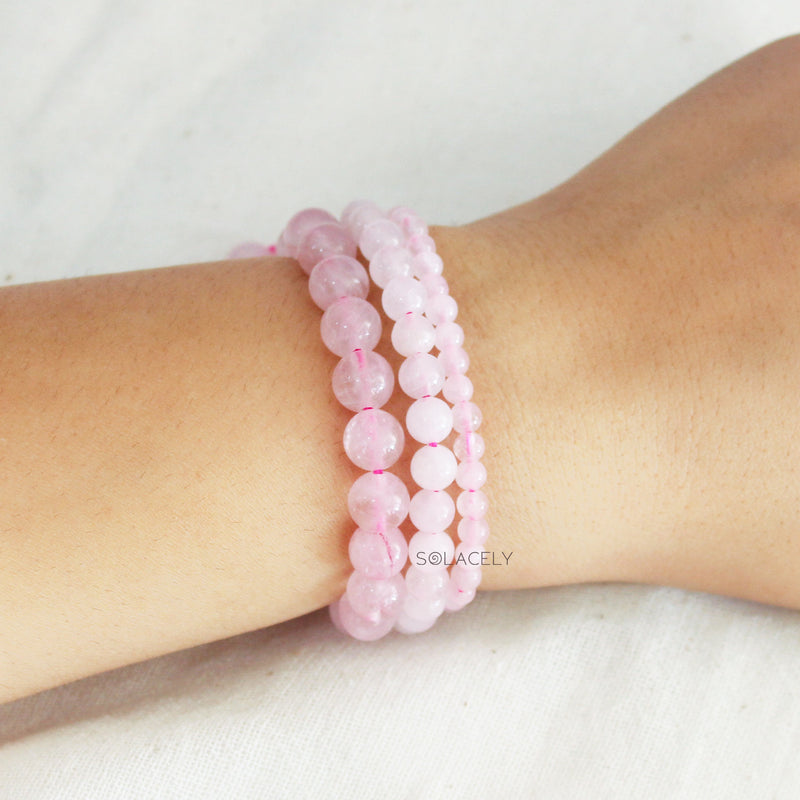
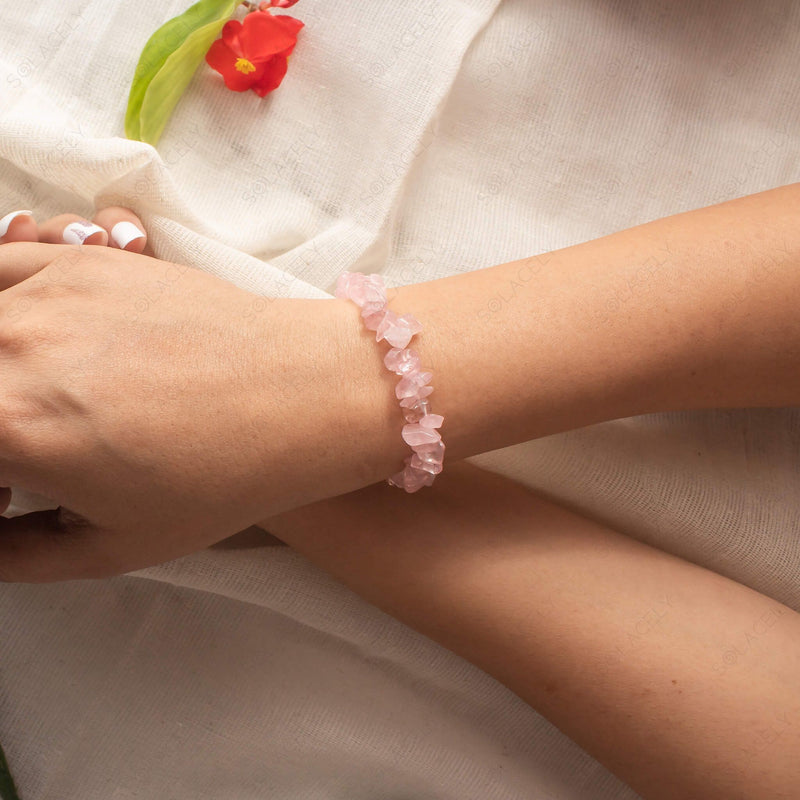
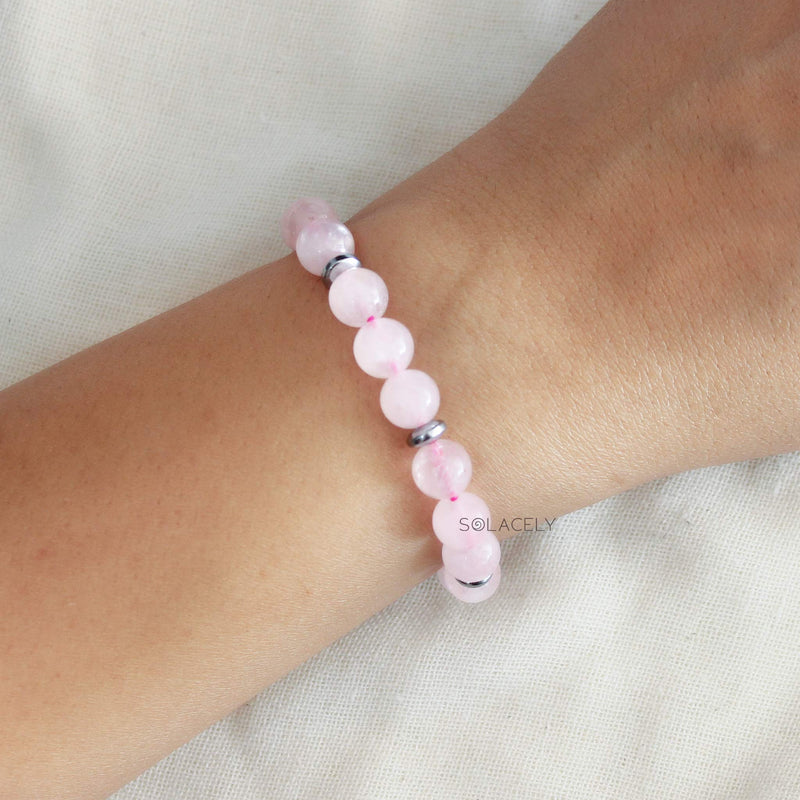
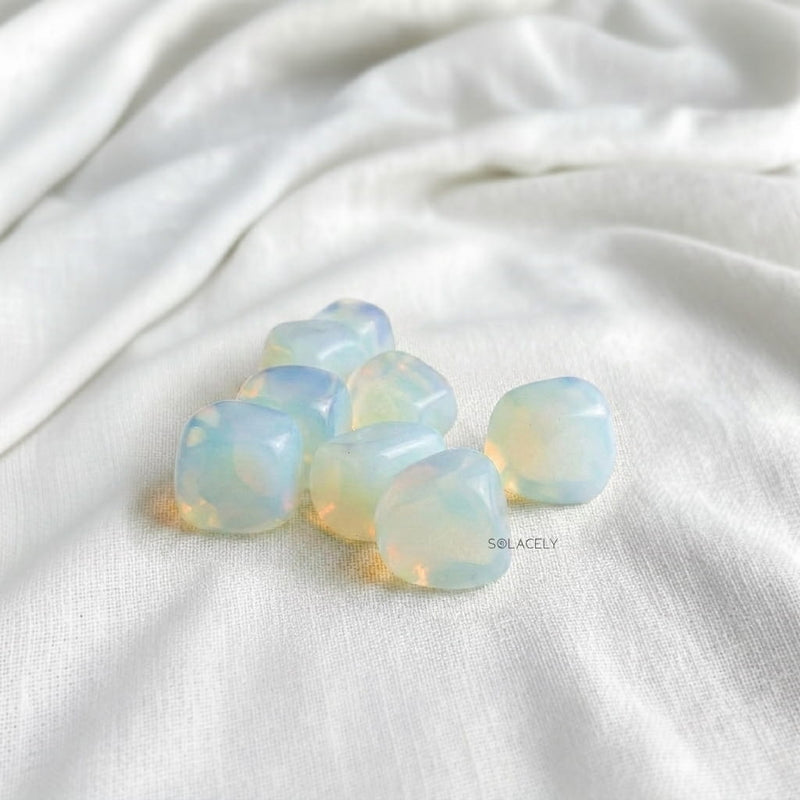
Pink opalite and rose quartz are paired for softness. Both are kept for gentleness and self-compassion rather than passion, and both carry a milky, diffused glow that suits that intention. It is one of the most forgiving combinations to wear, and one of the easiest to gift.
Key takeaways
- Both stones are traditionally kept for gentleness, comfort and self-compassion rather than romance.
- Pink opalite is an opalescent glass, made for its soft glow, and prized for exactly that quality.
- Rose quartz is a natural quartz at 7 on the Mohs scale, comfortable in everyday wear.
- Opalite is softer and prefers gentle handling, so keep it clear of harder beads in storage.
- The pairing suits comfort and rest rather than drive, which makes it a natural bedside set.
What pink opalite is
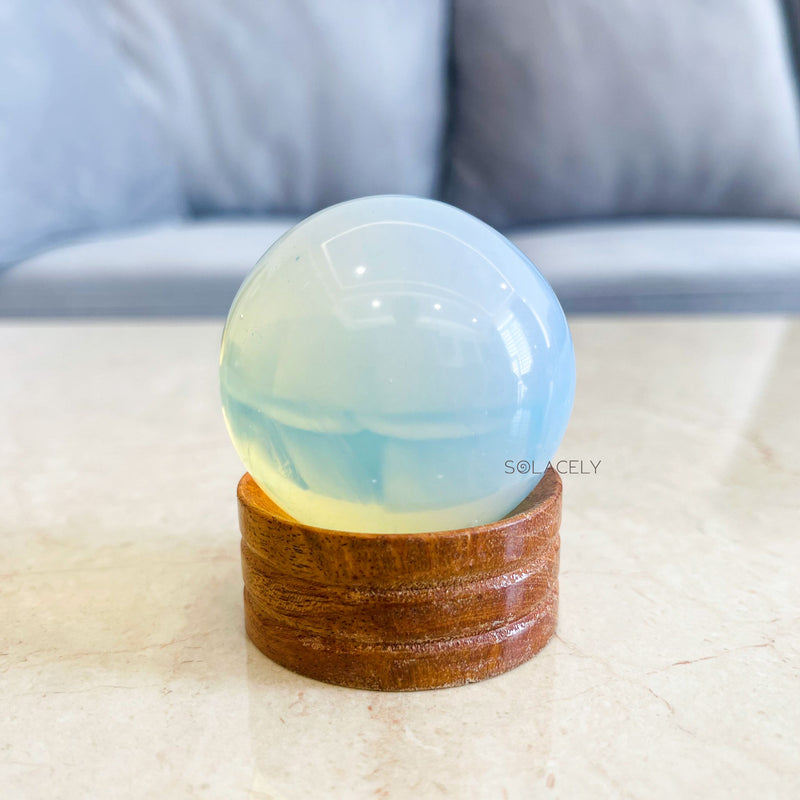
Pink opalite is an opalescent glass, made to carry the milky shimmer and soft colour shift that people love in opal. It has a gentle pink body with a bluish glow that moves as the light changes, and that quiet play of colour is the whole reason it is kept.
It belongs to a long tradition of beautiful made materials. Glassmakers have been producing opalescent and shimmering glass for centuries, and the results have always been valued in their own right. Opalite sits comfortably in that lineage, and it is described honestly by anyone selling it well.
Practically it is a pleasure to wear. Opalite is light, smooth and pleasant against the skin, and because it is consistent in colour it makes very even, tidy strands. In crystal practice it is kept for calm, gentleness and a settled feeling, which pairs naturally with rose quartz.
What rose quartz brings
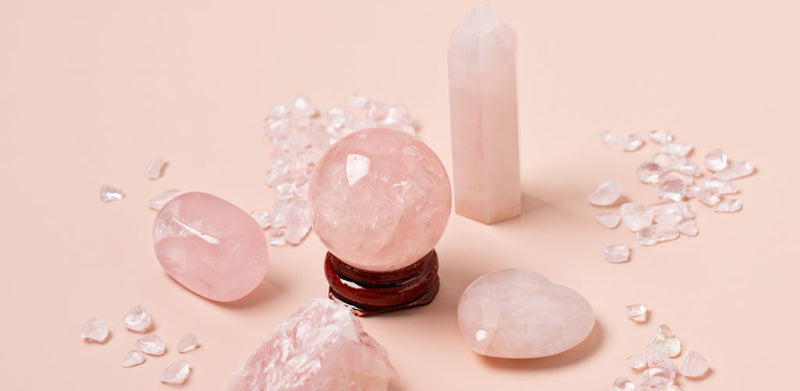
Rose quartz is the natural half of the pairing and the better known of the two. It is a quartz coloured a soft translucent pink by fine inclusions running through the stone, which is why it reads milky rather than clear. That cloudiness is characteristic and is what gives it the glow.
In crystal tradition it is the stone of the heart, though far more often for self-compassion than for romance. It is what people keep when they are being hard on themselves, when they are recovering, or when a household needs a softer atmosphere. That gentler association is the one worth leading with.
It is also one of the most practical stones to own. At 7 on the Mohs scale it handles daily wear in a ring, a bracelet or a pendant without complaint. The rose quartz guide covers its tradition and care in full.
Why the pairing works
Most pairings are built on contrast, one stone balancing another. This one is built on agreement. Both stones are gentle, both are pale and luminous, and both are kept for the same broad intention, which makes the set quietly consistent rather than a negotiation between two moods.
That makes it a good choice for anyone who finds stronger combinations too busy. There is no push in this pairing and no boundary work, just a soft, steady tone. People tend to reach for it during recovery, through a tender period, or simply as a set that lives on a bedside table and asks nothing.
Visually the two are made for each other. Opalite's cool bluish shimmer against rose quartz's warm milky pink gives a strand a subtle shift of tone as it moves, which is far prettier in person than either stone photographs.
Comparing pink opalite and rose quartz
| Pink opalite | Rose quartz | |
|---|---|---|
| Material | Opalescent glass | Natural quartz |
| Look | Even pink with a moving bluish glow | Milky translucent pink, varies piece to piece |
| Hardness | Softer, handle gently | 7 Mohs, everyday durable |
| Traditionally kept for | Calm, gentleness, a settled feeling | Self-compassion, comfort, the heart |
| Best format | Beads, pendants, tumbled pieces | Anything, including rings |
| Care | Wipe and dry, keep from harder beads | Warm soapy water, keep out of long sun |
The only practical difference that matters day to day is storage. Give opalite its own pouch so harder beads do not mark the surface, and the shimmer stays as bright as the day you chose it.
How to wear and place the pair
This is a gentle set, so it suits gentle placement. Nothing about it needs to be worn hard.
- Bracelets. Alternating pink opalite and rose quartz beads, which shows the tonal shift beautifully.
- Pendants. A rose quartz drop with opalite beads, or the reverse if you prefer the shimmer up front.
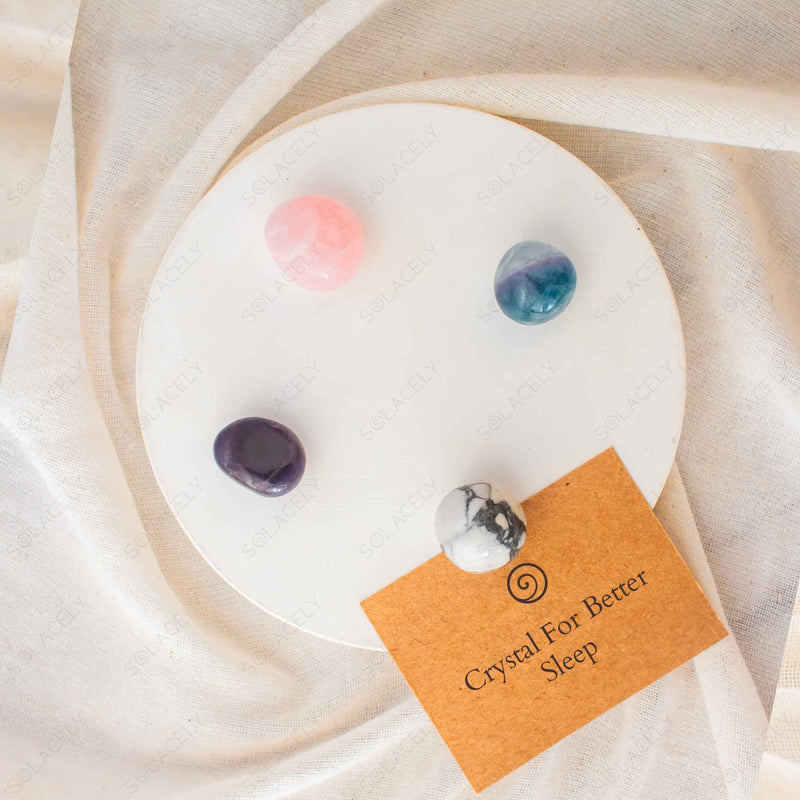
- Bedside. The most natural home for the pair. A tumbled stone each, within reach.
- As a gift. One of the easiest sets to give, since it suits almost anyone and needs no sizing.
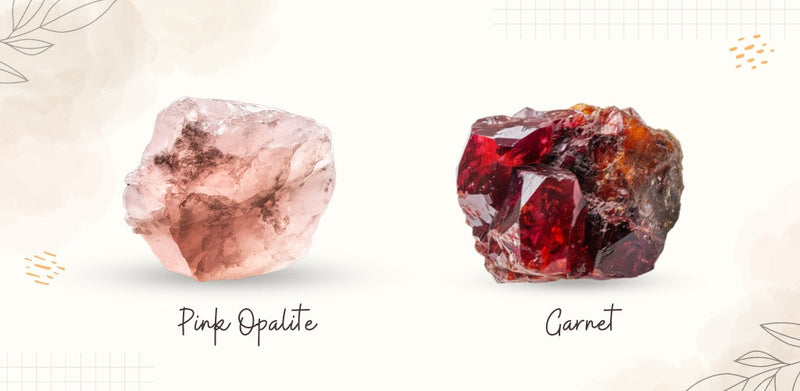
If you would like the same softness with a little more structure, pink opalite and garnet adds warmth and drive to the opalite base, and pink opalite and green calcite keeps the gentleness while shifting toward renewal.
Care for both
Rose quartz is easy. Warm water, a little mild soap, a soft cloth and a full dry. The one habit worth keeping is storing it away from a bright windowsill, since long hours of strong sun can soften the pink over time.
Opalite prefers a lighter touch. Wipe it with a soft, barely damp cloth and dry it straight away rather than soaking it, and keep it away from perfume, hairspray and household cleaners, which dull any polished surface over time. Put jewellery on last, after cosmetics have settled.
For energetic cleansing both suit moonlight or sound, and neither needs a long session in the sun. A rest on a selenite plate overnight is a gentle option that matches the mood of the pair. If comfort through a difficult stretch is what you are after, crystals for emotional healing covers the wider selection.
Who this pairing suits
It suits people who want company rather than challenge. Anyone recovering, anyone in a demanding caring role, and anyone who finds bolder stones too insistent will get on with this set, because it never asks anything of you.
It suits less well anyone looking for momentum or boundaries. Neither stone is traditionally kept for drive or protection, so a warmer or darker stone belongs in the mix if that is the real need. For pure softness, though, there are few easier pairings to live with.
Choosing the two stones
With opalite, look at how the glow moves. Tilt a piece under a light and watch for that bluish shimmer travelling across the surface, which is the whole reason to own it. A piece that stays flat as you turn it will stay flat on the wrist too.
With rose quartz, look for an even, soft pink with light sitting inside the stone rather than bouncing off the surface. Deeper pink is not automatically better, and many people prefer the paler, more translucent material for exactly the gentleness this pairing is built around.
Bead size is worth thinking about for a strand. Smaller beads, around 6 to 8 mm, give a more delicate look that suits the mood of the pair, while larger beads make more of a statement. For a set intended to be quiet company rather than a feature piece, smaller is usually the happier choice.
Making it a daily habit
A gentle set works best when it is attached to a gentle moment rather than worn as decoration and forgotten. The pattern most people settle into is small and easy to keep.
- Evening. The bracelet comes off and goes onto the bedside dish, which marks the end of the day.
- Morning. It goes back on before anything else, as the first unhurried thing you do.
- Difficult moments. A hand on the beads, three slow breaths, and nothing more required.
- Weekly. A wipe and a dry, which keeps both stones bright and takes a minute.
The properties described here reflect traditional and cultural belief around crystals. They are offered for reflection and wellbeing and are not medical advice, a diagnosis, or a treatment for any condition. If you are working through grief, low mood or a health concern, please speak with a qualified healthcare professional. Keep small stones away from young children, and never place crystals in drinking water.
Sources
- Gemological Institute of America, Rose Quartz Description
- Gemological Institute of America, Opal Description
Written by Chetena Sharma. Reviewed by the Solacely editorial team.
Frequently asked questions
About the author


Written by Chetna Sharma, crystal healing practitioner and co-founder of Solacely. Chetna has worked with healing crystals for over a decade and curates Solacely's protective stone collection.