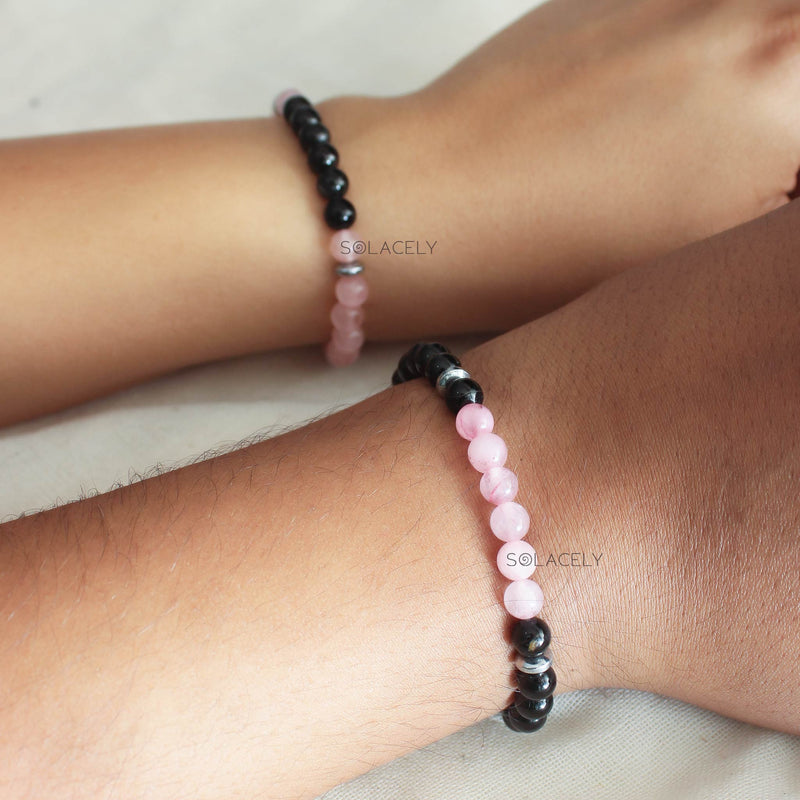
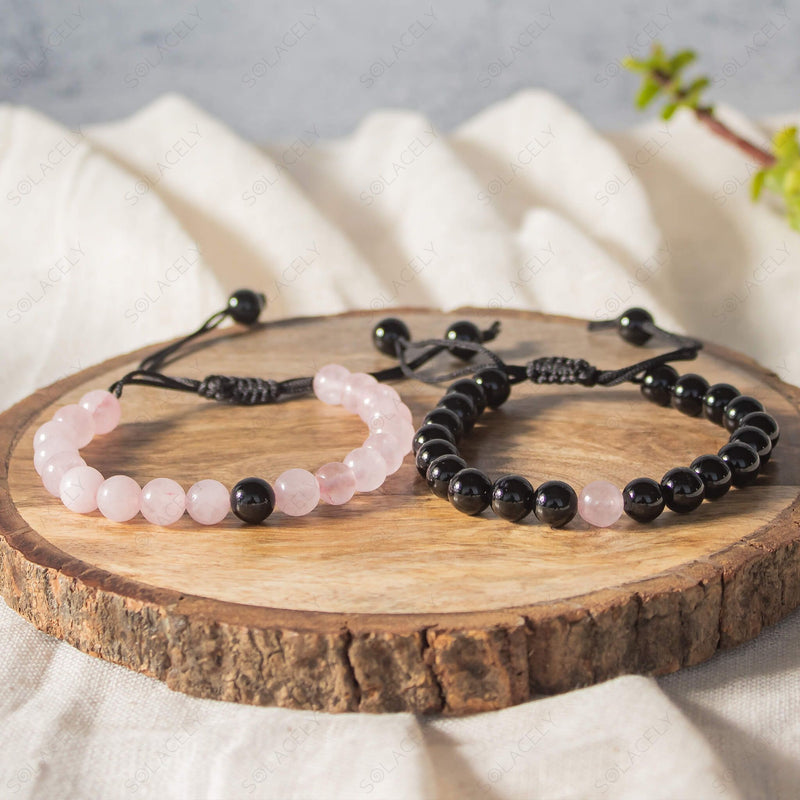
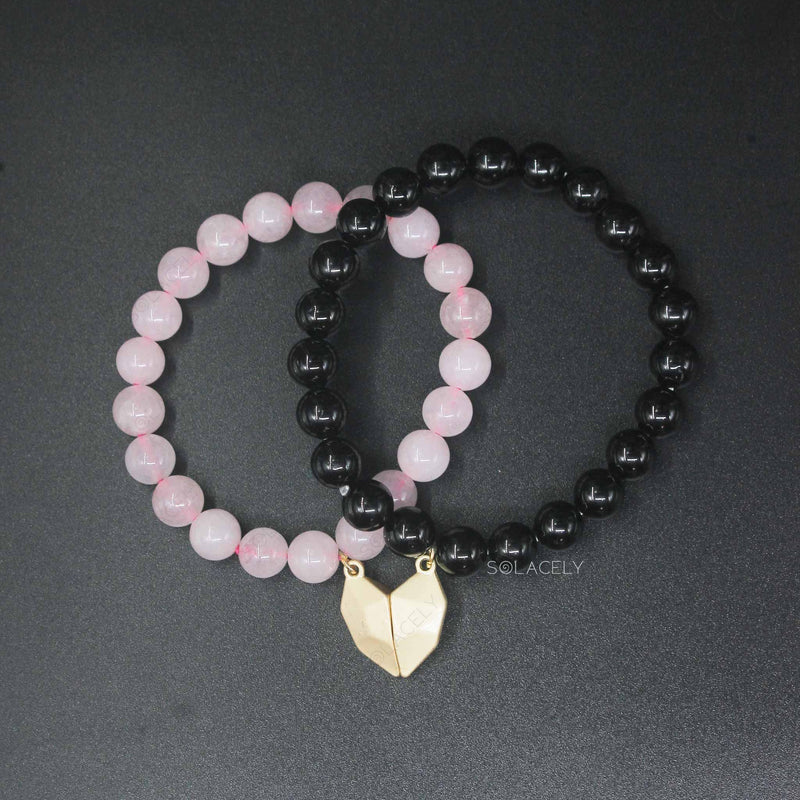
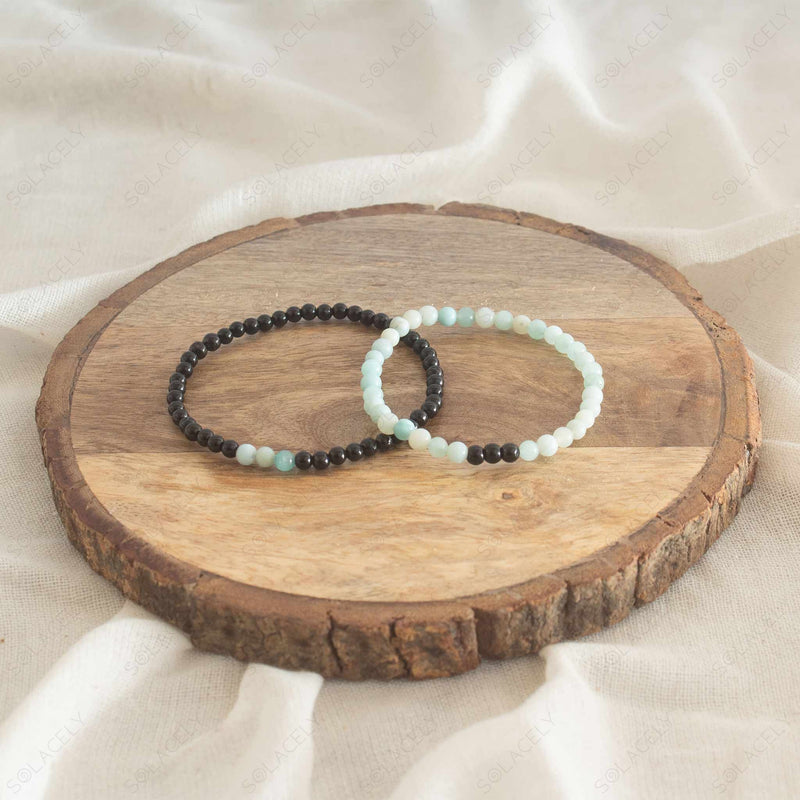
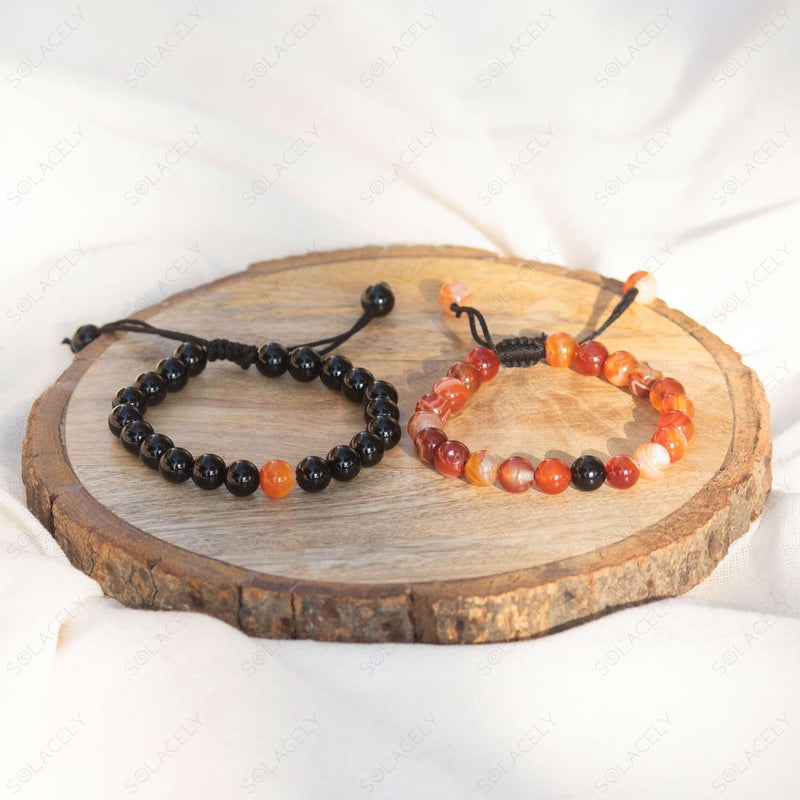
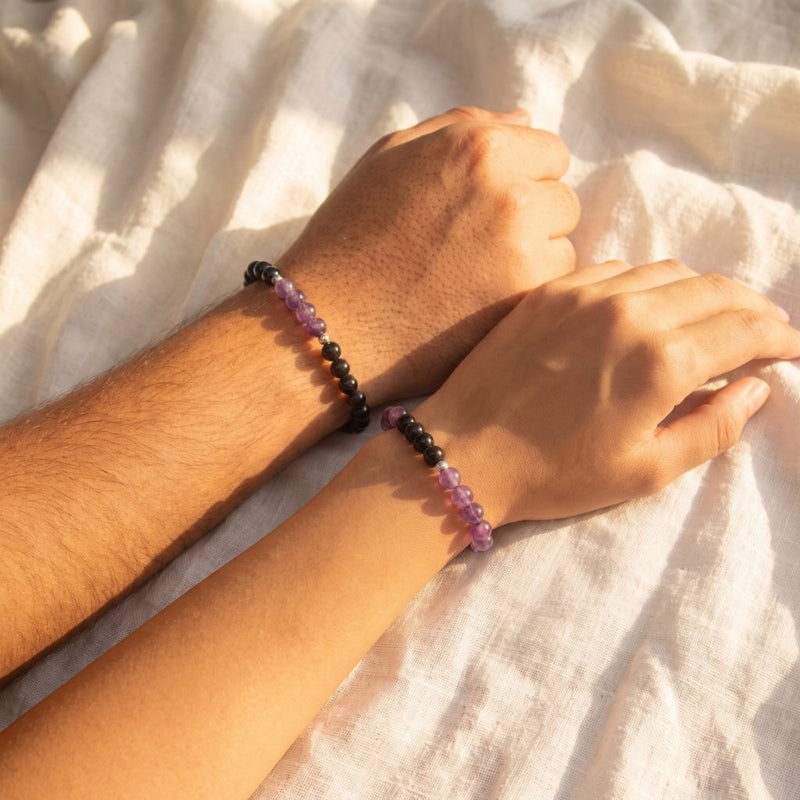
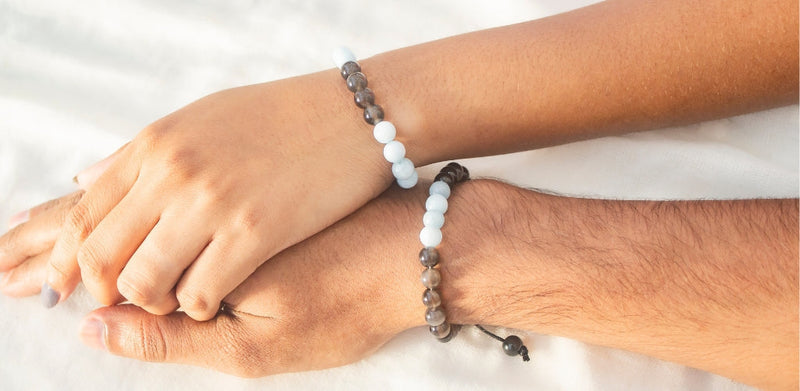
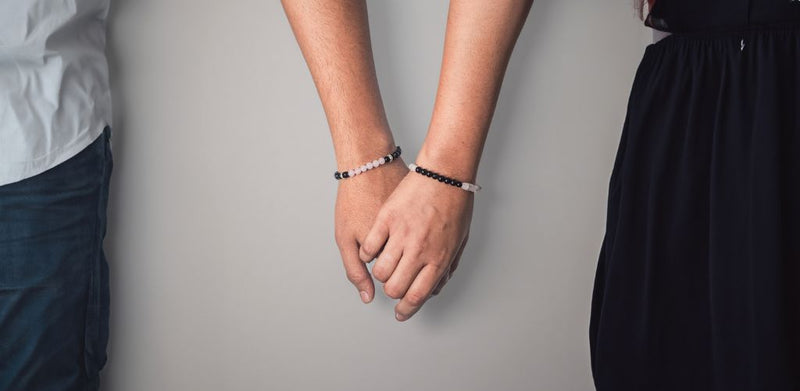
Couple bracelets are matching or complementary pairs worn by two partners as a wearable symbol of love, commitment, and shared intention. Most are stone-bead or metal bands chosen for meaning as much as looks, with Rose Quartz signalling love and Black Tourmaline protection.
Key Takeaways
- Couple bracelets are pairs worn by two partners to mark unity, love, and a shared intention on the wrist.
- Stone choice carries the meaning: Rose Quartz for love, Black Tourmaline for protection, Amethyst for calm.
- Main types are matching, his-and-hers, customisable, and distance pairs for long-distance couples.
- Typical tiers: entry (4mm beads), mid range, and premium for silver-accented sets.
- This is the hub guide; see our spokes on matching, cute, and stylish pairs.
What are couple bracelets?
Couple bracelets are two bracelets designed to be worn as a set by partners, so they read as connected rather than as two unrelated pieces. The pairing is the point. Whether identical, mirrored, or complementary, both bands share a stone, a design cue, or an engraving that ties them together and turns everyday jewellery into a small daily reminder of the relationship.
The idea is old and cross-cultural: giving a partner something to wear as a token of bond. What has changed is the material. Modern couple bracelets often use natural stone beads chosen for their traditional meaning, so the pair carries both a look and an intention.
Think of this guide as the map. It covers meaning, stones, types, sizing, care, gifting, and price in one place, then points you to the right style spoke. If you already know you want mirrored pairs, our matching couple bracelets guide goes deep on that one family.
What do couple bracelets mean?
At their core, couple bracelets stand for unity, commitment, and shared experience. Wearing one is a quiet, visible way of saying two people belong to the same story. The meaning isn't in the price. It sits in the fact that both partners agreed to carry the same small object, and keep carrying it, through ordinary days.
Three layers of meaning tend to show up. First, unity: the matched pair signals a bond a stranger can read at a glance. Second, affection: the bracelet becomes a wearable stand-in for the person you love when they aren't beside you. Third, memory: many couples start wearing a set on a specific day, so the bands hold the date of an anniversary, a first trip, or a wedding.
When a stone is involved, a fourth layer appears: intention. The couple isn't only marking that they're together, they're naming a quality they want between them, most often love or protection. That is what separates a crystal couple bracelet from a plain matching band.
Best stones for couple bracelets
Stone choice is where a couple bracelet earns its meaning. Pick the stone by the quality you want to name in the relationship, not by colour alone. Rose Quartz is the near-universal choice for love, Black Tourmaline for protection, and Amethyst for calm. Most couples land on Rose Quartz, Black Tourmaline, or a deliberate mix of the two.
Rose Quartz is the headline stone. It's a pink variety of quartz, and according to the Gemological Institute of America, rose quartz gets its colour from trace elements in the quartz. Culturally it has long been tied to love and tenderness, which is exactly why it leads this category.
Black Tourmaline is the other favourite. Encyclopaedia Britannica describes tourmaline as a boron silicate mineral occurring in many colours, with the black variety known as schorl. Couples reach for it when the message is grounding and protection rather than softness. Here is how the common choices compare.
| Stone | Traditional intention | Colour | Best for |
|---|---|---|---|
| Rose Quartz | Love, tenderness | Soft pink | The default couple stone |
| Black Tourmaline | Protection, grounding | Black | A steadying, neutral partner stone |
| Amethyst | Calm, clarity | Purple | Couples who want a peaceful cue |
| Amazonite | Calm communication | Blue-green | Partners working on how they talk |
| Carnelian | Warmth, energy | Orange-red | A lively, passionate pairing |
A soft-pink stone like Rose Quartz styles easily and reads instantly as affection, a tone we explore in our pink aura guide. Darker stones are more understated and suit partners who prefer neutral jewellery.
Types of couple bracelets
There are four main types, and knowing them saves you scrolling past the wrong ones. Matching pairs mirror each other. His-and-hers pairs complement without copying. Customisable pairs add names, initials, or dates. Distance pairs are built for couples living apart. Each says something slightly different about how a relationship works.
Matching bracelets are identical or mirrored bands that read as one idea split in two. They suit couples who like carrying the exact same thing. His-and-hers pairs use two stones or bead sizes chosen to complement, honouring difference inside the pairing rather than erasing it.
Customisable bracelets add a personal layer through engraving, an initial charm, or a meaningful date, turning a stock pair into something only the two of you can decode. Distance bracelets are usually identical sets, chosen so both partners wear the same stone across two cities. Our matching couple bracelets guide breaks down the identical, mirrored, and his-and-hers formats in more detail.
How to choose the right couple bracelet
Decide the message first, then the format, then the stone. That order keeps the pair meaningful instead of just matching. If your message is 'we protect each other,' identical Black Tourmaline bands say it cleanly. If it's 'you soften me, I steady you,' a his-and-hers Rose Quartz and Black Tourmaline set fits better. Let the intention lead the shopping.
Next, weigh how each of you actually lives. A partner who works with their hands, plays sport, or wears the band daily needs a sturdier cord and a bead size that won't snag. Someone who saves jewellery for occasions can go more delicate. Matching two lifestyles matters as much as matching two wrists.
Finally, match the style to your priority. Want playful and affordable? Our cute couple bracelets guide leans into sweet, budget-friendly designs. Want it to look good with an outfit? Stylish couples bracelets covers fashion and pairing. Want symbolic sameness? Start with matching. All three overlap, but each leads with a different idea.
Matching bracelets can be made even more meaningful when each person chooses details that reflect their own personality and intentions. A personalised crystal bracelet allows you to select stones, colours, and styles that feel unique while still creating a coordinated look as a pair.
Sizing and materials for two wrists
Matching two people means matching two wrist sizes, so most couple bracelets use a stretch cord or an adjustable band rather than a fixed clasp. That single choice removes the biggest fit headache. Bead diameter is the other lever: 4mm reads delicate and unisex, 6mm to 8mm reads bolder and more masculine. For a true matched look, keep the bead size equal on both wrists and let the elastic handle the difference.
Material decides how long the set lasts and how it feels to wear. Here are the common options and where they sit on price.
- Natural stone beads on elastic: the most common and most affordable base.
- Leather cord: casual and durable, easy for daily wear, often unisex.
- Sterling silver accents or charms: the quality benchmark for metal parts; look for the 925 hallmark.
- Gold or rose gold: the premium end, usually plated at this price tier rather than solid.
If your pair includes metal spacers or a charm, sterling silver is the standard to look for, and our 925 sterling silver guide explains exactly what the hallmark means and why it matters. For beads alone, prioritise a strong cord over a fancy clasp, since the cord is what fails first.
How to care for couple bracelets
Care keeps a shared set looking equal over time, which matters when the whole point is sameness. Stone beads need almost nothing: wipe them with a soft dry cloth and keep them off perfume, water, and sweat. Take them off before a shower, a swim, or the gym. That habit alone prevents most dullness and cord wear.
Silver components need a little more attention because they tarnish. If your bracelets have sterling silver charms or spacers, clean them gently and regularly so the two bands don't drift apart in appearance. Our how to clean sterling silver walkthrough covers the safe methods and what to avoid.
Store the pair together, ideally in the box it came in or a soft pouch, away from direct sunlight and humidity. Even, consistent care on both bracelets is the trick. When one partner babies theirs and the other doesn't, the sameness breaks, and a matched set that no longer matches loses half its meaning.
Gifting couple bracelets
A couple bracelet lands best when it marks a moment, so the bands carry the memory of the day you started wearing them. The occasion gives the shared stone its meaning. Across the year there are natural windows: anniversaries first, then Valentine's Day, a first Diwali together, Raksha Bandhan for some, a wedding, or a move to a new city.
Weddings and engagements are a strong fit, since a matched pair doubles as a keepsake. If you're gifting couples at a function, our wedding return gifts for couples guide covers presentation and budgets for that setting. For a partner who has just bought a car or moved home, a matching stone piece pairs nicely with something like our crystal car charms for the same carry-it-with-you intention.
Presentation makes the gift feel intentional rather than picked up in a hurry. A single box holding both bracelets, with a short handwritten note on why you chose the stone, turns two pieces into one keepsake. Gifting at a distance? Courier early with tracking, and keep one bracelet to wear yourself so you both put them on together, even over a video call.
Couple bracelet tiers
Couple bracelets follow a simple ladder. Entry stone pairs are plain 4mm bead sets, most thoughtful pairs sit in the mid range, and silver-accented or larger-bead sets reach the premium end. You are paying for stone quality, cord strength, and any metalwork, in that order of importance.
Spend where it decides longevity. An entry pair worn every day says more than a delicate premium one saved for occasions and forgotten. Here is a rough guide to what each tier buys.
| Tier | What you typically get | Best for |
|---|---|---|
| Entry | 4mm natural stone beads, stretch cord | Everyday matching pairs, first sets |
| Mid range | 6-8mm beads, mixed stones, small charms | Anniversary and Valentine's gifts |
| Premium | Sterling silver accents, larger beads | Weddings, milestone keepsakes |
Avoid the trap of buying up for its own sake. A genuinely matched, well-made mid-range pair does the job a flashier mismatched set cannot. Match the diameter, pick a sturdy cord, and let the stone carry the meaning.
Common mistakes to avoid
Most disappointments with couple bracelets come from a handful of avoidable errors, and nearly all of them happen at the buying stage. A little planning fixes them. Keep this short checklist in mind before you order a pair.
- Buying two different bead sizes and expecting them to look identical. They won't; match the diameter.
- Picking the stone by colour alone and losing the shared meaning. Decide the intention first.
- Choosing a delicate elastic for someone who wears it daily, so one band stretches out before the other.
- Skipping care, so one bracelet dulls or its silver tarnishes and the pair visibly drifts apart.
- Treating a couple bracelet as a one-off purchase rather than a shared ritual. The wearing is the meaning.
Get those five right and a modest pair holds its meaning for years. The goal was never an expensive set. It's a genuinely matched one that both people actually keep on.
Sources
- Gemological Institute of America (GIA), Quartz description: gia.edu/quartz
- Encyclopaedia Britannica, Tourmaline (mineral): britannica.com/science/tourmaline
- Mindat.org, Quartz mineral data: mindat.org/min-3337.html
Frequently asked questions
About the author


Written by Chetna Sharma, crystal healing practitioner and co-founder of Solacely. Chetna has worked with healing crystals for over a decade and curates Solacely's protective stone collection.