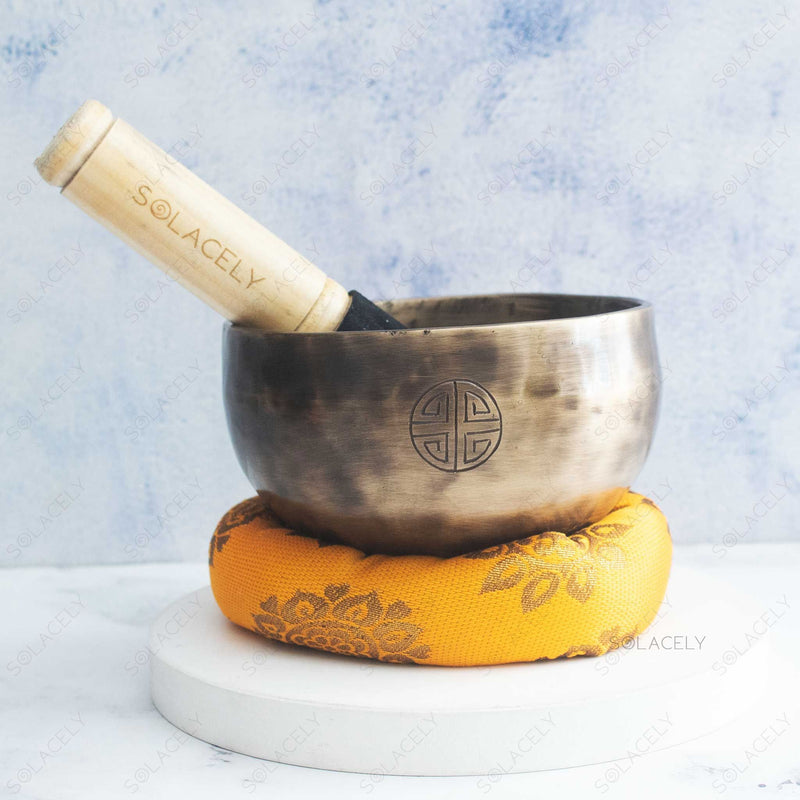
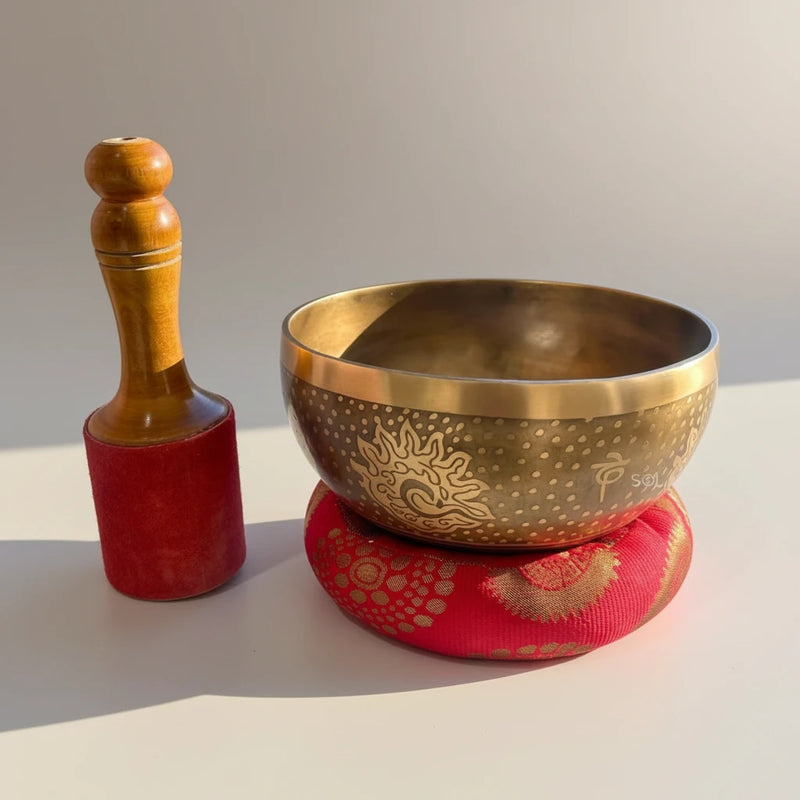
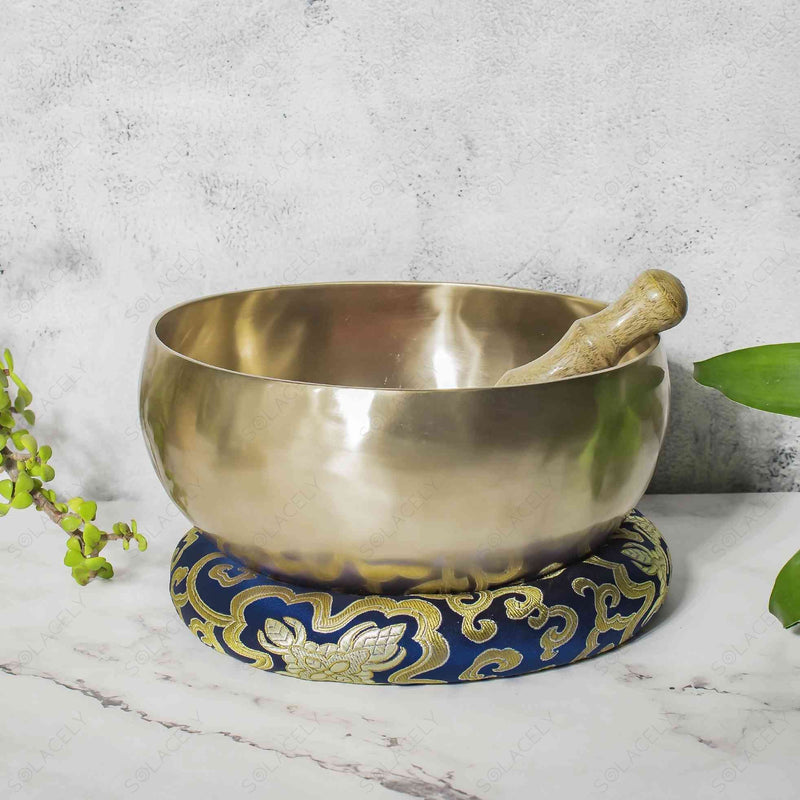
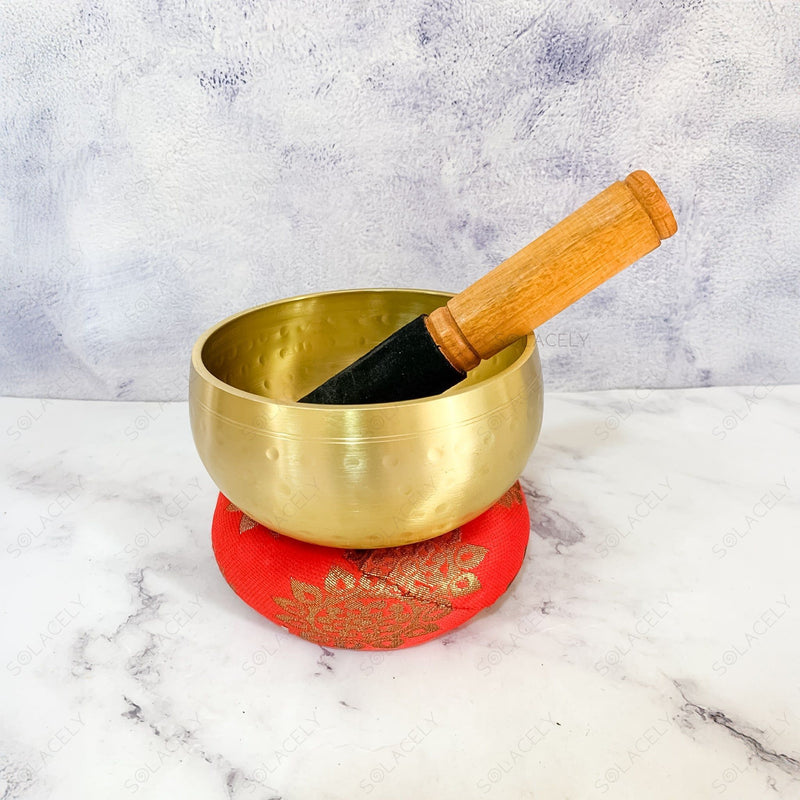
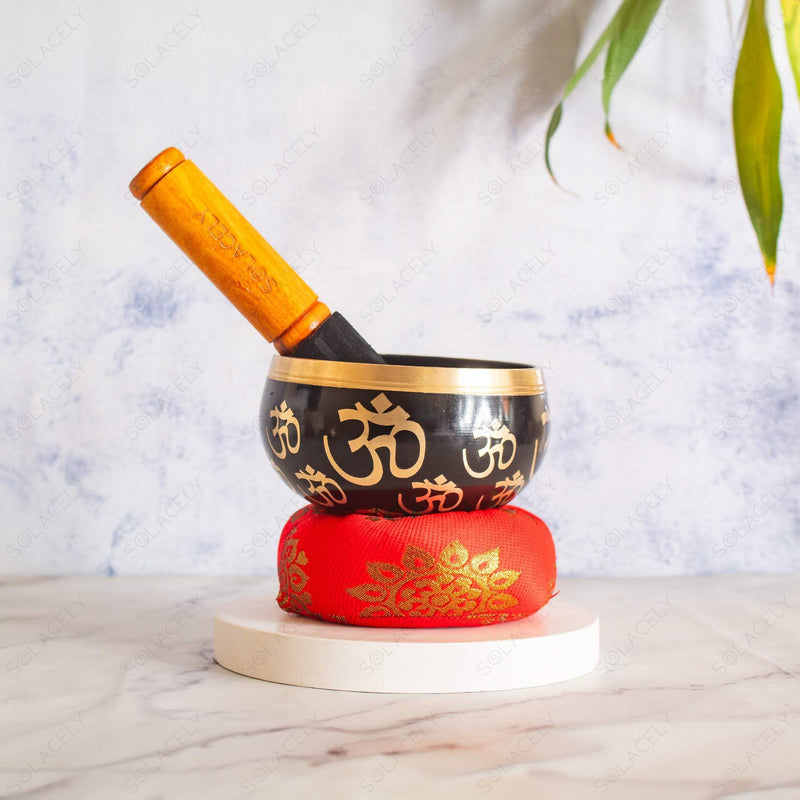
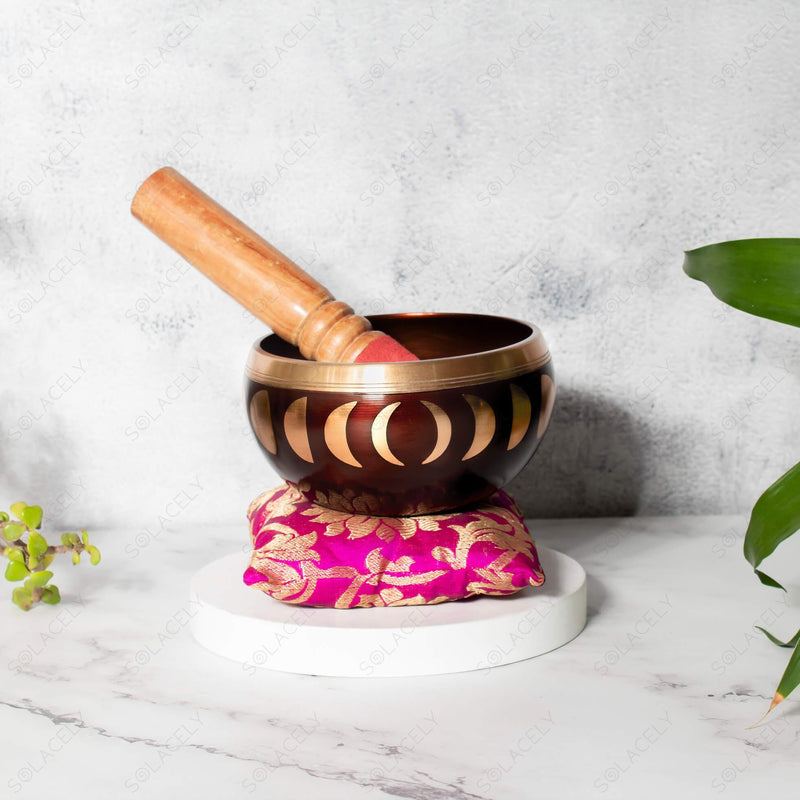
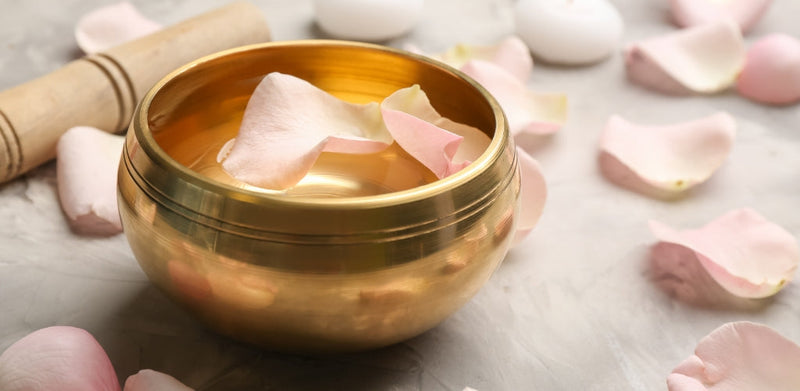
A handmade singing bowl is shaped by hand, a heated bronze disc hammered into form by artisans rather than spun or poured by machine. That hand-forging is what makes each bowl acoustically unique, giving it the layered, wavering overtones that a smooth machine-made bowl can't quite match. The tell-tale signs are visible hammer marks, a slightly uneven rim, and a rich, complex sustain.
Key Takeaways
- A genuine handmade bowl is hand-hammered from a bronze (copper and tin) disc, so no two are identical; machine-made bowls are spun or cast and sound uniform.
- Look for three signs: visible hammer dimples across the body, a slightly uneven rim, and a warm tone that holds several overtones at once instead of one clean note.
- Handmade bowls produce complex, wavering overtones; cast and machine-pressed bowls tend to give a single, cleaner, shorter tone.
- Honest tiers: a small handmade bowl is an entry-level buy, a good mid-size one is mid range, and machine-made bowls sit well below both.
- Sound-bowl relaxation has some early, small-study support for lowered tension and calmer mood, but it's complementary self-care, not medical treatment.
What makes a singing bowl 'handmade'?
A handmade singing bowl is one formed by hand-hammering, artisans heat a bronze disc and beat it into a bowl over many rounds of forging and annealing. That's different from a machine-made bowl, which is either spun on a lathe or cast in a mould. The making method changes the metal's structure, and with it the sound.
The word 'handmade' gets used loosely, so it helps to know the three broad ways a bowl can be made. Hand-hammered bowls are beaten into shape by a team of smiths. Machine-pressed or lathe-spun bowls are formed by machinery from a sheet or blank. Cast bowls are poured as molten metal into a mould and then finished.
Only the first is truly hand-forged in the traditional Himalayan sense. The other two can still be decent instruments, and they're usually cheaper, but they don't carry the irregular, living quality that collectors and sound practitioners look for. If you want the fuller backstory of the craft, our history of the singing bowl traces where this tradition comes from.
How a hand-hammered bowl is actually forged
A hand-hammered bowl starts as a flat bronze disc that a team heats until it glows, then beats into a curved shape over repeated cycles of hammering and reheating. The alloy is bell metal, a bronze of copper and tin. According to Encyclopaedia Britannica, bell metal is a hard bronze containing roughly 20 to 25 percent tin, chosen for its resonance.
The traditional process is physical and communal. Here's how it typically goes, step by step:
- Casting the blank. Molten bronze is poured into a rough disc or 'puck,' the raw material for the bowl.
- Heating (annealing). The disc is heated in a fire until it softens enough to be worked without cracking.
- Hammering. A group of smiths, often three or four, strike the metal in rhythm, slowly coaxing the flat disc upward into a bowl.
- Reheating and repeating. Bronze hardens as it's worked, so the bowl goes back into the fire again and again between rounds of hammering.
- Shaping the rim and walls. The team thins and evens the walls, sets the curve, and finishes the lip.
- Cleaning and finishing. The bowl is filed, cleaned, and sometimes darkened or polished, but the hammer marks are left on.
Each bowl passes through hundreds of hammer blows. That labour is exactly why a genuine handmade bowl costs more than a machine-pressed one, and why its surface tells the story of how it was made.
Why every handmade bowl sounds different
Every handmade bowl sounds different because hand-hammering leaves tiny variations in wall thickness, curve, and metal density that no two bowls share. Those irregularities scatter the bowl's vibration into several overtones at once, producing the wavering, layered tone people describe as 'alive.' A machine-made bowl, being uniform, tends to ring one cleaner note.
Think of it like the difference between a handmade clay cup and a factory-moulded one. The machine version is smoother and more predictable. The handmade one has small asymmetries, and in a musical instrument those asymmetries are the whole point. They're what let the bowl hold a fundamental note plus a shimmer of higher partials.
This is why practitioners often audition several bowls and pick the one that 'speaks' to them. Two handmade bowls of the same size and weight can sound noticeably different. If you're curious about how those tones map to musical notes and chakras, our singing bowl frequencies chart lays out the Hz ranges. For the wider family of instruments, see our overview of sound bowls.
Handmade vs machine-made vs cast: the real differences
The real differences come down to how the metal is worked, which shapes tone, appearance, and price. Handmade bowls are hand-hammered and give complex overtones. Machine-made bowls are spun or pressed and give a cleaner, shorter tone. Cast bowls are poured into moulds, are often heavier, and tend to ring a single dominant note.
None of these is 'fake.' They're different products at different price points. What matters is that you know which one you're buying, so you can judge whether the price is fair. The table below sums up the practical contrasts.
| Feature | Handmade (hand-hammered) | Machine-made (spun/pressed) | Cast (moulded) |
|---|---|---|---|
| How it's formed | Beaten by hand from a heated disc | Spun or pressed by machine from a sheet | Poured molten into a mould |
| Surface | Visible hammer dimples, small irregularities | Smooth, even, often machine-polished | Smooth, sometimes with mould seams |
| Rim | Slightly uneven, hand-finished | Perfectly round | Round, uniform |
| Tone | Complex, wavering, many overtones | Cleaner single note, shorter sustain | One dominant note, can be short |
| Each piece | Unique, no two alike | Near-identical between units | Near-identical between units |
| Typical price tier | Entry level to premium | Budget tier | Varies, often budget |
Use the table as a quick gut-check in a shop. If a 'handmade' bowl looks flawlessly smooth and perfectly round, and it's priced like a machine bowl, be curious about the label.
Tell-tale signs of a genuine handmade bowl
The clearest signs of a genuine handmade bowl are visible on the surface and audible in the tone: irregular hammer marks across the body, a rim that isn't perfectly circular, and a sound that holds several overtones with a long, wavering sustain. Uniform smoothness and a single clean note usually point to machine or cast work.
Run through this quick checklist before you buy:
- Hammer marks. Look for dimples or facets covering the body, sometimes faint, sometimes bold. Genuine hand-hammering leaves them everywhere, not just as a decorative band.
- Uneven rim. Rest the bowl on a flat surface and look along the lip. A hand-finished rim wavers slightly. A machine rim is dead-level.
- Slight asymmetry. Real bowls aren't perfectly round. Tiny differences in shape are normal and expected.
- Complex overtones. Strike it, then run the mallet around the rim. A handmade bowl blooms into layered tones that shift as they sustain. A machine bowl rings cleaner and fades faster.
- Weight and wall. Wall thickness often varies a little around a handmade bowl. Perfectly even walls suggest machining.
- Honest labelling. A trustworthy seller will tell you the metal, the origin, and the method without dodging.
No single sign is proof on its own. Judge the bowl on the whole picture, surface, rim, sound, and the seller's answers together.
How to buy a handmade singing bowl without being cheated
To buy without being cheated, ask direct questions, hear the bowl before you pay, and be wary of 'seven metals' claims and impossibly low prices. A fair seller will happily describe how the bowl was made, let you play it, and price a genuine hand-hammered piece above a machine-made one.
A few myths are worth clearing up. The old tradition says singing bowls contain seven metals, one for each celestial body. That's a lovely idea and part of the cultural story, but most bowls, antique and modern, are simply bronze, a copper and tin alloy, sometimes with small traces of other metals. Treat 'seven metals' as folklore, not a spec sheet, and don't pay a premium purely for that claim.
Watch the price signal too. A hand-forged bowl takes hours of skilled labour, so a 'handmade' bowl priced like a mass-market one deserves a second look. Buy from sellers who show real photos, name the origin, and stand behind the sound. When possible, listen to a recording or video of the exact bowl. For a curated starting point built around tone, a matched singing bowl set can be an easier first purchase than hunting for a single perfect bowl.
Handmade singing bowl price tiers
Handmade singing bowl prices scale with size, tone quality, and craftsmanship. Small hand-hammered bowls sit at the entry level, good mid-size bowls are a clear step up, and large or antique-style collector pieces climb several times higher again. Machine-made bowls undercut all of them, which is exactly why they sound thinner.
Price tracks a few things at once: the diameter and weight, the clarity and length of the tone, the fineness of the hammering, and whether the bowl is new or a genuine older piece. A bigger bowl uses more metal and more labour, so size alone moves the price a lot. The table gives realistic bands to set expectations, not fixed quotes.
| Bowl type | Typical size | Honest price tier |
|---|---|---|
| Machine-made / entry bowl | Small (8-12 cm) | Budget |
| Small handmade | 8-12 cm | Entry level |
| Mid-size handmade | 13-20 cm | Mid range |
| Large handmade | 21 cm and up | Premium |
| Antique / collector handmade | Varies | Collector |
A handmade bowl also makes a thoughtful gift, for a housewarming (griha pravesh), a Diwali hamper, or a wedding, precisely because each one is unique. Set your budget by the occasion, then choose the tone you like within it rather than chasing the biggest bowl.
Caring for your handmade singing bowl
Caring for a handmade bowl is simple: keep it dry, handle the rim gently, clean it rarely and softly, and store it where it won't get knocked. Bronze is durable but the tone lives in the walls and rim, so the main job is protecting the surface and shape rather than polishing it to a shine.
Day to day, wipe the bowl with a soft dry cloth to remove dust and fingerprints. If it needs more, use a barely damp cloth and dry it at once, since standing moisture can spot the metal. Avoid harsh chemical polishes, they can strip the patina that many players actually prize, and never put a singing bowl in a dishwasher.
Handle it with clean, dry hands and set it down on a cushion or ring so the rim isn't jarred. Store it away from edges where it might get bumped. Played and cared for well, a good bronze bowl lasts generations. To get the most from yours, our guide to Tibetan singing bowl meditation walks through striking and rimming technique, and our guide to singing bowl benefits covers how people use the sound day to day.
Do handmade bowls actually sound or work better?
Handmade bowls sound richer to most ears because their irregularities create layered overtones, and many people find that fuller sound more absorbing to sit with. On measurable wellbeing, the evidence is early and modest. Sound-bowl relaxation may ease tension and lift mood a little, but it's gentle complementary care, not a medical treatment.
One small observational study of singing-bowl sound meditation, published in the Journal of Evidence-Based Complementary and Alternative Medicine, reported reductions in tension, anger, and fatigue among participants after a session. It's a preliminary finding from a small group, without a strong control, so it points to relaxation rather than proving any therapeutic effect.
The wider science on why we relax to calming sound is still developing. The U.S. National Center for Complementary and Integrative Health notes that relaxation and meditation practices may help with stress and general wellbeing, while stressing the evidence varies. In short, buy a handmade bowl for its tone and for the ritual of using it, and treat any calm it brings as a welcome bonus. Our broader sound healing guide keeps the same honest line, and the singing bowl hub gathers every guide in one place.
Sources
- Encyclopaedia Britannica, 'Bell metal'
- Goldsby TL, Goldsby ME, McWalters M, Mills PJ, 'Effects of Singing Bowl Sound Meditation on Mood, Tension, and Well-being: An Observational Study,' Journal of Evidence-Based Complementary & Alternative Medicine (2017), PMC5871151
- National Center for Complementary and Integrative Health (NIH), 'Meditation and Mindfulness: What You Need To Know'
Frequently asked questions
About the author


Written by Chetna Sharma, crystal healing practitioner and co-founder of Solacely. Chetna has worked with healing crystals for over a decade and curates Solacely's protective stone collection.