This is the practical guide: where to put citrine, in what form, and what to actually do with it. For what citrine is and what it means, start with our complete citrine guide. This page assumes you already have a piece and want to put it to work.
Key takeaways
- Put citrine where the activity happens, not where it looks best on a shelf.
- One stone, one fixed place. Scattering pieces around dilutes the routine that makes it work.
- The traditional placement is a till, wallet or cash box. That is where the merchant's stone name comes from.
- Format follows purpose: tumble for carrying, bracelet for wearing, tree or cluster for a room.
- Say one specific thing, not a general wish. Specificity is what makes an intention actionable.
- Attach the ritual to a habit you already have, or it will not survive the second week.
The five placements that matter
| Placement | Use it when | Best format |
|---|---|---|
| Desk, in your sightline | Work, a project, output | Tumble or small point |
| Wallet, till or cash box | Pricing, spending, trade | Small tumble or chip |
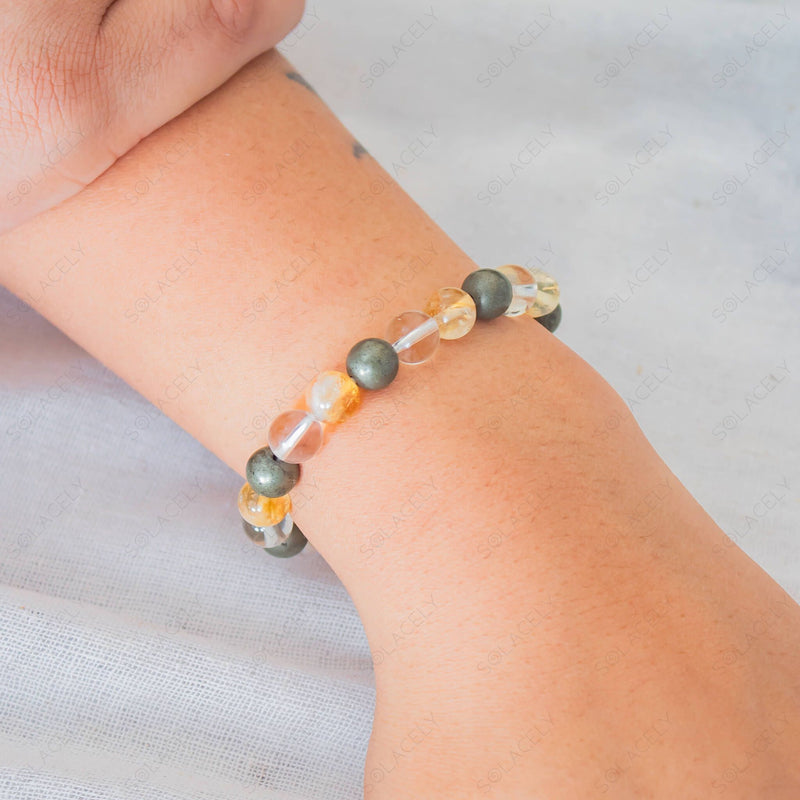
| Worn on the body | How you carry yourself day to day | Bracelet or ring |
| Studio or workbench | Creative output | Cluster or raw piece |
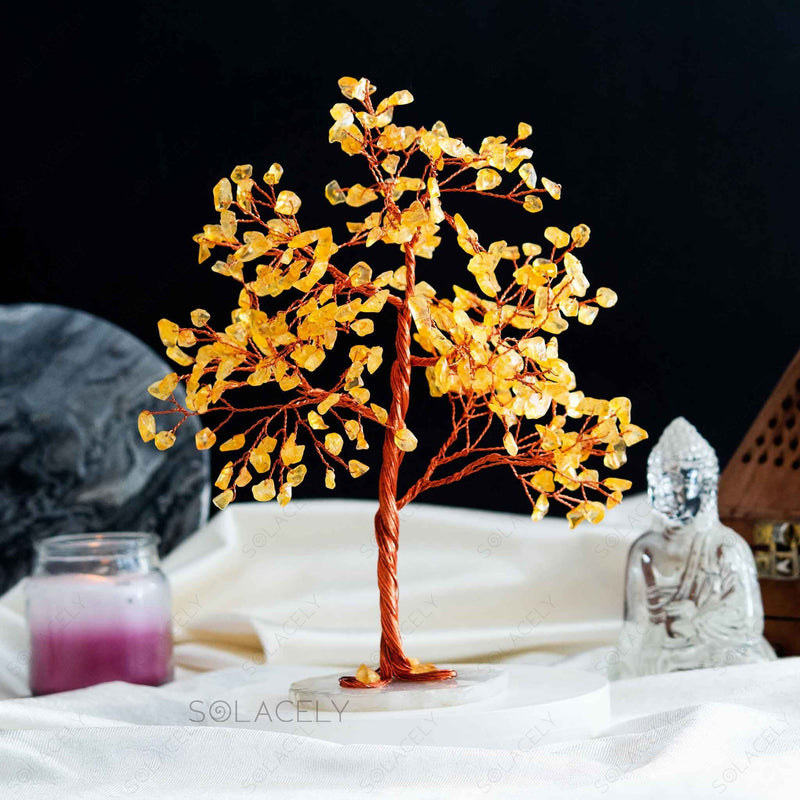
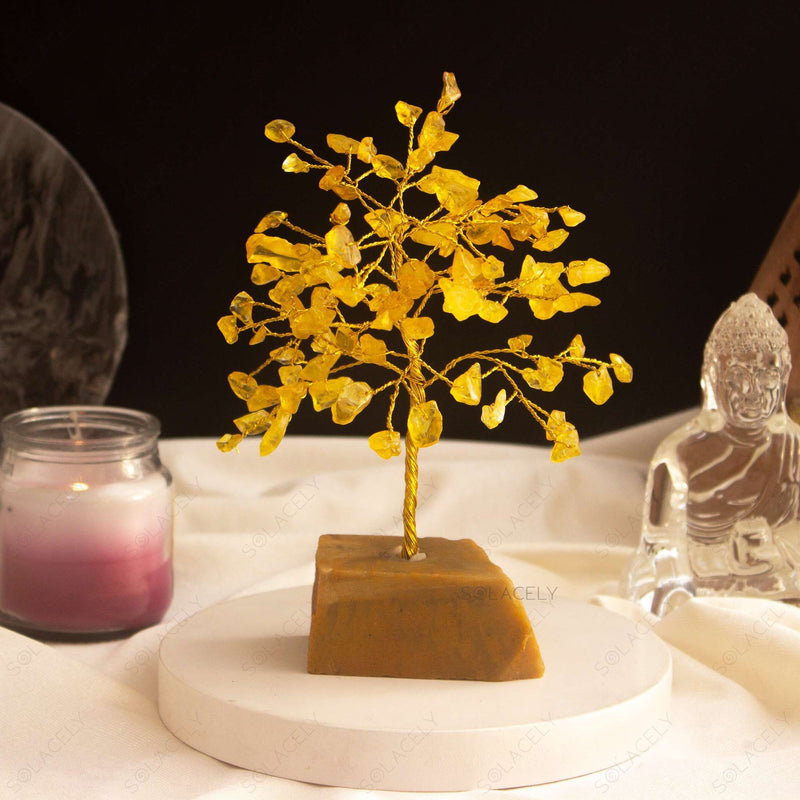
| Kitchen or home workspace | The household's practical life | Citrine tree |
The wallet placement is the oldest and the one with the clearest logic behind it. A golden stone kept where money changes hands is a standing reminder to charge fairly and value the work, which is exactly what the merchant's stone tradition is about.
Choosing a format
Format is not decoration. It decides how often you actually encounter the stone, and that frequency is what the practice runs on.
- Tumbles. The workhorse. Pocket sized, survive being carried, and cheap enough to have one at the desk and one in a bag. Start here.
- Bracelets. Best if you would rather not have to remember to pick anything up. Constant contact, no upkeep. Covered in citrine bracelets.
- Rings. The most visible format, in your eyeline every time you use your hands. Strong choice when the intention is about self worth. See citrine rings.
- Trees and clusters. For a room rather than a person. A citrine tree reads as an ornament first, which is why it works in shared spaces.
- Raw points. Best on a desk or a workbench where they will not be knocked about.
A routine that survives
Most crystal practices fail in the second week for one reason: nothing triggers them. The fix is to attach the new habit to one you already have without thinking.
- Pick one stone and one place. Beside the kettle, on the desk, in the wallet. It lives there.
- Name one specific thing. A rate you will quote. A conversation you will have. A number you will not go below. Not abundance in general.
- Say it once, at the same moment each day. While the kettle boils, or as you put the bracelet on. Repetition matters more than eloquence.
- Use the sight of it as a cue. Each time you notice the stone, ask whether the next thing you do moves toward that named goal.
- Review after a month. If nothing has shifted, make the intention smaller and more concrete.
Ninety seconds a day is enough. Anything longer gets skipped on a busy morning, and a skipped morning becomes a skipped fortnight.
Using citrine in a grid
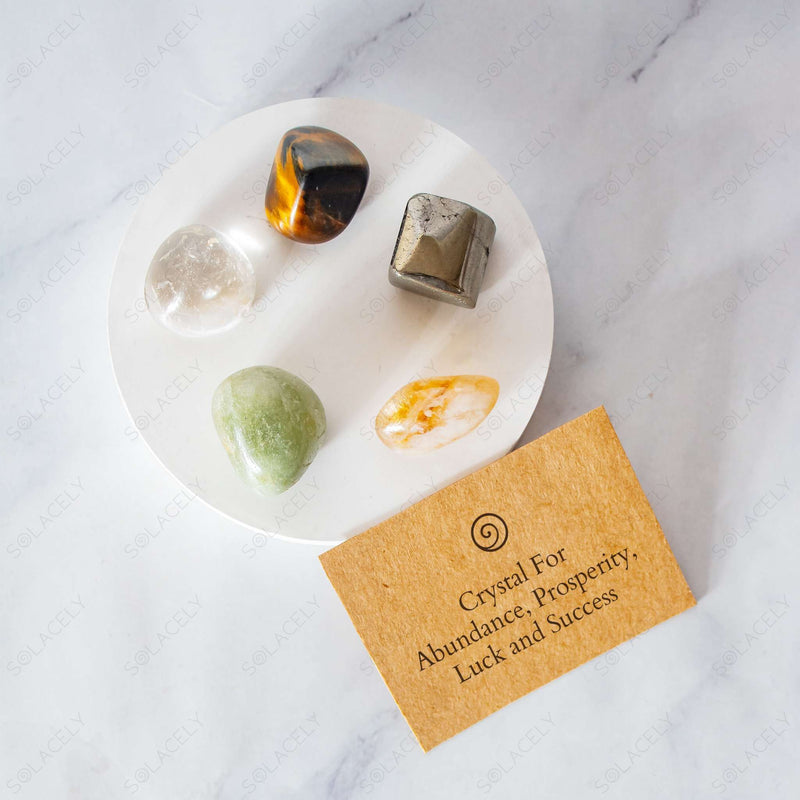
Citrine is commonly placed at the centre of a prosperity grid, with green aventurine and pyrite arranged around it and clear quartz points directing inward. The centre stone carries the intention and the surrounding stones reinforce it.
Keep grids somewhere they will not be disturbed, and give the arrangement a fixed meaning rather than rebuilding it constantly. If you are pairing citrine with a single partner stone instead, our guide to citrine crystal combinations works through the twelve most useful pairings.
Using citrine at work
Discretion decides the placement here. In a relaxed office a small tumble beside the keyboard sits in your sightline and draws no attention. In a formal one, a drawer you open several times a day works nearly as well, since the point is regular contact rather than display.
Before a difficult conversation, hold the stone and take ten slow breaths in the corridor, in for four and out for six. Then leave it alone. Our guide to crystals for good luck in a job covers interviews and pay conversations specifically.
Keeping it in good condition
Warm water, mild soap, a soft brush. Skip steam cleaning, and skip ultrasonic if the stone has any fracture reaching the surface.
The one placement to avoid is a bright windowsill. Sustained direct sun and heat can soften citrine's colour over months, so a shelf or a side table set back from the glass is the better home for a decorative piece. Many practitioners hold that citrine never needs cleansing at all, but if you prefer to, water, sound and smoke are all safe.
The uses described here reflect traditional and cultural crystal practice. They are not medical claims and are not a substitute for professional healthcare, financial or legal advice.
Sources
Written by Chetena Sharma. Reviewed by the Solacely editorial team.
Frequently asked questions
About the author


Written by Chetna Sharma, crystal healing practitioner and co-founder of Solacely. Chetna has worked with healing crystals for over a decade and curates Solacely's protective stone collection.