Yellow crystals run from pale lemon through honey to deep gold, and citrine is the stone most people mean when they ask for one. Yellow jasper, golden tiger's eye, amber, yellow calcite and sunstone fill out the group. They are traditionally kept for confidence, warmth and a steady sense of abundance.
Key takeaways
- Yellow is a colour group rather than one mineral family, so a single shelf can hold quartz, jasper, calcite, feldspar and fossilised resin.
- Citrine is the usual starting point: golden quartz at 7 on the Mohs scale, hard enough for a bracelet you never take off.
- Golden tiger's eye and yellow jasper are the tough, earthy yellows, while yellow calcite and amber are soft and want gentler handling.
- Sunstone brings the flash, with copper or hematite platelets inside a feldspar giving it that glittering shimmer.
- Yellow stones are long associated with the solar plexus chakra, and people reach for them when they want to feel steadier in a room.
- Keep citrine and amber out of long, direct sunlight so the colour stays as warm as the day you chose it.
What makes a crystal yellow?
Yellow in crystals usually comes down to iron. In quartz varieties such as citrine, traces of iron inside the silica framework give the golden colour, and in jaspers and calcites iron oxides do similar work. Because the same element behaves differently in each mineral, no two yellows in the group look quite alike.
Amber is the outlier. It is not a mineral at all but fossilised tree resin, which is why it feels warm and light in the hand rather than cool and dense. Its yellows come from the resin itself and from tiny bubbles trapped inside, and the range runs from clear butterscotch to a cloudy, almost opaque cream.
Sunstone does something different again. It is a feldspar with flat platelets of copper or hematite grown inside it, and those platelets catch the light and throw it back as a metallic glitter called aventurescence. The base colour can be pale gold, peach or a deep orange gold, with the flash sitting over the top of it.
All of this matters when you shop, because saturation shifts with the light source. Most yellow stones look brighter and cleaner in daylight and richer under a lamp. It is worth looking at a piece under the lighting you actually live with before you commit to a shade.
Ten yellow crystals at a glance
The stones below cover almost everything you will meet on a yellow shelf. The hardness column is the practical one: anything at 6 or above copes with daily wear, while the softer stones are happier in a bowl, a pouch or a display piece. Traditional associations are given as they have been handed down.
| Stone | Colour range | Mohs hardness | Traditionally kept for |
|---|---|---|---|
| Citrine | Pale lemon to deep madeira gold | 7 | Abundance, optimism, everyday confidence |
| Yellow jasper | Mustard to sandy gold, often banded | 6.5 to 7 | Steadiness, protection while travelling |
| Golden tiger's eye | Honey and brown with a moving sheen | 6.5 to 7 | Willpower, courage, follow through |
| Amber | Butterscotch to cloudy cream | 2 to 2.5 | Warmth, comfort, lightening a mood |
| Yellow calcite | Soft lemon to buttery gold | 3 | Hope and self belief |
| Sunstone | Pale gold to orange gold with flash | 6 to 6.5 | Leadership, energy, joy |
| Yellow fluorite | Pale straw to strong gold, often zoned | 4 | Focus and clear thinking |
| Yellow aventurine | Warm yellow with a fine glitter | 7 | Creative confidence |
| Honey calcite | Deep amber gold, translucent | 3 | Persistence through a long task |
| Yellow garnet | Cinnamon gold to greenish yellow | 6.5 to 7.5 | Drive and creative action |
Citrine: where most yellow collections start
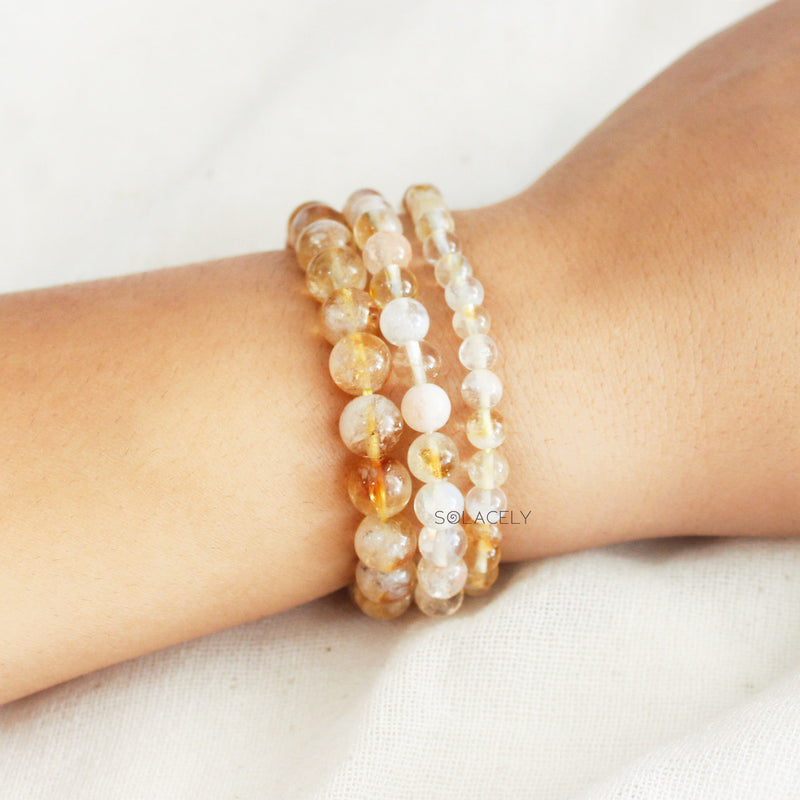
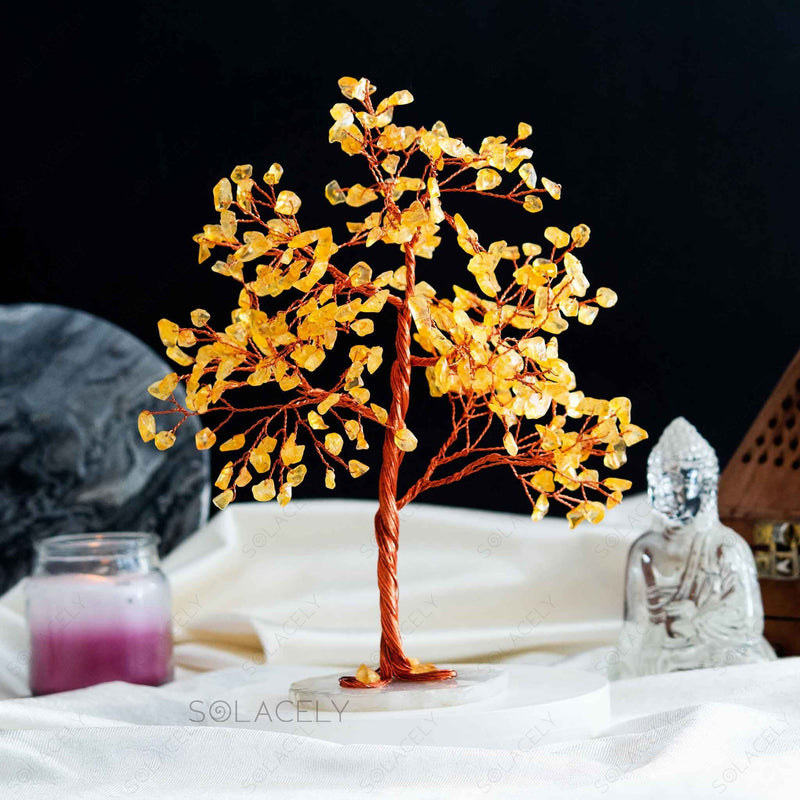
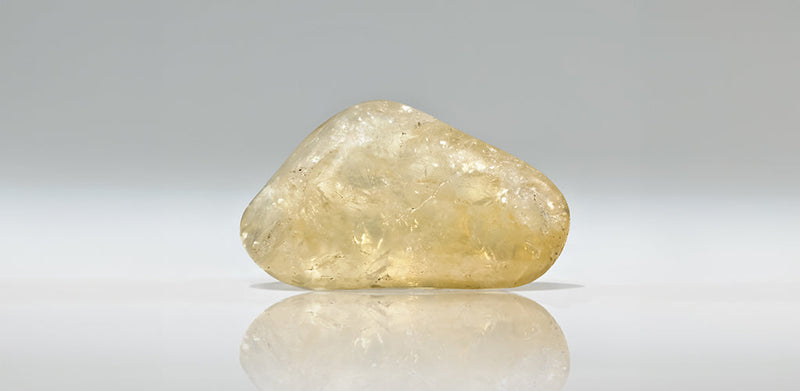
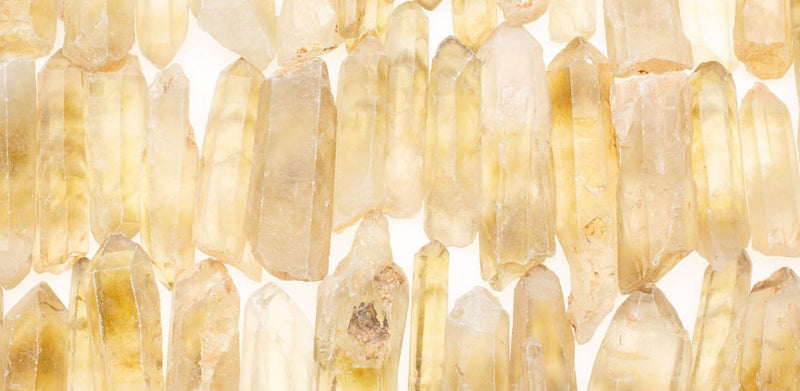
Citrine is the golden variety of quartz and the stone most yellow collections are built around. It sits at 7 on the Mohs scale, so it copes with being worn every day, and it comes in every format from chip bracelets to clusters and towers. The practical question is which shade of yellow you actually want.
Heat brings citrine's golden colour forward, a long established practice used right across the coloured stone trade, and the result is permanent and stable, so the tone you choose in the shop is the tone you will still be looking at years from now. That frees you to shop on looks alone, which is the way gem buyers have always approached colour.
The range is wide. At the pale end you get a champagne or lemon yellow that reads as light and clean, and looks especially good in faceted beads and small silver settings. In the middle sits the classic warm honey that most people picture when they hear the word citrine. At the deep end are the madeira and brandy tones, a rich orange gold that carries real weight in a statement piece.
Gemmological grading pays attention to how evenly that colour runs through a stone, and cutters orient the rough to bring the strongest tone face up. On a beaded bracelet you will usually see a spread of tones across the strand, which many people prefer to a flat, uniform look. Our guide to citrine colour walks through the shades side by side, and the full citrine meaning and properties guide covers formats and pairings in more depth.
Traditionally citrine is the merchant's stone, kept in a till, a wallet or a workspace as a daily cue for abundance and self worth. People reach for it before a pitch, a negotiation or a nervous first day. One care note earns its place: citrine fades in prolonged sun, so a bright windowsill is the one spot to avoid.
Yellow jasper, golden tiger's eye and amber
These three are the warm, earthy end of the yellow family, and they behave very differently from each other. Yellow jasper and golden tiger's eye are both quartz at heart, hard-wearing and happy on a wrist. Amber is fossilised resin, far softer and lighter, and it asks to be treated as jewellery rather than as a tumble stone.
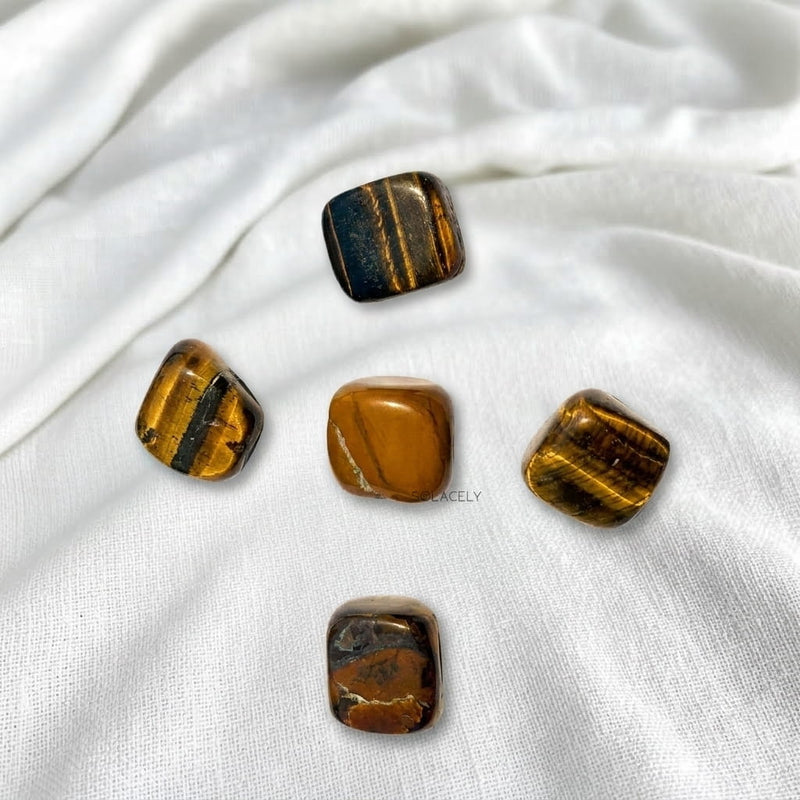
Yellow jasper is a fine grained, opaque quartz coloured by iron oxides, usually mustard to sandy gold with brown or red banding running through it. No two pieces are alike, and the pattern is the whole point of choosing one. It has long been carried as a travelling stone, kept in a bag or a car for a sense of steadiness on the move.
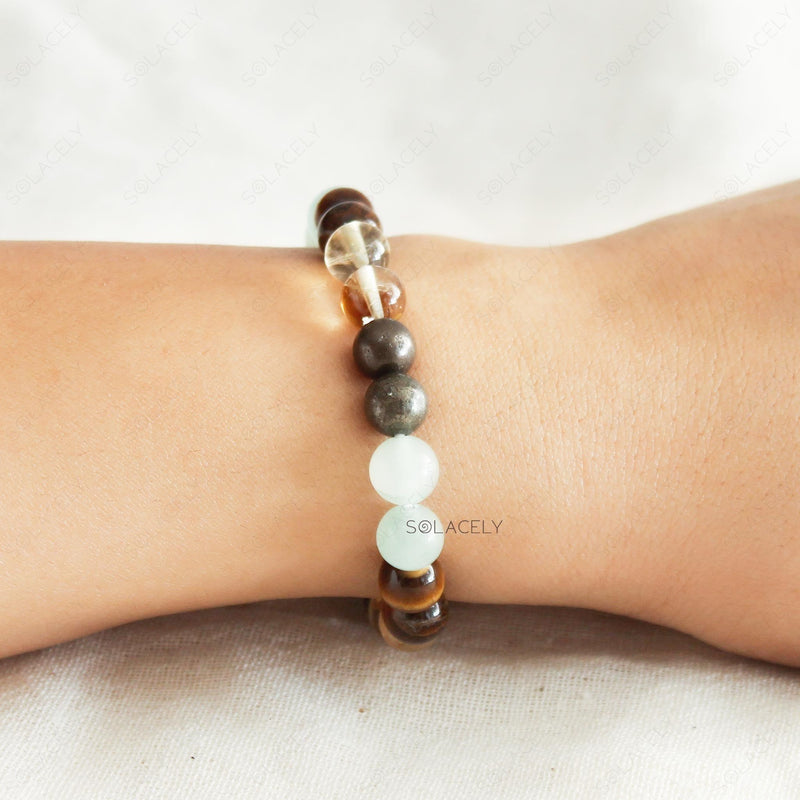
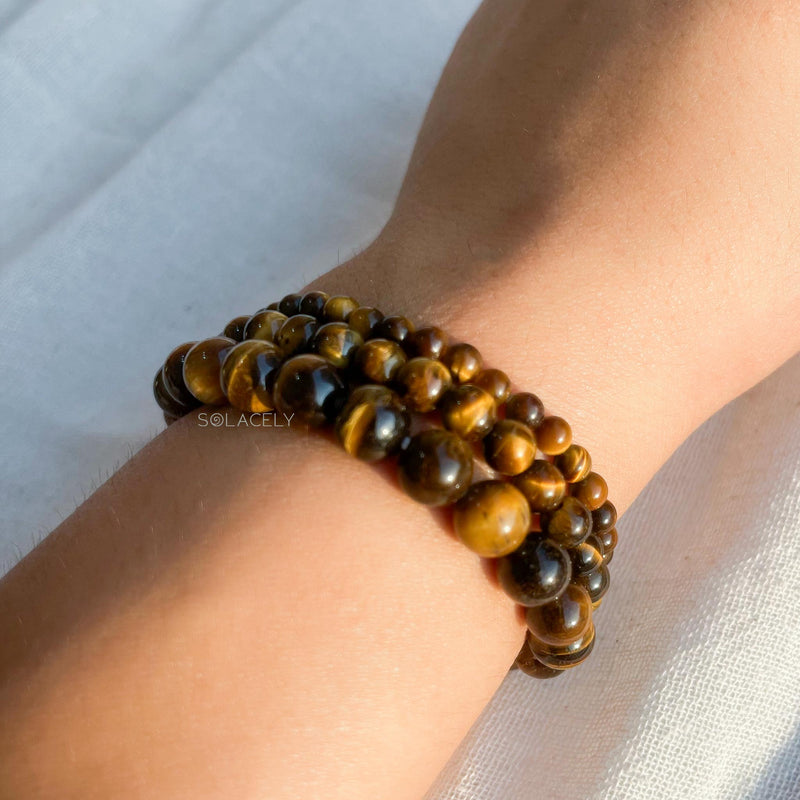
Golden tiger's eye gets its moving band of light from parallel fibres inside the stone, an effect called chatoyancy that shifts as you turn your wrist. That silky, rolling sheen is why it holds up so well in beaded bracelets: even a plain round bead has something happening in it. It is traditionally kept for willpower and nerve, and our tiger's eye guide covers how people wear it.
Amber is the softest thing on the list at roughly 2 to 2.5 on the Mohs scale. Keep it away from perfume, hairspray, solvents and hot water, put it on last when you get dressed, and store it apart from harder beads so it does not pick up scratches. In return you get a stone that warms in the hand almost immediately, which is a large part of why people love it.
Sunstone, calcite and the brighter yellows
The brighter yellows are the ones people pick up for mood rather than for durability. Sunstone carries a metallic flash inside a feldspar. Yellow and honey calcite give a soft, buttery glow. Yellow fluorite adds a clear, almost glassy gold. Only sunstone and yellow aventurine really belong on a wrist you knock about.
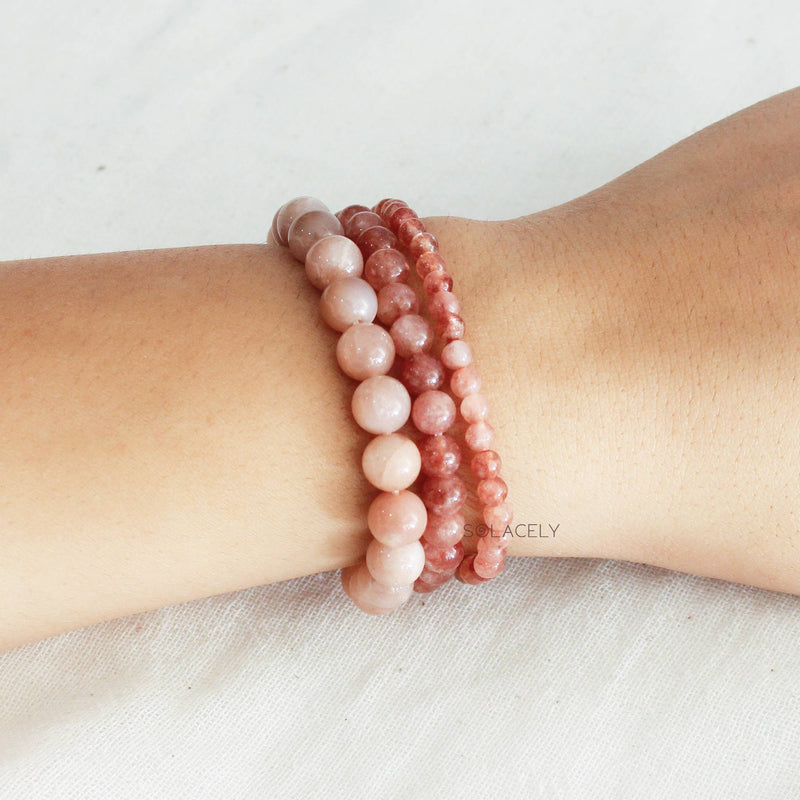
Sunstone sits at roughly 6 to 6.5 on the Mohs scale, which is enough for a bracelet worn with a little care. Its glitter comes from those copper or hematite platelets catching the light, so choose a piece by how the flash moves when you tilt it rather than by the base colour alone. It is long associated with energy, warmth and stepping forward, and the sunstone guide goes further into how people use it.
Yellow calcite and honey calcite are both around 3 on the Mohs scale, soft enough to mark with a fingernail on a fresh edge. Keep them as tumbles in a bowl, on a desk or beside a bed rather than on a bracelet. They are also sensitive to anything acidic, so no vinegar, no lemon and no soaking. A dry cloth is all they need.
Yellow fluorite is softer still at 4, often growing in zoned bands where the chemistry of the fluid changed as the crystal formed. It is a desk stone, traditionally kept for focus and clear thinking, which is why so many people end up with a fluorite cube beside a laptop. Yellow aventurine, at 7, is the one bright yellow that will genuinely take daily wear.
How to use yellow crystals day to day
Most people use yellow crystals in three ways: worn, carried or placed. A bracelet keeps the colour in your eyeline as a daily cue. A tumble in a pocket gives you something to reach for before a meeting. A cluster or tower on a desk or a shelf sets the tone of a workspace without asking anything of you.
Yellow stones are long associated with the solar plexus, the chakra linked with personal power and self assurance. A simple practice is to lie back with the stone resting a little above the navel, breathe slowly for a few minutes, and set one plain intention such as speaking up in tomorrow's meeting. Our guide to crystals for the solar plexus sets out a fuller layout.
For work and money intentions, citrine is the traditional choice: kept in a cash drawer, a purse, a desk drawer or wherever the decisions get made. Tiger's eye suits the follow through, the part where you have to actually do the thing. Pick one stone rather than five, stay with it for a few weeks, and you will get a far clearer sense of whether it suits you.
Caring for yellow crystals so the colour stays warm
Yellow stones want three things: shade, gentle cleaning and separate storage. Citrine and amber can lighten under long spells of direct sunlight, so a sunny windowsill is the one place not to keep them. The soft stones want a dry cloth rather than a scrub, and none of the group should share a box with harder beads.
For cleaning, a soft dry or barely damp cloth handles almost everything. Citrine, yellow jasper, golden tiger's eye and yellow aventurine tolerate a brief rinse in cool water followed by a thorough dry. Calcite, fluorite and amber are better kept away from soaking altogether. Skip ultrasonic cleaners, hot water and household chemicals across the whole group.
Store bracelets flat in individual pouches so the softer pieces are not rubbing against the harder ones. If you like to cleanse your stones, moonlight, sound and dry salt on a plate beside the piece are all gentle options that avoid water. Keep small beads, chips and tumbles well away from young children, as they are a choking and strangulation risk.
Crystals are kept for comfort, focus and ritual. They are not a medical treatment and nothing here is medical, psychological or financial advice. If you have a health concern, please speak to a qualified professional and carry on with any care that has already been arranged for you. Keep small stones, beads and chips away from babies, young children and pets, as they present a choking and strangulation risk.
Sources
Written by Chetena Sharma. Reviewed by the Solacely editorial team.
Frequently asked questions
About the author


Written by Chetna Sharma, crystal healing practitioner and co-founder of Solacely. Chetna has worked with healing crystals for over a decade and curates Solacely's protective stone collection.