This guide covers twenty crystals worth owning, grouped by the chakra each one is traditionally assigned to. For every stone you get its colour, mineral family, Mohs hardness, the qualities it is traditionally worn for, and the format that suits it best. Start at the chakra you care about.
Key takeaways
- Chakra colour matching is the simplest rule in crystal practice: red and black stones go to the root, blue to the throat, violet and white to the crown.
- Hardness decides format. Anything under 5 on the Mohs scale, such as selenite at 2, belongs on a shelf rather than on a wrist.
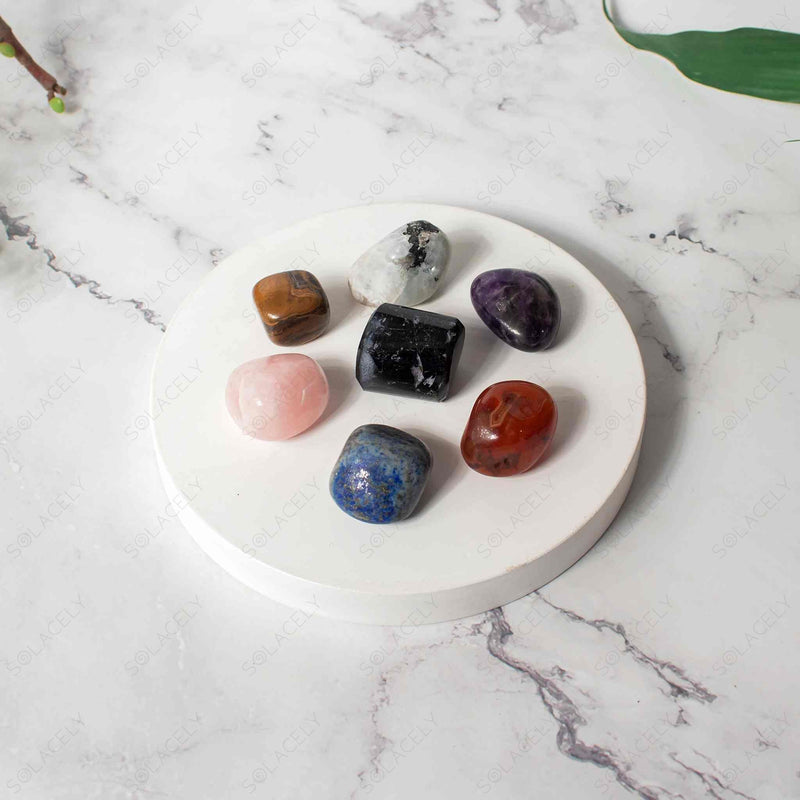
- Four stones cover most beginner needs: clear quartz, amethyst, rose quartz and black tourmaline.
- Quartz varieties dominate this list because quartz is hard, affordable and available in more colours than any other family.
- Chakras come from Indian tantric and yogic tradition, and the stone associations here follow that lineage rather than any single modern author.
What does a crystal's chakra association actually mean?
It means a stone has been assigned to one of seven energy centres described in Indian tantric and yogic tradition, usually on the basis of colour. The assignments have been refined over generations of practice, which is why you will see small variations between guides and teachers.
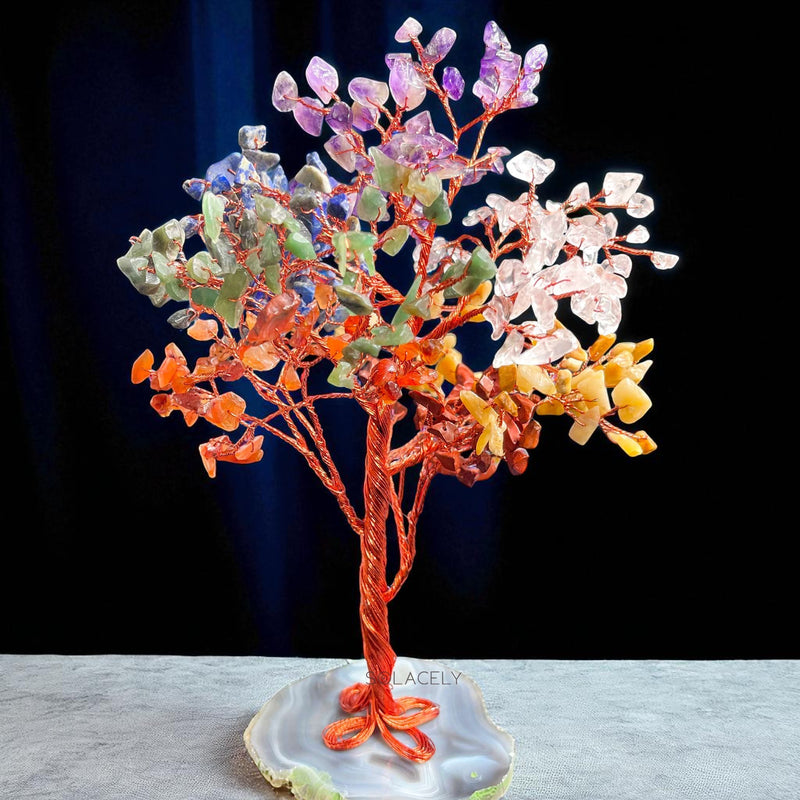
The seven centres run from the base of the spine to the top of the head: root, sacral, solar plexus, heart, throat, third eye and crown. Each carries a colour, a body region and a set of themes. Red and black at the root for stability, orange at the sacral for creativity, yellow at the solar plexus for confidence, green and pink at the heart, blue at the throat, indigo at the third eye, violet or white at the crown.
Colour matching is why the system caught on. It is easy to remember and it makes a shelf of stones legible at a glance. If you want the framework itself rather than the stones, start with our beginner's guide to the chakra system and the companion piece on chakra stones for beginners.
One practical note before the list. Colour is the fastest way in, but it is not the only one. Weight, temperature and how a stone sits in the hand matter just as much once you are choosing between two pieces at the same centre.
Root chakra crystals
The root centre sits at the base of the spine and covers steadiness, safety and feeling present in your own body. Its stones are the dark, dense, weighty ones, and three carry most of the tradition: black tourmaline, smoky quartz and hematite.
Black tourmaline
Black, opaque, mineral name schorl, a complex boron silicate at 7 to 7.5 on the Mohs scale. It is the standard grounding and protection stone in modern practice, traditionally kept by a front door, a desk or a bedside. Hard enough for daily bracelets and rough enough in raw form to look good on a shelf. It is the piece people most often keep beside a desk or a router when screens are the thing draining them. Fuller detail sits in our black tourmaline meaning and properties guide.
Smoky quartz
Translucent brown to grey quartz, 7 on Mohs, coloured by natural irradiation of the crystal structure. It is the gentler grounding stone, chosen when black tourmaline feels too heavy. Traditionally worn for letting go of a mood you have been carrying around, and popular with people who want a protective stone that still reads as jewellery. Read the smoky quartz guide for its full range.
Hematite
Iron oxide, metallic silver grey, 5 to 6.5 on Mohs and noticeably heavy in the hand. That weight is the whole point. Hematite is traditionally worn when you want to feel physically anchored, and the polished beads are cool to the touch, which some people find settling on its own. Rub it on unglazed porcelain and it leaves a rust red streak, which is where the name comes from: haima, the Greek for blood. See our hematite guide.
Sacral chakra crystals
The sacral centre sits below the navel and covers creativity, appetite and emotional flow. Its stones run warm and luminous rather than dark, and the three worked with most are carnelian, sunstone and moonstone.
Carnelian
Orange to deep red chalcedony, a microcrystalline quartz at 6.5 to 7. The classic sacral stone, traditionally used for motivation, creative momentum and physical energy. Carnelian was carved into Roman and Egyptian seals because it takes engraving well and does not stick to hot wax. Warm, cheap and hard wearing, which makes it a sensible early purchase. More in our carnelian guide.
Sunstone
Orange feldspar with a glittery aventurescent flash from iron oxide platelets, 6 to 6.5 on Mohs. Traditionally worn for confidence, warmth and starting things. Feldspar has cleavage, so keep it to bracelets and pendants rather than rings. It is the traditional Leo stone, which is why it turns up on so many late summer birthstone lists. Our sunstone guide covers the sourcing and the Oregon copper bearing variety.
Moonstone
Feldspar again, 6 to 6.5, showing adularescence: a soft blue or white sheen that appears to float below the surface. Traditionally the stone of new beginnings, cycles and intuition, and an official June birthstone alongside pearl and alexandrite. Handle it gently, since the same cleavage issue applies. See our moonstone guide.
Solar plexus chakra crystals
The solar plexus is the confidence and personal power centre, sitting just above the navel, and its colour is yellow or gold. Three stones dominate: citrine for optimism and abundance, tiger's eye for nerve, and pyrite for the visual symbolism of gold. All three are hard enough for daily wear.
Citrine
Yellow to amber quartz, 7 on Mohs, nicknamed the merchant's stone because traders kept it in cash boxes. Traditionally worn for optimism, self assurance and money intentions. Warming quartz to draw out its golden tones is a long established and entirely stable practice across the coloured stone trade, so choose the depth of gold you actually want to wear. See our citrine guide.
Tiger's eye
Golden brown quartz at 6.5 to 7 with a moving band of light called chatoyancy, produced by parallel fibrous structures inside the stone. Traditionally the courage and clear headed decision making stone, worn when a choice needs making rather than avoiding. Tumbles show the shimmer better than small beads do. Detail in our tiger's eye guide.
Pyrite
Iron sulfide, brassy metallic gold, 6 to 6.5 on Mohs and the original fool's gold. Traditionally used as a wealth and confidence stone, largely because it looks like money. Pyrite can oxidise in damp air and it is heavier than it looks, so keep it dry and store it away from softer stones. Our pyrite guide covers cubes, clusters and jewellery.
Heart chakra crystals
The heart centre takes pink and green stones, and it is where most people begin. Rose quartz handles love and self compassion, green aventurine handles luck and opportunity, and green jade brings the older Chinese tradition of harmony and steadiness. All three are quartz or quartz hard.
Rose quartz
Pale pink quartz at 7 on Mohs, usually translucent to cloudy rather than clear. It is the best known heart stone in the world and the one most often given as a gift, traditionally associated with self compassion, gentleness and repairing relationships. Colour runs from the palest blush to a deep rose, so pick the tone you are drawn to. Read the rose quartz guide for the full picture.
Green aventurine
Green quartz at 6.5 to 7, its sparkle caused by inclusions of fuchsite mica. Known in practice as the stone of opportunity and traditionally carried into interviews, pitches and anything requiring luck plus nerve. It is inexpensive, durable and forgiving, which makes it one of the better first purchases. More in our green aventurine guide.
Green jade
Two different minerals share the jade name: nephrite at 6 to 6.5 and jadeite at 6.5 to 7. Both are exceptionally tough, which is why jade was carved into tools and ritual objects across China and Mesoamerica for thousands of years. Traditionally worn for harmony, longevity and steady good fortune. See our green jade guide.
Throat chakra crystals
The throat centre covers speech, honesty and saying the thing you have been putting off. Its stones are blue, and two lead the tradition: lapis lazuli as the historic headline choice and amazonite as the softer everyday option.
Lapis lazuli
Deep blue rock, not a single mineral, made mostly of lazurite with pyrite flecks and white calcite, at 5 to 6 on Mohs. It was ground into ultramarine pigment for Renaissance painting and buried with Egyptian royalty. Traditionally worn for truthfulness and clear speech. Softer than quartz, so it scratches. Our lapis lazuli guide has the history.
Amazonite
Blue green microcline feldspar at 6 to 6.5, often streaked with white. Traditionally the stone of saying difficult things calmly, which is why it sits between the throat and heart in most systems. Its colour comes from trace lead in the crystal structure. Same feldspar caution: avoid rings and knocks. Read the amazonite guide.
Third eye chakra crystals
The third eye sits between the brows and covers intuition, perception and clear thinking. Its stones are indigo and deep blue, and three are worked with most often: labradorite for its flash, sodalite for logic and fluorite for order.
Labradorite
Grey feldspar at 6 to 6.5 that flashes blue, green and gold when tilted, an effect called labradorescence caused by light scattering off internal layers. Traditionally the stone of intuition, transformation and protecting your own energy. The flash only shows at certain angles, so buy in person or from photos taken in motion. See our labradorite guide.
Sodalite
Deep blue with white calcite veining, a sodium aluminium silicate at 5.5 to 6 on Mohs. Traditionally the stone of logic and structured thinking, which is why it turns up on so many study desks alongside the softer intuition stones. Softer than quartz, so keep it away from keys and harder beads. Our sodalite guide covers its range.
Fluorite
Calcium fluoride, banded through purple, green and blue, and the mineral that gave fluorescence its name. Traditionally kept for tidying scattered thought, which is why the rainbow banded pieces sell so well as desk stones. At 4 on Mohs it is soft, so it belongs on a surface rather than on a wrist, and it prefers shade to a sunny sill.
Crown chakra crystals
Violet, white and clear stones sit at the crown, the centre associated with perspective and spiritual connection. Amethyst is the traditional headline stone, clear quartz is the all purpose one, and selenite is the cleansing stone that everything else gets rested on.
Amethyst
Purple quartz at 7 on Mohs, coloured by iron and natural irradiation. It is the February birthstone and the most widely owned metaphysical stone after clear quartz. Traditionally used for calm, sleep and clear thinking. Strong sunlight can fade the colour over months, so keep it off a sunny windowsill. Our amethyst guide covers geodes, points and jewellery.
Clear quartz
Colourless silicon dioxide at 7 on Mohs, the reference point for the whole scale's midpoint and the most abundant crystal on this list. Called the master healer because tradition treats it as amplifying whatever intention you set with it, which also makes it the standard filler bead in mixed bracelets. If you buy one crystal, buy this one. See our clear quartz guide.
Selenite
Translucent white gypsum at just 2 on Mohs, soft enough to scratch with a fingernail and water soluble over time. Traditionally used to cleanse other stones, which is why selenite plates and sticks sell so well. Never wash it, never wear it as a ring, and keep it away from damp. Read our selenite guide before buying.
How to choose, use and care for these crystals
Pick by intention first and hardness second. Anything below 5 on the Mohs hardness scale should stay on a shelf. Anything at 6.5 or above can be worn daily. That single rule prevents most of the disappointment new buyers run into.
| Mohs range | Examples from this guide | Best format |
|---|---|---|
| 2 to 4 | Selenite | Shelf or altar only, keep dry |
| 5 to 6 | Lapis lazuli, hematite | Pendants, occasional wear |
| 6 to 6.5 | Sunstone, moonstone, amazonite, labradorite, pyrite | Bracelets and pendants, avoid rings |
| 6.5 to 7.5 | Quartz family, jade, black tourmaline | Daily wear including rings |
Cleaning is mostly common sense. Warm water and mild soap suit the quartz family. Skip water entirely for selenite. Skip ultrasonic cleaners for everything on this list, since heat and vibration are unkind to cleavage and to included stones. Store pieces separately so the harder ones do not scratch the softer ones.
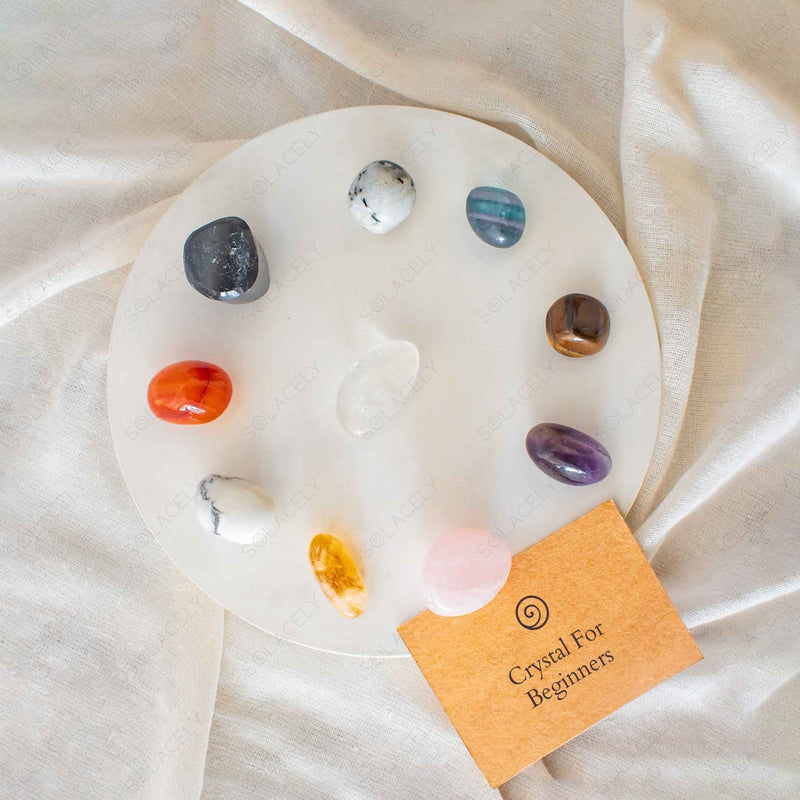
For energetic cleansing, moonlight, incense smoke, sound or a rest on a selenite plate all work and none of them damage the stone. Direct sunlight is the one to be careful with, because amethyst, rose quartz and fluorite all fade with prolonged exposure. If you are still building a first set, our crystals for beginners guide narrows the twenty above down to a starter five and covers how to build the set out from there.
The properties described here reflect traditional and cultural belief around crystals and chakras. They are not medical claims and are not a substitute for professional healthcare. If you are managing a health concern, speak to a qualified practitioner.
Sources
Written by Chetena Sharma. Reviewed by the Solacely editorial team.
Frequently asked questions
About the author


Written by Chetna Sharma, crystal healing practitioner and co-founder of Solacely. Chetna has worked with healing crystals for over a decade and curates Solacely's protective stone collection.