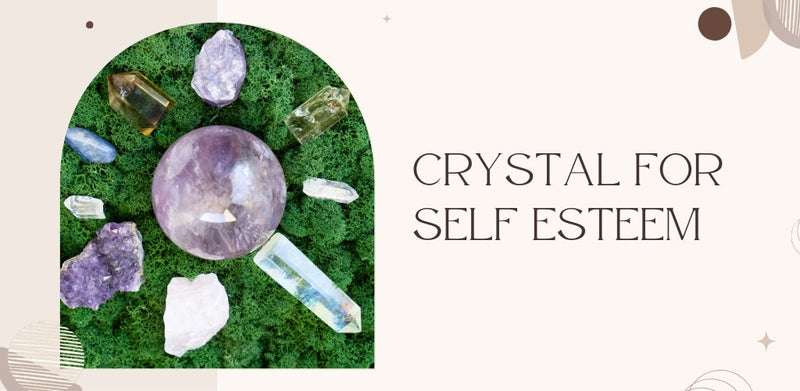
The crystals most associated with beauty are rose quartz, amethyst, jade and clear quartz, used for self-image and ritual rather than for skin itself. Rolled or held cold, they can feel soothing on the face, and the mild depuffing effect comes from temperature and massage, not the mineral.
Key takeaways
- Rose quartz, amethyst, jade and clear quartz are the four stones most used in beauty practice.
- Any depuffing from a roller or gua sha tool comes from cold and lymphatic massage, not from the crystal.
- For a skin condition, a dermatologist is the right first call. The stones here are for the ritual around it.
- Keep tools clean and dry. Porous or cracked stone against skin is a hygiene problem.
- The genuine benefit is a consistent, unhurried few minutes. That is worth having, and worth describing accurately.
What crystals can and cannot do for skin
It is worth being clear about what this practice is for. Crystal beauty tools belong to the ritual side of a skincare routine: the few unhurried minutes, the cool stone, the attention paid to your own face. Anything to do with acne, pigmentation or ageing sits with a dermatologist, and the two go together perfectly well.
What a chilled stone tool can do is real but modest. Cold causes brief vasoconstriction, which temporarily reduces the look of puffiness, and gentle stroking toward the lymph nodes can help move fluid that has pooled overnight. Both effects come from temperature and mechanics. A stainless steel roller kept in the fridge would do the same.
For anything clinical, the American Academy of Dermatology publishes plain, evidence based guidance on daily skin care. That is the right source for skin. Crystals belong in the ritual column. If you came here about a specific skin concern, crystals for skin issues takes the same honest line.
Rose quartz: the beauty stone
Rose quartz is the stone most associated with beauty, and the association is about self-regard rather than appearance. In crystal tradition it is a stone of self-compassion, which is a considerably more useful thing to attach to a mirror than a promise about pores.
According to the Gemological Institute of America, rose quartz owes its pink to microscopic inclusions distributed through the quartz, which is why the colour is milky rather than transparent. That cloudiness is normal and not a quality flaw.
As a material for face tools it is sensible: quartz at 7 on the Mohs scale, non porous when properly polished, and it holds cold well. Just check any roller for hairline cracks before use, since a cracked stone traps residue. The rose quartz guide covers the stone in full.
Amethyst, jade and clear quartz
Amethyst is the calming choice, used in evening routines where the point is winding down rather than waking up. The GIA describes it as the purple variety of quartz, coloured by iron and natural irradiation. One practical note: prolonged sunlight fades it, so do not leave an amethyst tool on a bright windowsill.
Jade is the traditional material for face tools, and it has been used in Chinese practice for centuries. It is exceptionally tough, which is why it survives being dropped. Be aware that a large share of inexpensive jade rollers are serpentine, aventurine quartz or dyed marble rather than nephrite or jadeite. None of those are harmful, but they are not jade.
Clear quartz is the neutral option, used where no particular intention is attached. It is the cheapest of the four, since quartz is among the most abundant minerals on Earth, and it performs identically as a tool.
How to actually use a crystal face tool
| Step | What to do | Why |
|---|---|---|
| Prepare | Chill the tool in the fridge, not the freezer | Freezing risks cracking the stone and is too cold for skin |
| Apply slip | Use a facial oil or serum first | Dragging on dry skin causes irritation and tugging |
| Direction | Centre outward, jaw and neck downward | Follows lymphatic drainage toward the nodes |
| Pressure | Light. No red marks afterwards | Heavy pressure irritates skin and does not help drainage |
| Duration | Three to five minutes | Longer adds nothing measurable |
| After | Wash the tool, dry fully | Oil and skin residue on stone is a hygiene issue |
Do not use a roller or gua sha over active acne, broken skin, sunburn, or during a flare of eczema or rosacea. Rolling over inflamed skin spreads bacteria and worsens irritation. That is the one genuine risk in this practice and it is easily avoided.
Hygiene, which matters more than the stone
A face tool touches skin daily and sits in a bathroom, which is a warm, damp environment. Wash it after every use with warm water and a mild soap, then dry it completely with a clean cloth. Do not leave it wet on a shelf.
Check the fittings on rollers. Cheap ones use glue and a metal frame that can loosen, and a wobbling stone with a gap around the axle collects residue you cannot reach. If a roller starts to rattle, replace it rather than continuing.
Avoid porous or soft stones for anything touching skin. Selenite dissolves in water and cannot be washed. Malachite contains copper and should not be used as a face tool at all. Check the Mohs hardness scale and stick to the quartz family and jade.
The honest case for a crystal beauty ritual
Here is what actually holds up. A few minutes each morning or evening, unhurried, with your hands on your own face and no screen in front of you, is a genuinely pleasant thing that most people do not otherwise make time for. The stone is what gets you to do it consistently.
Consistency is also where the small physical effects live. The depuffing is temporary, but a morning routine you keep produces it every morning, which is more than an occasional expensive treatment does. That is a fair claim and it does not need dressing up.
Where crystals genuinely earn the label beauty is on the self-image side, which is not a small thing. A daily practice framed around care rather than correction changes how the mirror feels. If that is what you are after, crystals for self-esteem and crystals for confidence address it directly.
Roller or gua sha, and which to buy
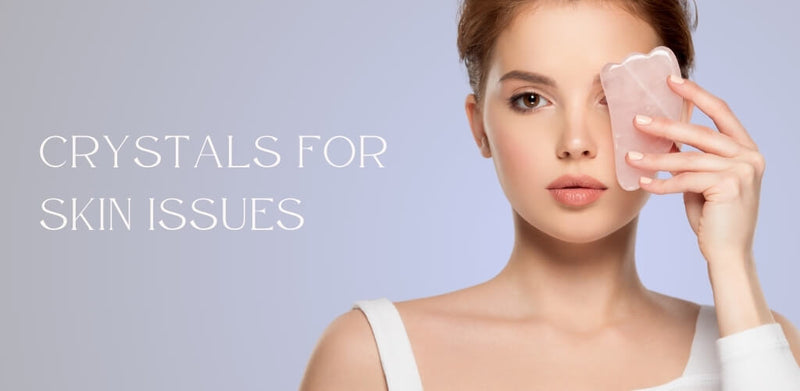
The two tools do different things and people often buy the wrong one. A roller is for light, repetitive strokes and is the easier of the two to use badly without consequence. A gua sha stone is held flat against the skin at a shallow angle and covers more area per stroke, which suits the jaw and neck better.
If you are choosing one, start with the roller. It is more forgiving of technique, harder to press too hard with, and the double ended versions include a small head that reaches under the eyes where puffiness is most visible in the morning.
Skip anything sold as a set of six stones in assorted materials. Those are almost always the cheapest available minerals in whatever colours photograph well, and several of them are unsuitable against skin. One well made tool in a hard, non porous stone outperforms a drawer of them.
Beauty stones worn rather than used
Not everything in this category is a tool. Plenty of people keep the stones as jewellery instead, which sidesteps the hygiene question entirely and works just as well for the self-image side of the practice.
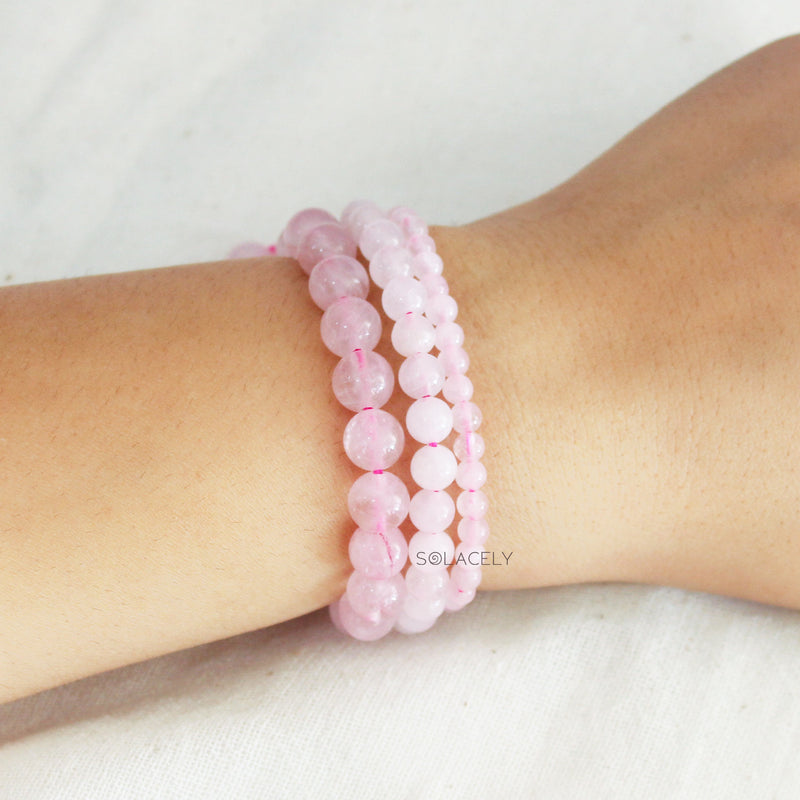
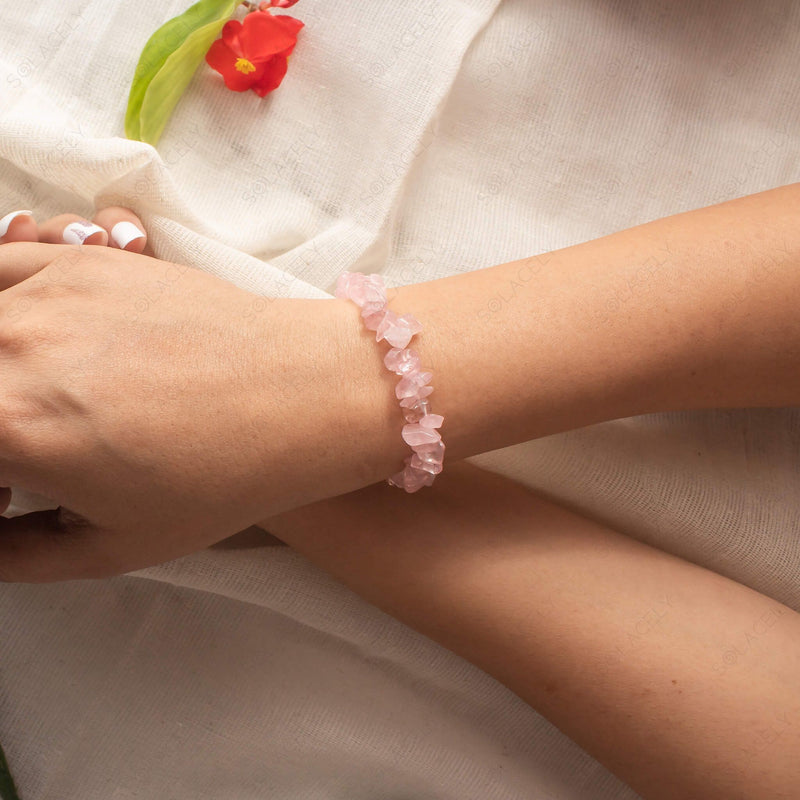
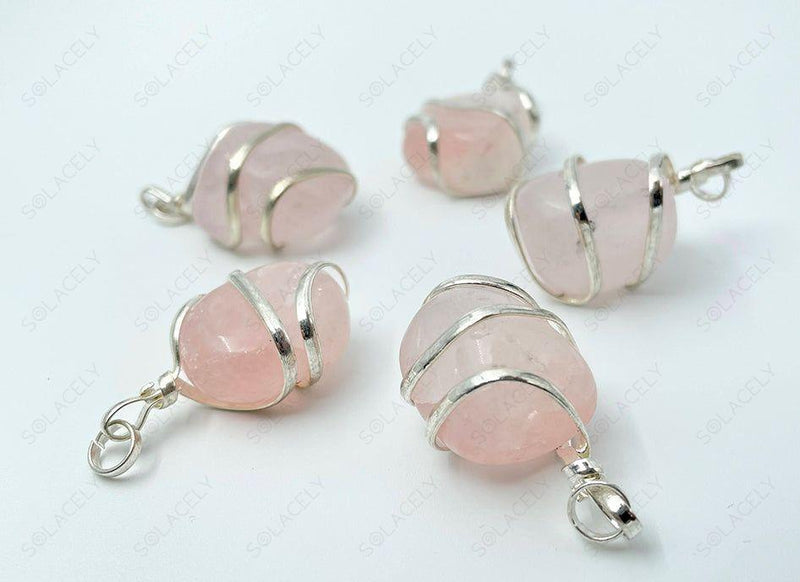
A rose quartz pendant worn daily does the same reminding job as a roller used inconsistently, and it does not need washing after every use. For anyone whose bathroom shelf is already crowded, that is the more realistic version of the practice. The stone that gets used is always the one that fits the life you actually have.
The properties described here reflect traditional and cultural belief around crystals. They are offered for reflection and wellbeing and are not medical advice, a diagnosis, or a treatment for any skin condition. Do not use face tools over broken, inflamed, or infected skin. For any persistent skin concern, please see a GP or a dermatologist.
Sources
- Gemological Institute of America, Rose Quartz Description
- Gemological Institute of America, Amethyst Description
Written by Chetena Sharma. Reviewed by the Solacely editorial team.
Frequently asked questions
About the author


Written by Chetna Sharma, crystal healing practitioner and co-founder of Solacely. Chetna has worked with healing crystals for over a decade and curates Solacely's protective stone collection.