In Vedic astrology Mercury's stone is emerald, known as panna, with green tourmaline, peridot and green onyx as the accepted substitutes. It is traditionally set in gold and worn on the little finger of the right hand, begun on a Wednesday. Mercury governs speech, trade and quick thinking.
Key takeaways
- Mercury's primary stone is emerald (panna). Green tourmaline and peridot are the usual substitutes.
- Emerald is the green variety of beryl, rated 7.5 to 8 on the Mohs scale but brittle because it is heavily included.
- Almost all emerald is fracture filled with oil or resin, which is standard practice and must never meet an ultrasonic cleaner.
- Tradition sets it in gold, worn on the little finger of the right hand, first put on during a Wednesday morning.
- Astrological gemstone practice is traditional belief, not medical, educational or financial advice.
Which crystals are associated with Mercury?
Emerald leads. Vedic astrology assigns each of the nine grahas a primary gemstone, and Mercury's is panna. Where emerald is out of reach, practitioners substitute green tourmaline or peridot, and modern crystal practice adds green aventurine and green onyx for the same associations.
Mercury, or Budh, governs speech, intellect, commerce, negotiation and quick adaptation in this system. Its stone is therefore recommended most often to students, writers, traders, and anyone whose work depends on communicating clearly under pressure.
The shared logic across every substitute is the green colour rather than any shared chemistry. The neighbouring planetary guides, crystals for Jupiter and crystals for the Moon, follow exactly the same structure.
Emerald: what it is and why it is fragile
Emerald is the green variety of beryl, coloured by trace chromium or vanadium. According to the Gemological Institute of America, emerald sits at 7.5 to 8 on the Mohs scale, which sounds durable, and yet emerald is among the more fragile gemstones you can buy.
The reason is inclusions. Emerald almost always contains internal fractures and mineral inclusions, so characteristic that the trade calls the pattern jardin, French for garden. Those fractures reduce toughness considerably, which is why an emerald can chip from a knock that a sapphire would shrug off.
It is also why nearly all emerald on the market is treated. Fractures reaching the surface are filled with oil or polymer resin to improve clarity. This is accepted, expected and disclosed, but it has one hard consequence: never put an emerald in an ultrasonic or steam cleaner, because the treatment can be driven out and the stone can crack.
Peridot and green tourmaline as substitutes
Peridot is the most practical substitute and the one most people end up wearing. The GIA notes that peridot is the gem variety of olivine, forms deep in the mantle, and occurs in a single colour, always green. At 6.5 to 7 on the Mohs scale it is softer than emerald but far less fractured.
Its own weakness is chemical rather than structural: peridot reacts badly to acids, so perfume, hairspray and sweat left on it overnight will dull the polish over time. Put jewellery on last, after cosmetics have dried. The peridot guide covers it fully.
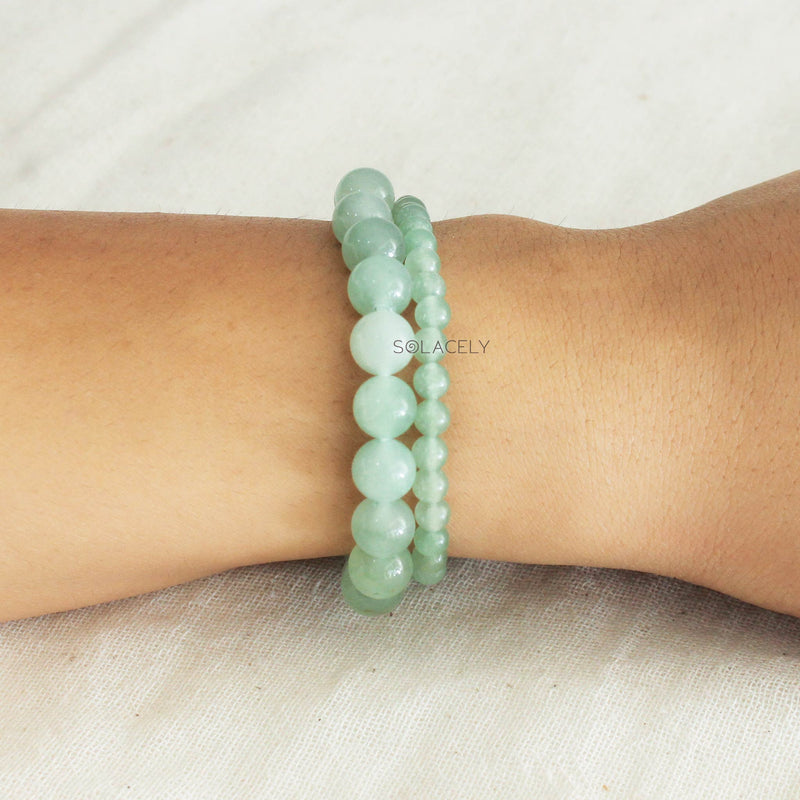
Green tourmaline is the third option, harder at 7 to 7.5 and generally cleaner than emerald, which makes it a genuinely sensible choice for a ring worn daily. Green aventurine, a quartz with mica inclusions, is the cheapest option and the one most often used by people treating the system as symbolism rather than prescription.
How Mercury's stone is traditionally worn
| Element | Traditional prescription | Practical note |
|---|---|---|
| Primary stone | Emerald (panna) | Expensive, brittle, almost always fracture filled |
| Substitutes | Green tourmaline, peridot, green onyx | Tourmaline is the most durable of the three |
| Metal | Gold | Open-backed setting so the stone meets skin |
| Finger | Little finger, right hand | The finger associated with Mercury |
| Day to begin | Wednesday morning | Wednesday is Budhvar, Mercury's day |
| Hardness | Emerald 7.5 to 8, tourmaline 7 to 7.5, peridot 6.5 to 7 | Hardness alone understates emerald's fragility |
Weight recommendations vary widely between practitioners, which is a fair indication of how much of this is convention. What stays consistent across sources is the metal, the finger and the day.
What the tradition claims Mercury's stone does
Budh is associated with the faculties that make communication work: clarity of speech, mental quickness, the ability to hold a negotiation, and adaptability. Emerald is therefore recommended most often to people whose difficulty is expression rather than confidence.
The recurring profiles are students preparing for exams, people in sales or trade, anyone whose work involves writing or presenting, and those recovering from a period where they felt scattered or unable to think clearly. That is a coherent tradition, worth reporting accurately without inflating it.
The usual caveat applies with full force here, because emerald is expensive. Vedic gemstone practice traditionally follows a birth chart reading, and practitioners generally advise against wearing a strong planetary stone chosen from an article. If you take the system seriously, get the chart read before spending. If you are treating it as symbolism, green aventurine costs a fraction and carries the same colour association.
Buying emerald without getting caught out
Emerald is one of the most treated and most imitated stones on the market, so a few checks matter more here than almost anywhere else.
- Ask what the filling is. Cedarwood oil is traditional and reversible. Polymer resin is more stable but should be disclosed and priced differently.
- Ask for an independent report. Not the seller's own certificate. Colombian, Zambian and Brazilian origins all carry different price expectations.
- Expect inclusions. They are the natural signature of emerald, and a good seller will describe a stone's clarity and origin plainly.
- Never accept ultrasonic cleaning. If a jeweller offers it for an emerald, that tells you what you need to know about their expertise.
Lab grown emerald is chemically identical, entirely legitimate, and worth a fraction of natural material. It must be disclosed, and for anyone treating the stone as a remedy rather than an investment it is a perfectly reasonable buy.
Care
Emerald needs the gentlest handling of any stone in the planetary set. Warm water, mild soap, a soft cloth, dried carefully. No ultrasonic, no steam, no sudden temperature change, and no prolonged soaking, since soaking can leach oil treatment out over time.
Peridot takes similar care for a different reason, being acid sensitive rather than fracture prone. Green tourmaline and aventurine are the two easy ones, both taking ordinary washing without complaint.
Store them apart from harder stones. Check anything new against the Mohs hardness scale before it shares a pouch with an emerald, since a scratched emerald cannot simply be repolished the way a sapphire can. If you are building the whole planetary set, crystals for the Sun covers the warm end of it, and green aventurine is the budget green option.
The properties described here reflect traditional Vedic and cultural belief around gemstones. They are not medical claims, educational guidance, or financial advice. Astrological gemstone recommendations vary between practitioners and are not verifiable by scientific method. Consult a qualified professional for any health, legal, or financial decision.
Sources
- Gemological Institute of America, Emerald Description
- Gemological Institute of America, Peridot Description
Written by Chetena Sharma. Reviewed by the Solacely editorial team.
Frequently asked questions
About the author


Written by Chetna Sharma, crystal healing practitioner and co-founder of Solacely. Chetna has worked with healing crystals for over a decade and curates Solacely's protective stone collection.