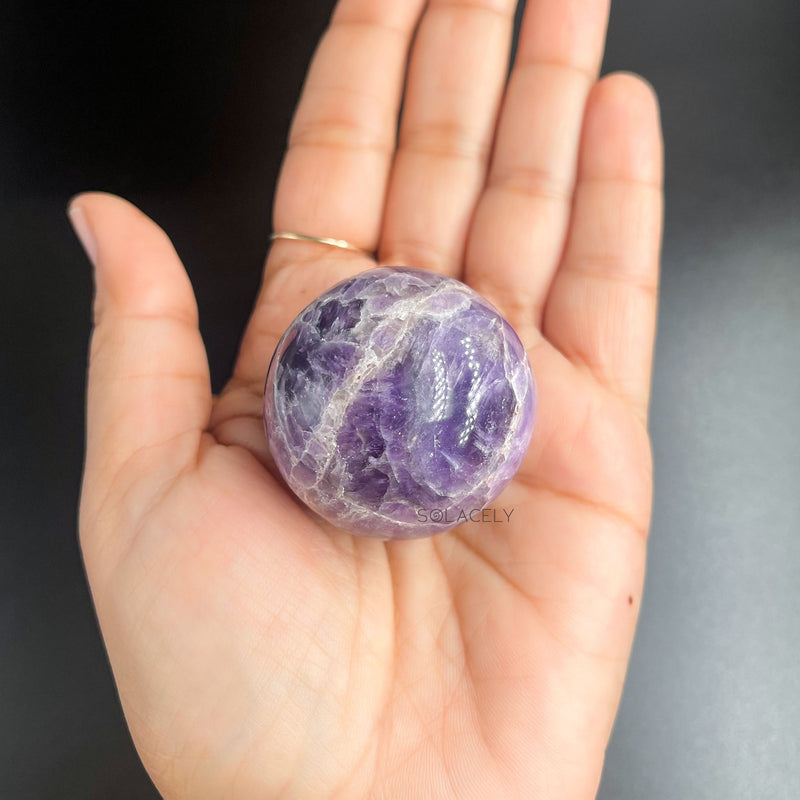
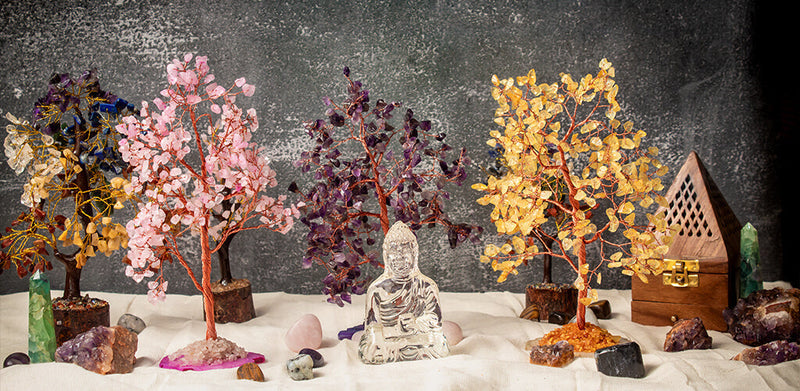
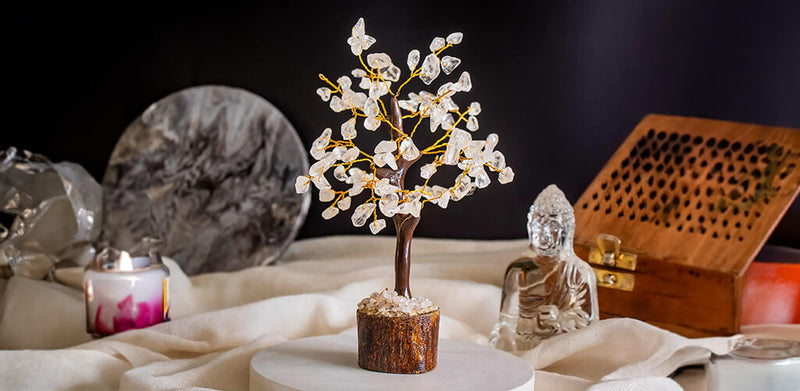
Crystal tree decor means styling a wire-branch sculpture, hung with polished stone 'leaves,' as a deliberate accent in your home. You place it by room, pair it with your existing palette and materials, size it to the surface, and refresh the styling for festivals like Diwali. Think of it as decor first, intention second.
Key Takeaways
- A crystal tree is a decorative sculpture: 50–300 tumbled stone chips wired onto metal branches, set in an agate or crystal base, usually 12–25 cm tall.
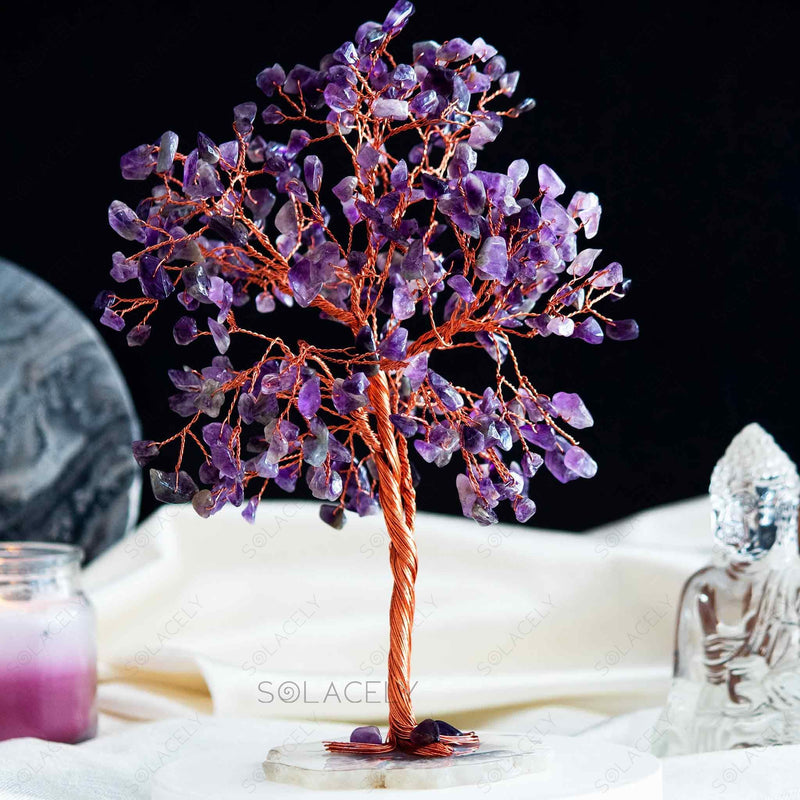
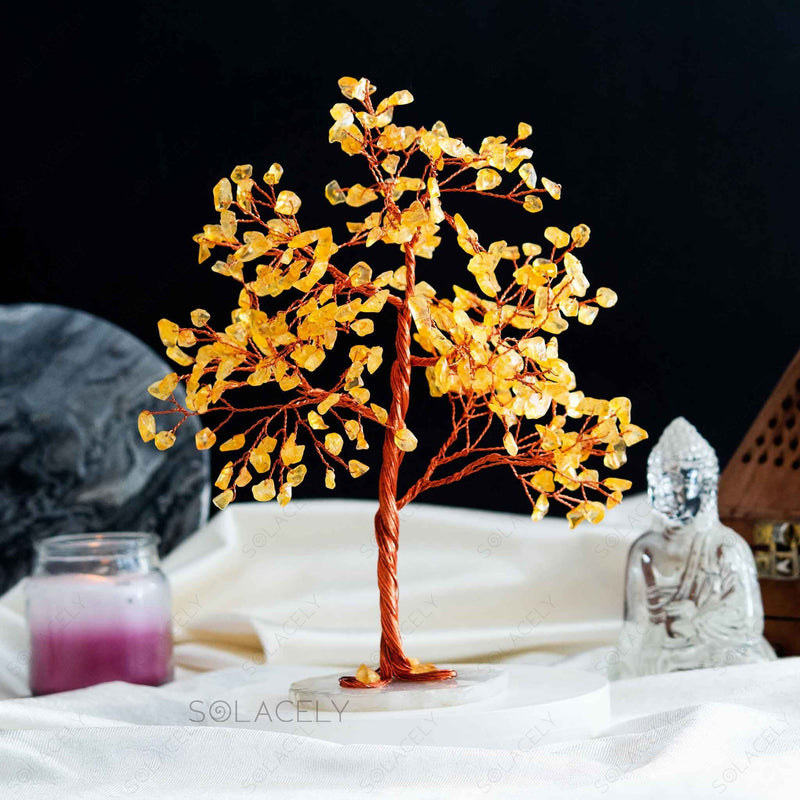
- Style by room: amethyst in bedrooms, citrine or pyrite in the study or near the cash box, rose quartz in living spaces, clear quartz anywhere bright.
- In Vastu tradition the north and east are linked to prosperity and light, which is why many homes place a tree on a north or east-facing console.
- Match metal to your hardware: gold-tone wire with brass and warm wood, silver-tone with chrome and cooler greys.
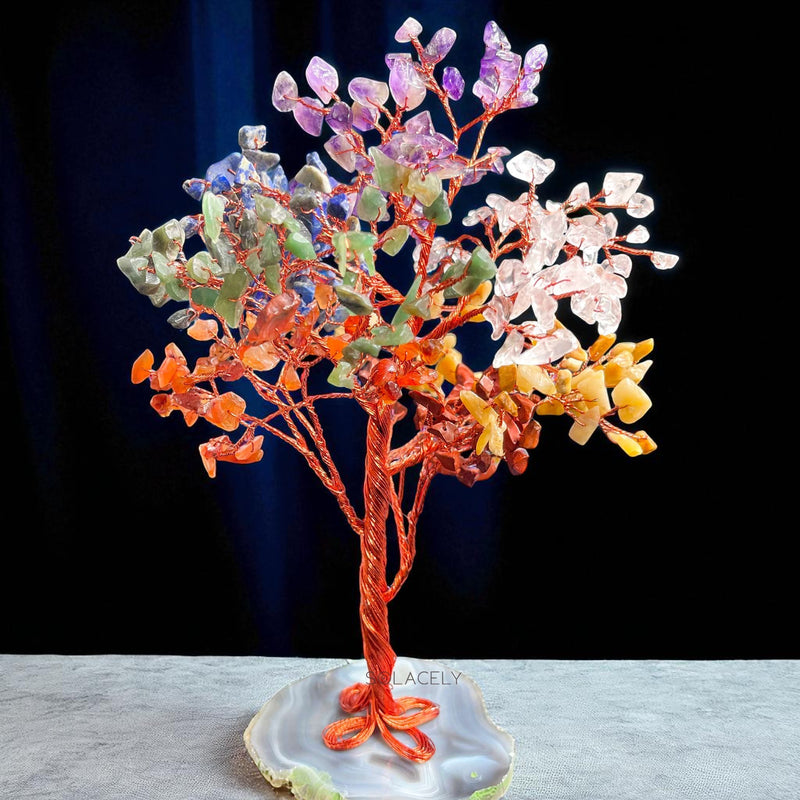
- Typical tiers: Entry (small desk piece), Mid range (premium centrepiece), Premium (large statement or seven-chakra tree).
What Is Crystal Tree Decor?
Crystal tree decor is the practice of using a gemstone tree as a styled accent object, not just a shelf filler. The tree itself is a handmade sculpture: dozens of polished stone chips are threaded onto twisted wire branches and anchored in a base, usually a slice of agate. Each one is unique because natural stone varies in colour and size.
The decor part is what you do around it. A good stylist treats the tree like any other accent, a vase, a candle, a small sculpture, and asks three questions: where does it sit, what sits near it, and what does it echo in the room? Colour, height, and material all matter. A deep purple amethyst tree reads as calm and premium; a bright citrine tree reads as warm and celebratory.
If you want the full catalogue of stone types before you style, our guide to crystal trees is the hub, and crystal tree sculptures explains the wirework and craftsmanship. This page is about styling what you already own.
Room-by-Room Placement
Match the stone's colour and mood to the room's job. Bedrooms suit soft purples and pinks; workspaces suit warm yellows and metallics; living rooms suit whatever anchors your palette. A 15–20 cm tree fits most side tables and consoles, while a desk needs something under 15 cm so it doesn't crowd your working space.
Here is a quick placement map most homes can follow:
| Room | Best stone tree | Why it works there |
|---|---|---|
| Bedroom | Amethyst | Cool purple reads as restful; suits a bedside or dresser |
| Study / home office | Citrine or pyrite | Warm, energising colour; traditionally linked to focus and abundance |
| Living room | Rose quartz or clear quartz | Soft pink or bright clear tones pair with most sofas and rugs |
| Entryway / foyer | Seven-chakra or clear quartz | A colourful conversation piece that catches light at the door |
| Pooja or meditation corner | Amethyst or clear quartz | Calm, quiet tones that don't compete with the space |
For the bedroom specifically, an amethyst tree is the go-to because purple is the easiest colour to live with at close range. For a desk, a citrine tree brings warmth to a workspace that's often all screen and steel.
Pairing With Your Interiors
Good styling comes down to two rules: match the metal, and control the colour. Match the tree's wire tone to your existing hardware and finishes, gold-tone with brass and warm wood, silver-tone with chrome, glass, and cooler greys. Then let the stone either echo an accent colour in the room or provide a single, deliberate pop against a neutral backdrop.
Texture matters too. A polished crystal tree looks best against something matte: a raw wood console, a linen runner, a plastered wall. Set it on a small brass tray or a marble coaster to give it a base and stop it looking like it's floating. If your room is busy with pattern, keep the tree simple and single-coloured. If your room is minimal, a multi-stone or seven-chakra tree can be the one thing that carries colour.
Height is the quiet trick. Style trees in a loose triangle with objects of different heights, a tall vase, the medium tree, a short stack of books or a tealight, so the eye moves naturally instead of hitting a flat line.
Vastu-Style Corners and Directions
In Vastu tradition, direction carries meaning: the north is associated with wealth and Kubera, the east with sunrise, light, and new beginnings. This is why many homes place a prosperity-linked tree, citrine or green aventurine, on a north or east-facing console, and a calming amethyst tree in a quieter north-east pooja corner. Treat this as styling intent, not a rule.
You don't need to follow Vastu to enjoy a crystal tree, and it makes a lovely accent in any direction. But if the tradition matters to you or your family, the common pattern is straightforward: place abundance-toned stones where you handle money or work, and calm-toned stones where you rest or pray. A citrine or pyrite tree near the cash drawer or the study is the classic choice; the reasoning behind those associations is covered in amethyst tree benefits for the calm side of the family.
Keep the piece off the floor and at eye level or above where you can. A tree that catches daylight on a console reads as intentional; one hidden low in a corner reads as forgotten.
Festive and Diwali Styling
Diwali is when crystal tree decor earns its keep. The festival of lights rewards anything that reflects a flame, and polished stone leaves throw tiny points of colour across a room when diyas and fairy lights hit them. Group a citrine or gold-toned tree with brass diyas, marigold, and a few tealights on your entryway console for a warm, layered vignette.
A simple festive formula that works every year:
- Anchor with the tree as the tallest object in a cluster of three to five pieces.
- Add live warmth: marigold garland, a small brass diya, or a bowl of floating flowers.
- Scatter light low: two or three tealights or a short string of warm fairy lights behind the tree so the crystals catch it.
- Keep the surface uncluttered; negative space makes the whole group look more intentional.
For griha pravesh (housewarming) or a Diwali gift, a crystal tree is an easy win because it's decorative and carries a warm wish without being religious. If you're gifting for a new car or a new home, our note on crystal car charms covers the smaller travel-sized cousins of these pieces.
Sizing Guide: Matching Tree to Surface
Size is the most common styling mistake. A tree that's too small vanishes on a large console; one that's too big crowds a desk. As a rule, the tree should occupy roughly a third of the surface's depth and never be the only thing on a large table. Measure your surface before you buy, not after.
Use this rough guide for homes and standard furniture:
| Surface | Ideal tree height | Notes |
|---|---|---|
| Office / study desk | Under 15 cm | Leaves clear space for a keyboard and mug |
| Bedside or dresser | 12–18 cm | Small enough to sit beside a lamp |
| Living room console | 18–25 cm | Reads as a centrepiece; style in a group |
| Entryway / large sideboard | 22–30 cm+ | A statement piece; can stand mostly alone |
| Bookshelf niche | 12–20 cm | Should fit the shelf height with breathing room |
When in doubt, size up slightly and give the piece room around it rather than crowding a small tree with other objects. Empty space around a well-chosen tree almost always looks better than a cramped surface.
Price Bands and What You Get
Crystal tree decor spans a wide range and price tracks size, stone quality, and base material more than anything else. Small desk trees start around Entry, premium centrepieces with better stone and heavier agate bases sit at Mid range, and large statement or seven-chakra trees run Premium and up. The base is often the tell: a solid, well-polished agate slice signals a better piece than a light resin foot.
Here's what each band typically buys:
| Band | Tier | What you get |
|---|---|---|
| Everyday / gift | 500–1,500 | 12–15 cm, single stone, small agate or resin base |
| Premium centrepiece | 1,500–3,000 | 18–22 cm, better colour, heavier natural base |
| Statement / luxury | 3,000–10,000+ | 25 cm+, dense canopy, multi-stone or seven-chakra, thick agate base |
Spend where it shows. For a piece that sits at eye level in a living room, the stone colour and base quality matter, so lean premium. For a desk or a bulk gift, the everyday band is perfectly good. A single well-placed amethyst tree in the right spot beats three cheap ones scattered around.
Cleaning and Care
Crystal trees are decor, so they gather dust like anything else, and dusty stone loses the light-catching sparkle that makes the piece work. Dust the leaves weekly with a soft dry brush, a clean make-up brush or a paint brush is ideal, getting into the gaps the wire creates. Avoid soaking the whole tree, because water can loosen the glue on the leaves and dull certain stones.
For a deeper clean, wipe individual leaves with a barely-damp cloth and dry them at once. Keep the tree out of harsh, all-day direct sun: amethyst in particular can fade over months of strong afternoon light, per gemological guidance from the GIA. Gently reshape bent branches with your fingers rather than pliers, which can snap the thin wire.
Position matters for longevity too. Keep trees away from the edge of surfaces where they get knocked, and off windowsills that get splashed during monsoon. Treat the piece like a small sculpture, because that's exactly what it is.
Common Styling Mistakes
The usual mistakes are easy to fix once you see them. Isolating the tree in the middle of a bare surface makes it look stranded; group it. Matching the wrong metal to your hardware creates a subtle clash; check gold-versus-silver first. And overcrowding a small tree with clutter buries the one thing you bought it for.
A few more worth naming:
- Placing a delicate tree where doors, curtains, or pets brush it daily.
- Buying too small for a big console, so the piece disappears.
- Ignoring light: crystals need some daylight or lamp light to sparkle, so a dark corner wastes them.
- Mixing too many colours on one surface; let the tree lead or let it support, not both.
Fix these and a modest tree can carry a whole vignette. The stone does half the work; placement does the rest.
Sources
- Gemological Institute of America (GIA) — amethyst quartz description and light-fading guidance: gia.edu/amethyst
- Encyclopaedia Britannica — quartz mineral overview: britannica.com/science/quartz
Frequently asked questions
About the author


Written by Chetna Sharma, crystal healing practitioner and co-founder of Solacely. Chetna has worked with healing crystals for over a decade and curates Solacely's protective stone collection.