Strictly speaking, the Celts did not use runes. Their own writing system was Ogham, an alphabet of straight strokes cut across a line, while 'runes' belong to the Norse and wider Germanic world (the Elder Futhark). Most people searching for 'Celtic runes' are really mixing these two traditions, so this guide untangles them.
Key Takeaways
- 'Celtic runes' is a modern mix-up. The Celtic script is Ogham; runes are the Norse/Germanic Elder Futhark. They are separate systems.
- Ogham uses groups of 1 to 5 strokes around a central line and has about 20 core letters, each linked in tradition to a tree or plant.
- Elder Futhark is a 24-character runic alphabet used by Germanic peoples; Britannica dates runic writing to roughly the 3rd century CE.
- Popular 'Celtic' symbols people group here, the Trinity knot, Tree of Life, and Dara knot, are knotwork motifs, not letters from either alphabet.
- Today these marks appear in jewellery, tattoos, and divination sets; treat them as heritage and belief, not fortune-telling.
What are 'Celtic runes', really?
'Celtic runes' is a popular phrase, but it blends two unrelated writing systems. The Celts wrote in Ogham, a stroke alphabet found on Irish and British standing stones. Runes are Germanic and Norse. According to Britannica, Ogham and the runic Futhark developed in different cultures, so no genuine 'Celtic rune' alphabet exists.
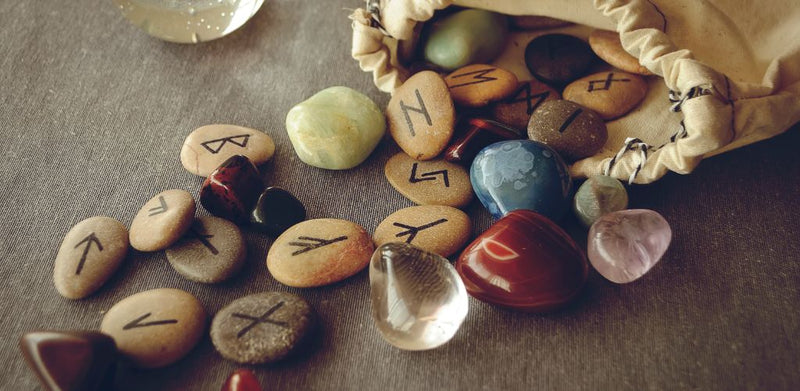
The confusion is easy to understand. Both Ogham and the runic Futhark are old, angular, and carved rather than penned, and both turn up in modern spiritual practice, jewellery, and games. When someone says 'Celtic runes,' they usually mean one of three things: the actual Ogham script, the Norse runes given a Celtic-flavoured look, or Celtic knotwork symbols with no alphabetic role at all.
This guide keeps them separate on purpose. If you want the Norse letters, our companion piece on the deeper meanings of rune symbols covers the full Elder Futhark. Here, the focus is on what is genuinely Celtic, the Ogham, plus an honest map of where the Norse overlap comes from.
Ogham: the real Celtic 'alphabet'
Ogham is the authentic Celtic script. According to Britannica, it consists of perpendicular and angular strokes cut across or beside a central line, mostly on the edges of standing stones, and it was used chiefly for the early Irish language between roughly the 4th and 7th centuries CE. It has about twenty core letters.
Each Ogham letter is a group of one to five strokes, placed above, below, across, or slanting through the medial line. The letters carry names, and in later manuscript tradition many were associated with trees and plants, birch, oak, hazel, willow, which is why Ogham is sometimes called the 'tree alphabet' or 'Celtic tree oracle.' That tree-lore is medieval and later, not proven druidic practice.
Most surviving Ogham inscriptions are short and practical: personal names and lineages carved to mark territory or memorialise the dead. They are not spell-books. Reading Ogham as a mystical oracle is a modern revival layered on top of a genuinely ancient script, and it is fair to enjoy it as long as the history stays honest.
Celtic Ogham vs Norse runes: the core difference
Ogham and the runic Futhark answer to different cultures, dates, and shapes. Ogham is Celtic, strokes around a line, tied to early Irish. Runes are Germanic and Norse, angular letters built from staves and branches. Confusing the two is the single biggest error in 'Celtic rune' content, so this table sets them side by side.
| Feature | Ogham (Celtic) | Elder Futhark (Norse/Germanic) |
|---|---|---|
| Culture | Celtic (chiefly early Irish) | Germanic and Norse |
| Rough era | 4th to 7th century CE | 2nd/3rd century CE onward |
| Letters | About 20 core letters | 24 characters |
| Form | Strokes across a central line | Angular staves and branches |
| Typical use | Names and memorials on stones | Names, marks, later charms |
| Common association | Trees and plants (later lore) | Everyday concepts (cattle, sun) |
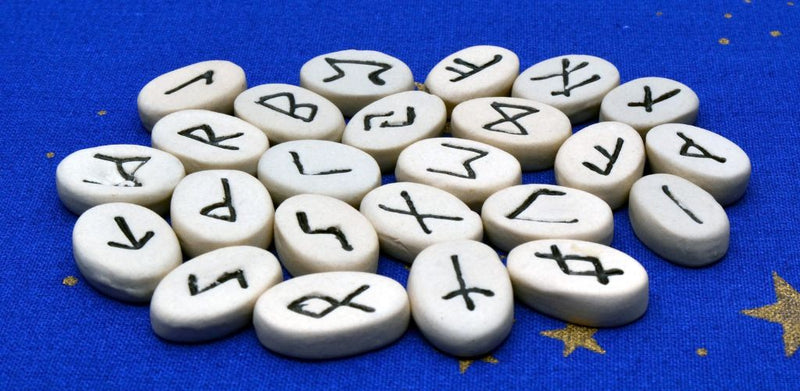
The takeaway is simple. If a design shows strokes ticking off a spine or stone edge, that is Ogham. If it shows separate angular letters like an F, a diamond, or an arrow, those are runes. For the Norse side of the story, including how Viking-age carvers actually used their letters, see our overview of Viking rune symbols.
Key Ogham symbols and their traditional meanings
A handful of Ogham letters carry the tree associations people find most evocative. Remember these meanings come from later medieval word-lists, not verified druid teaching, so read them as heritage and reflection. Below are five of the most commonly cited letters and the trees and themes traditionally attached to them.
| Ogham letter | Tree / plant | Traditional theme |
|---|---|---|
| Beith | Birch | New beginnings, renewal |
| Duir | Oak | Strength, endurance, doorways |
| Coll | Hazel | Wisdom, knowledge, insight |
| Saille | Willow | Intuition, flow, the moon |
| Nion | Ash | Connection, growth, potential |
Beith, the birch, opens the alphabet and traditionally signals fresh starts, which is why it appears in modern intention work. Duir, the oak, is read as strength and as a 'doorway,' a threshold you are ready to cross. Coll, the hazel, ties to wisdom in Irish myth, where salmon eating hazelnuts gain all knowledge.
These are gentle, reflective associations, not predictions. If you like using symbols to hold an intention, the same logic runs through many traditions. Our guide to the top manifest symbols and their meanings covers marks from several cultures used this way.
Where the Norse runes fit in
Because so many 'Celtic rune' sets on the market are actually Elder Futhark, it helps to know a few of the Norse letters people most often encounter. These are genuinely runic, not Celtic, but they are the symbols usually sold under a 'Celtic' label, so understanding them prevents the mix-up from spreading.
The Elder Futhark has 24 letters, each with a name and an everyday meaning that later folk practice read as a theme. Fehu meant 'cattle,' the movable wealth of a herding society, so people link it to abundance. Uruz meant 'aurochs,' the wild ox, read as strength. Algiz, shaped like a splayed hand or elk, is the classic protection rune.
If protection is your reason for searching, the runic tradition has more to offer here than Ogham does. Our guide to rune symbols for protection walks through Algiz and its companions, and our rune symbols for abundance piece covers Fehu and the wealth cluster. Both are Norse, correctly labelled.
Popular Celtic symbols that aren't runes at all
Alongside Ogham and Norse runes, a third group gets swept into 'Celtic runes': knotwork symbols. The Trinity knot, Tree of Life, and Dara knot are decorative and symbolic motifs, not letters from any alphabet. They carry meaning in Celtic art and modern jewellery, but they spell nothing, so calling them 'runes' is loose at best.
- Trinity knot (Triquetra). Three interwoven loops with no beginning or end, read in tradition as unity, and in modern use as three-part ideas like mind, body, spirit or love, strength, and family.
- Tree of Life (Crann Bethadh). Roots and branches mirroring each other, symbolising interconnection, balance, and the link between earth and sky.
- Dara knot. An intricate knot inspired by oak roots, associated with strength, endurance, and inner resilience drawn from deep foundations.
These motifs are lovely and worth wearing, and they sit comfortably alongside crystal jewellery. Just keep the vocabulary honest: they are art and symbolism, not a script you can read letter by letter. That distinction is exactly what separates a well-informed piece from the usual 'Celtic rune' muddle.
A short history: how Ogham and runes grew up separately
Ogham and the runic Futhark developed in parallel but apart. Britannica places the runic alphabet among Germanic peoples from around the 3rd century CE, while Ogham belongs to the early Irish world of roughly the 4th to 7th centuries. Neither borrowed from the other; each answered its own culture's need to carve names and marks in stone or wood.
Runes spread widely across northern Europe and evolved into later rows such as the Anglo-Saxon Futhorc and the shorter Younger Futhark of the Viking Age. They appear on memorial stones, weapons, and everyday objects, and over centuries some carvers used them in charms and blessings, which is where the runes' magical reputation grew.
Ogham had a narrower life. It stayed largely Irish and largely lapidary, cut into the edges of standing stones to record names and lineage. As Latin script took over, Ogham faded from daily use and survived mainly in manuscripts and antiquarian interest, before its modern revival as a 'tree oracle.' Knowing this timeline is the antidote to the marketing blur.
How Celtic symbols and runes are used today
Modern use of these symbols spans jewellery, tattoos, home decor, and divination sets. People wear an Ogham pendant of their initials, a Trinity knot ring, or a Futhark rune for a chosen intention. In divination, cards or tiles are drawn or cast, then read as prompts for reflection rather than fixed predictions. Frame it as tradition, not fortune-telling.
If you are buying, here is a simple way to choose without falling for the mix-up:
1. Decide which tradition you want. Genuine Celtic means Ogham or knotwork. Runes mean Norse Elder Futhark. Ask the seller which one a 'Celtic rune' set actually is. 2. Match the symbol to your intention. Duir (oak) or the Dara knot for strength; Beith (birch) for new beginnings; Algiz for protection. 3. Check the material. Wood, bone, and crystal are traditional, and each carries a different weight in the hand. 4. Add a crystal by intention if you like. Black tourmaline for protection, citrine for abundance, amethyst for calm, chosen by purpose rather than by looks. 5. Keep the frame honest. These are focus tools rooted in heritage. They hold an intention in view; they do not guarantee outcomes.
For the reflective, meditative side of working with these marks, our guide to rune symbols for spirituality is a good companion. If your interest is relationships, love rune symbols covers the runes people pair with matters of the heart.
Common mistakes to avoid
The biggest mistake is treating 'Celtic runes' as a single, ancient druid alphabet. It isn't. Ogham, Norse runes, and Celtic knotwork are three different things, and blending them produces confident-sounding nonsense. Getting the categories right is what makes your understanding, or your jewellery, actually meaningful.
- Calling Norse runes 'Celtic.' The Elder Futhark is Germanic. If a shop sells 'Celtic runes' that look like angular letters, they are almost certainly Futhark.
- Treating knotwork as a script. The Trinity knot and Dara knot are symbols, not letters. They mean things; they don't spell things.
- Reading Ogham tree-lore as proven druid teaching. The tree associations come from later medieval word-lists, so enjoy them as heritage, not verified history.
- Expecting prediction. Both systems are tools for reflection in modern practice, not a way to foretell events. Any outcome is your own effort, not the symbol.
- Ignoring orientation and source. Ask what tradition a set belongs to before buying, so your symbol says what you actually mean.
Sources
- Encyclopaedia Britannica, Ogham writing. britannica.com
- Encyclopaedia Britannica, the runic alphabet. britannica.com
- Encyclopaedia Britannica, Futhark. britannica.com
Frequently asked questions
About the author


Written by Chetna Sharma, crystal healing practitioner and co-founder of Solacely. Chetna has worked with healing crystals for over a decade and curates Solacely's protective stone collection.