Copper jewellery is valued for three concrete reasons: a warm, living patina that no other metal offers, deep roots in Ayurvedic and Indian tradition, and genuine durability at an accessible price. Its wellness reputation comes from long-standing custom rather than proven medicine, so it is best worn for beauty and meaning.
Key Takeaways
- Copper is a warm, malleable metal prized for a shifting rose-gold patina and centuries of use in Indian adornment.
- In Ayurveda, copper (tamra) is a traditional material; these uses are cultural belief, not clinical proof.
- Copper is a genuine essential trace mineral for the body, but well-controlled studies show copper bracelets do not relieve arthritis better than a placebo.
- Real copper turns skin green sometimes; that is a harmless surface reaction, not a health warning.
- Copper jewellery is inexpensive next to precious metals, which makes it easy, meaningful gifting.
- A quick lemon-salt scrub restores shine in minutes; copper is one of the lowest-maintenance metals to own.
What copper jewellery actually is
Copper is a soft, reddish-brown metal, one of the first ever worked by humans, and it has adorned wrists, necks, and fingers for thousands of years. As jewellery, it is worn pure or lightly alloyed, and it is loved for a warm tone that sits between rose gold and terracotta. Its appeal is both aesthetic and cultural.
According to Britannica, copper is highly malleable and ductile, which is exactly why artisans can hammer, twist, and engrave it into detailed bangles and rings without specialist equipment. That workability keeps handmade copper pieces affordable and gives each one small, human irregularities.
People reach for copper for different reasons. Some want the look. Some follow family tradition, wearing a copper kada the way a grandparent did. Others are drawn to its wellness folklore. All three are valid, and this guide keeps them honestly separate. For the deeper mineral science, our copper healing properties hub goes further.
Traditional Ayurvedic and Indian uses of copper
In Ayurveda, copper is known as tamra and has a long place in Indian daily life, from drinking-water vessels (tamra jal) to bangles worn from childhood. These practices reflect a rich cultural tradition passed down for generations, not a set of proven medical treatments. Worn thoughtfully, copper carries meaning first.
The most familiar custom is storing water overnight in a copper lota and drinking it in the morning. Traditional texts frame this as balancing the body's doshas. Copper bangles and rings sit in the same tradition, believed by many families to support circulation and vitality when worn against the skin.
There is also a strong metaphysical thread in Indian belief, where copper is linked to conductivity of energy, protection, and grounding. We treat that as tradition, not fact. If the energetic side is what draws you, our guides to copper's metaphysical properties and the spiritual benefits of wearing copper explore it in that spirit. Many wearers also ask which hand to wear a copper bracelet on, another question rooted in custom.
What the evidence actually supports
Here is the honest picture. Copper is a genuine essential trace mineral: the body needs it, and the U.S. National Institutes of Health lists it as vital for making red blood cells, connective tissue, and running key enzymes. But that is about copper in your diet, not copper absorbed meaningfully through a bracelet. The two are often confused.
On the popular claim that copper bracelets ease joint pain, the best evidence is not encouraging. A 2013 randomised controlled trial published in PLOS ONE (Richmond et al.) tested copper bracelets and magnetic wrist straps on people with rheumatoid arthritis and found they worked no better than a placebo device. So the arthritis-relief promise is not supported by good clinical data.
Copper does have a real, well-documented antimicrobial property: its surfaces kill many bacteria on contact, which is why hospitals study copper touch surfaces. That is genuine metallurgy. It does not mean a bangle detoxes your body, but it does explain part of copper's ancient reputation for cleanliness. Keep expectations grounded, and enjoy the piece for what it is.
| Claim about copper jewellery | Evidence status |
|---|---|
| Copper is an essential nutrient (in diet) | Supported (NIH) |
| Copper surfaces are antimicrobial | Supported (lab research) |
| Copper bracelets relieve arthritis/joint pain | Not supported (RCT, PLOS ONE 2013) |
| Copper 'detoxes' or balances body energy | Traditional belief, not proven |
The aesthetic case: warmth and living patina
Copper's strongest, most defensible benefit is simply how it looks. Its warm rose-and-amber tone flatters a wide range of skin tones and pairs beautifully with both traditional and everyday wear. Unlike sealed metals, copper is alive: it develops a patina over months, so your piece slowly becomes visually one of a kind.
That patina is a feature, not a flaw. Fresh copper is bright and mirror-like. With wear it deepens to a mellow bronze, and left untouched it can drift toward green-blue verdigris. Some people love the antiqued look and never polish; others keep it gleaming. Both are correct.
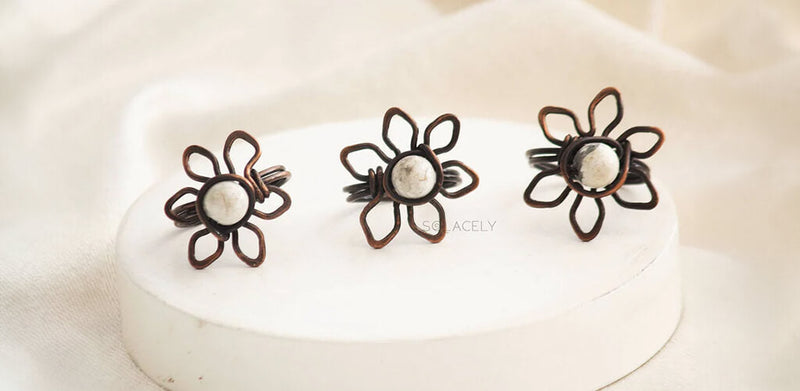
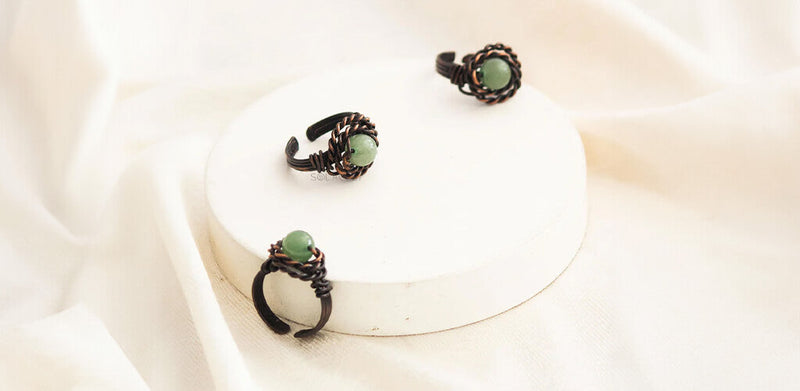
Copper also styles easily. It sits well stacked with brass, gold, or oxidised silver, and a single copper cuff can carry a plain outfit. For crystal lovers, copper is a natural partner for stones, warming the look of amethyst, carnelian, or citrine without competing with them.
Durability, and why copper sometimes turns skin green
Copper is tougher than it looks and, worn daily, lasts for years. The green mark it occasionally leaves on skin is a harmless chemistry reaction, not a sign of poor quality or a health risk. Understanding it removes the main worry people have before buying copper.
The green comes from copper reacting with acids and moisture on your skin, sweat, lotions, humidity, forming copper salts that tint the skin. It washes off with soap and water and does nothing lasting. If it bothers you, a thin clear coat of nail lacquer on the inner surface creates a barrier. We cover this fully in why copper turns your skin green.
Worried about safety more broadly? Copper is not linked to cancer from ordinary jewellery wear; that myth is addressed in our piece on whether copper bracelets cause cancer. In short, external copper contact is considered safe for the vast majority of people.
How to choose good copper jewellery
Buying copper well comes down to purity, finish, and fit. Look for pieces described as pure copper (or a stated alloy), check that the weight feels substantial rather than tinny, and confirm whether it is sealed or raw so you know how much patina to expect. Honest sellers state all three.
Use this quick buyer's checklist:
- Confirm the metal. Ask for pure copper, or a clearly named alloy. Vague 'copper-tone' often means plated base metal that wears off.
- Weigh it in hand. Solid copper has a reassuring heft. Very light, hollow pieces may be thin plating.
- Check the finish. Sealed/lacquered copper keeps its shine longer; raw copper patinas faster and feels more traditional.
- Mind the fit. For bangles, measure your widest hand span; for adjustable cuffs, avoid over-bending, which weakens the metal.
- Read the return terms. A seller confident in their copper will happily explain sourcing and care.
If your interest is intention-led rather than purely decorative, our guide to copper jewellery for healing matches styles to the traditions behind them, without over-promising.
What copper jewellery costs
Copper is one of the most accessible metals to buy, which is a real benefit in its own right. Everyday copper jewellery costs a small fraction of an equivalent gold or silver piece, with artisan or crystal-set designs rising above that. You get genuine handcraft and meaning without a precious-metal price tag.
| Tier | Relative cost | What you get |
|---|---|---|
| Everyday | Lowest | Simple bangles, plain rings, light cuffs |
| Premium | Moderate | Heavier kadas, engraved or twisted designs |
| Artisan / crystal-set | Highest | Copper wire-wrapped stones, statement cuffs |
Because copper is inexpensive, it makes low-pressure gifting: a modest copper piece feels thoughtful for a birthday, a housewarming, or a festival gift, without the weight of a costly present. The meaning does the work, not the receipt.
How to care for copper jewellery
Copper is refreshingly low-maintenance. When it dulls or darkens, a two-minute clean with lemon and salt, or a little tamarind, brings the shine straight back. There is no special polish or professional service needed, which is part of copper's everyday charm.
Try this simple routine:
- Make a paste. Mix lemon juice with a pinch of salt (or use tamarind pulp).
- Rub gently. Work it over the copper with your fingers or a soft cloth. The tarnish lifts as you go.
- Rinse and dry. Wash off completely with water and dry thoroughly, since trapped moisture speeds up tarnish.
- Optional seal. For less patina, buff on a thin protective wax or clear lacquer.
To slow tarnish between cleans, take copper off before swimming, bathing, or workouts, and apply perfume and lotion before you put it on. Store pieces dry in a small pouch, ideally with a silica gel packet. If you prefer the antiqued look, simply do nothing: copper's patina is meant to be worn.
Copper vs other jewellery metals
Copper's benefit is best understood in comparison. It offers warmth, tradition, and low cost, but trades away tarnish resistance and hardness. Set against silver, brass, or stainless steel, copper wins on character and price while asking for a little more upkeep. The right metal depends on what you value.
| Metal | Look | Upkeep | Relative entry cost |
|---|---|---|---|
| Copper | Warm rose, living patina | Occasional clean; patinas | Low |
| Brass | Golden, warm | Similar to copper | Low |
| 925 sterling silver | Bright white | Tarnishes, cleanable | Moderate |
| Stainless steel | Cool grey, modern | Very low, no tarnish | Low to moderate |
Choose copper when you want warmth, tradition, and an affordable piece with personality, and you do not mind the odd two-minute clean. Choose a sealed metal if you want zero maintenance. Neither is better; they simply suit different wearers.
Sources
- National Institutes of Health, Office of Dietary Supplements — Copper: an essential trace mineral. ods.od.nih.gov
- Richmond SJ et al., PLOS ONE (2013) — Copper bracelets and magnetic wrist straps for rheumatoid arthritis: randomised controlled trial. journals.plos.org
- Britannica — Copper: properties, malleability and uses. britannica.com
Frequently asked questions
About the author


Written by Chetna Sharma, crystal healing practitioner and co-founder of Solacely. Chetna has worked with healing crystals for over a decade and curates Solacely's protective stone collection.