Copper's 'magical properties' are a body of folklore, not fact: for thousands of years cultures have linked the warm red metal to the goddess Venus, to love and beauty, and to the flow of energy. This guide sets out those traditional beliefs honestly as belief, then explains the real metallurgy that made copper feel special in the first place.
Key Takeaways
- Copper is the metal of Venus. In classical and alchemical tradition, copper is paired with the goddess of love, its symbol the same familiar circle-and-cross, ♀.
- Folklore casts copper as a conductor of energy that 'amplifies' crystals and intention. This is cultural belief, valued for meaning, not scientifically tested.
- Copper is one of the oldest worked metals, used for roughly 10,000 years, which is much of why it gathered so much myth (Britannica).
- The real science is quieter: copper is an essential trace mineral (~900 mcg/day, per the NIH) and an outstanding conductor of heat and electricity.
- Copper is one of the least expensive metals to buy, which makes ritual copper genuinely accessible.
- Wear copper for its beauty, history, and intention, not as a treatment for any illness.
What 'magical properties' of copper actually means
When people speak of copper's magical properties, they mean a cluster of folk beliefs: that copper carries the energy of Venus, draws love and beauty, and acts as a conduit that strengthens the effect of crystals and intention. These are traditions, passed down through alchemy, temple ritual, and modern spiritual practice. None is a proven physical property of the metal.
It helps to keep two registers apart. There is copper the mineral, with measurable behaviour, and copper the symbol, with centuries of meaning layered on top. Both are real in their own way. One belongs to a chemistry lab, the other to a folklore studies bookshelf. Trouble starts only when the second is dressed up as the first.
Throughout this guide, 'magical' is used the way a folklorist uses it: to describe what people have believed and practised, not to assert that a copper ring casts a spell. If you enjoy the symbolism, you can enjoy it fully without needing it to be literally true. That honesty is what keeps the tradition beautiful rather than misleading. For the closely related belief system, see our companion piece on copper metaphysical properties.
Copper and Venus: the metal of love
In classical mythology and alchemy, copper is the metal of Venus, the Roman goddess of love and beauty. The link runs deep: the very word Cyprus, the island famed for its ancient copper mines, shares a root with the Latin cuprum from which we get 'copper,' and Cyprus was also a great cult centre of Aphrodite, Venus's Greek counterpart. Metal, island, and goddess braided together in the ancient imagination.
Alchemists formalised this. They matched each of the seven classical metals to a planet, and copper was assigned to Venus, sharing her astrological glyph, the circle above a cross, ♀. In that scheme copper stood for softness, warmth, attraction, and the arts of love and harmony, the opposite pole to iron's hard, martial energy under Mars. This is symbolic correspondence, a system of poetic associations, not a claim about atoms.
Why did copper earn the gentlest planet? Partly its look. Copper glows a warm rose-pink when polished, closer to blushing skin than any other common metal. Partly its feel. Pure copper is soft and yielding, easy to bend into curves and coils. To an ancient mind sorting the world by resemblance, a soft, rosy, glowing metal naturally belonged to the goddess of love. The reasoning is aesthetic, and rather lovely, but it is association, not physics.
Copper across world folklore and mythology
Copper carries meaning in cultures far beyond the Mediterranean, and each tradition should be named as tradition. According to Britannica, humans have worked copper for around ten thousand years, longer than almost any other metal, so it had a very long time to gather stories in every region that mined or traded it.
A brief tour of the beliefs people have held:
| Culture / tradition | Belief about copper (as folklore) |
|---|---|
| Greek & Roman | Metal of Venus/Aphrodite; love, beauty, harmony |
| Ancient Egypt | Symbol of eternal life; the ankh was often copper or bronze |
| Indian ritual | Tamra is auspicious and purifying; used in puja vessels and kalash |
| Native American | A sacred metal linking the physical and spirit worlds |
| European alchemy | Venus-ruled metal, paired with the planet and its glyph ♀ |
In Indian tradition specifically, copper (tamra) is treated as a purifying, auspicious metal. Temple kalash and lota vessels, puja thalis, and diyas have used it for centuries, and copper still appears in daily ritual across the country. This is living cultural practice, valued for meaning and continuity. Broad health claims attached to it are tradition, not settled medical fact, a distinction we hold throughout our copper healing properties guide.
Notice how consistent the themes are: life, love, purity, connection between worlds. When a metal earns similar reputations on several continents, it usually says as much about the metal's qualities, its glow, its warmth, its usefulness, as about any shared belief. People reached for the same symbolism because copper looks and behaves the same everywhere.
Elemental symbolism: fire, earth, and flow
In elemental and folk-magic systems, copper is most often filed under fire and, sometimes, earth, a metal born of the ground yet carrying the sun's warm colour. Practitioners describe it as 'flowing' and receptive, a bridge between elements rather than a fixed one. These are symbolic categories from esoteric tradition, not scientific classifications.
The 'flow' idea has an obvious root in the real world. Copper is one of the best conductors of electricity and heat that we have, second only to silver, which is exactly why it fills the wiring in your walls and the pipes in your kitchen. Folk practice took that literal conductivity and extended it into a metaphor: if copper carries electricity, the reasoning went, perhaps it carries subtler 'energy' too.
That leap from measured conduction to metaphysical 'energy flow' is where science stops and belief begins. There is no evidence that copper channels an energy field around the body. But you can see how the symbolism grew from an honest observation. The metal really does flow with current, and the human mind loves a resonant metaphor. Wear the symbol if it speaks to you, just hold it as poetry, not proof.
Copper as an amplifier in crystal folklore
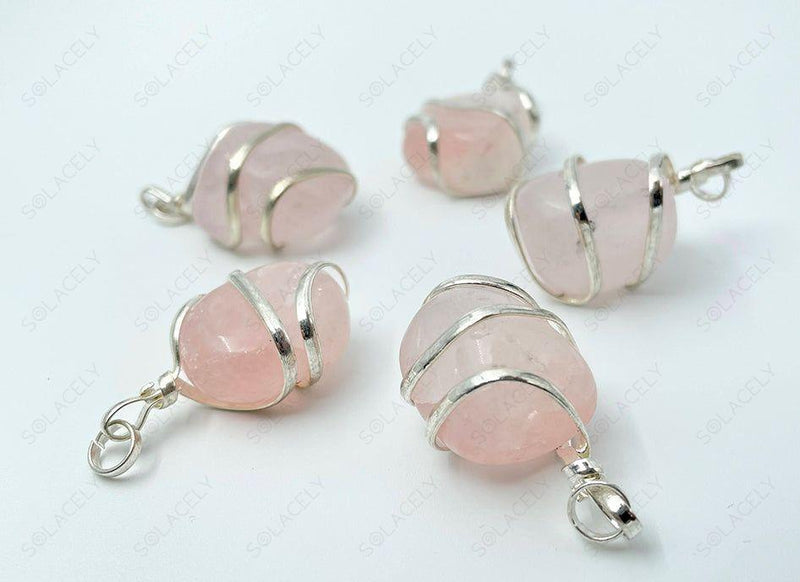
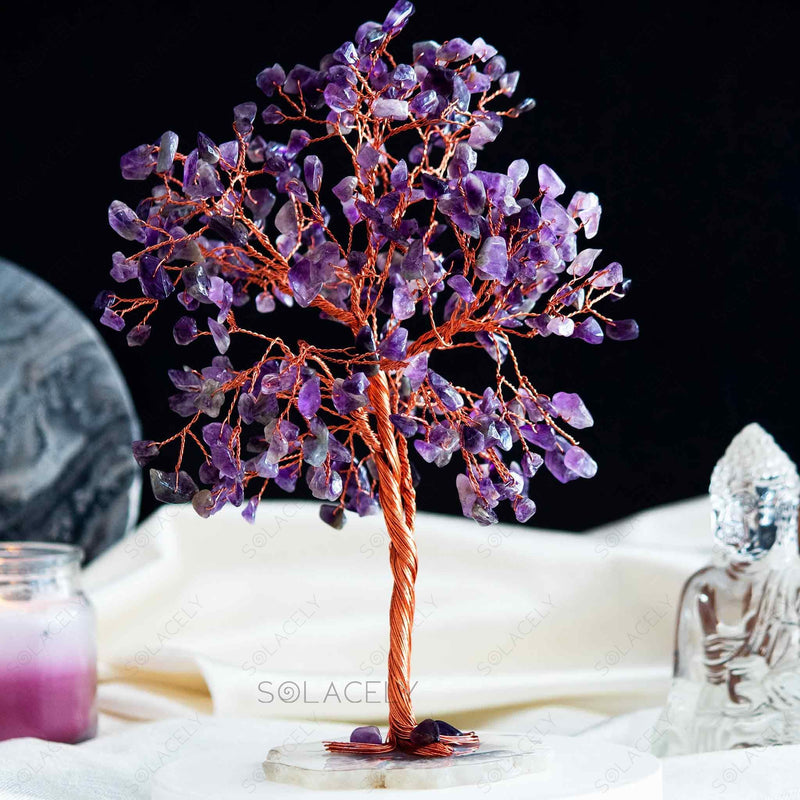
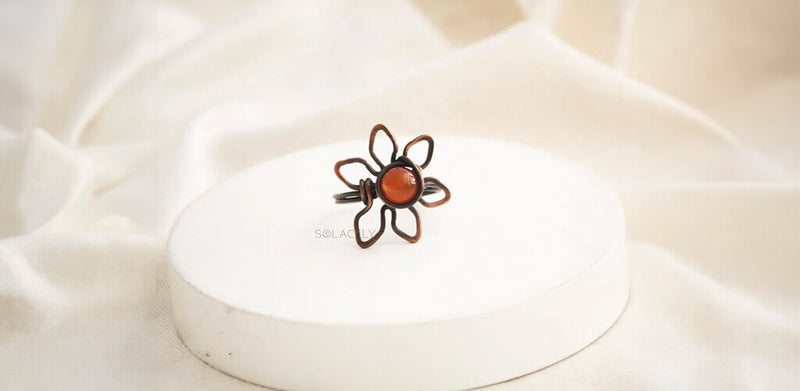
One of the most repeated beliefs is that copper 'amplifies' crystals, that setting a stone in copper, or wrapping wire around it, strengthens the crystal's effect and helps its energy flow. This is folklore drawn from copper's role as a conductor, and it is why so much spiritual jewellery pairs copper wire with quartz, amethyst, or rose quartz. It is belief, not a tested mechanism.
In this tradition, particular pairings carry particular intentions:
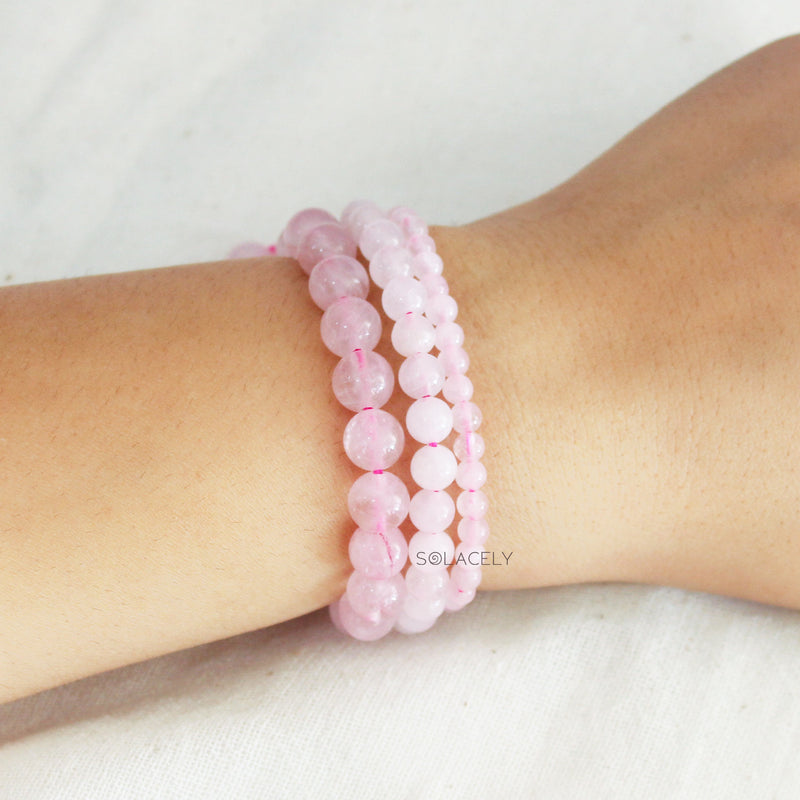
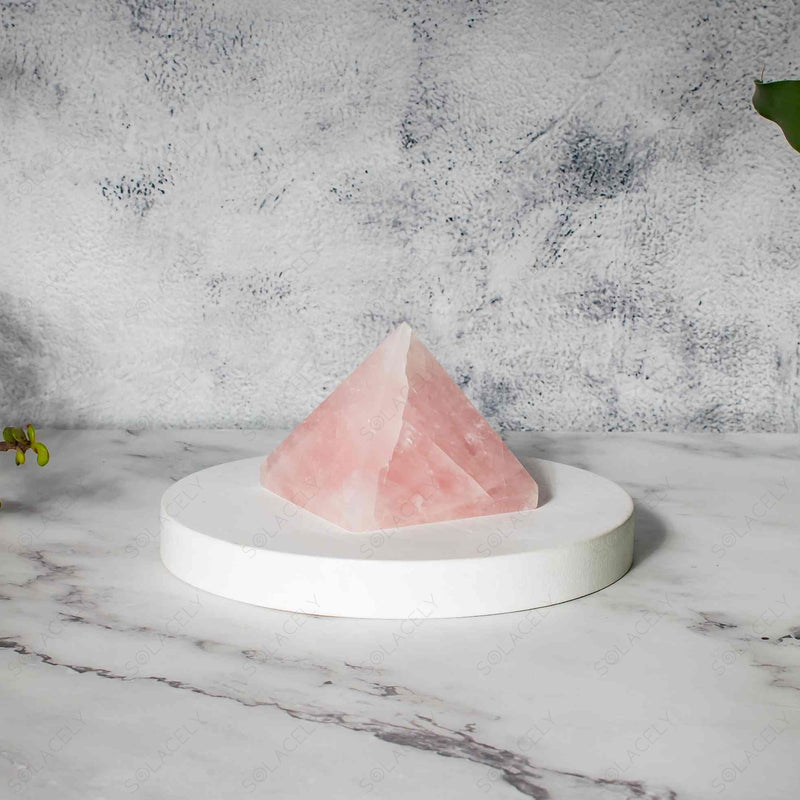
- Copper with rose quartz for love and gentle self-worth, doubling down on the Venus theme.
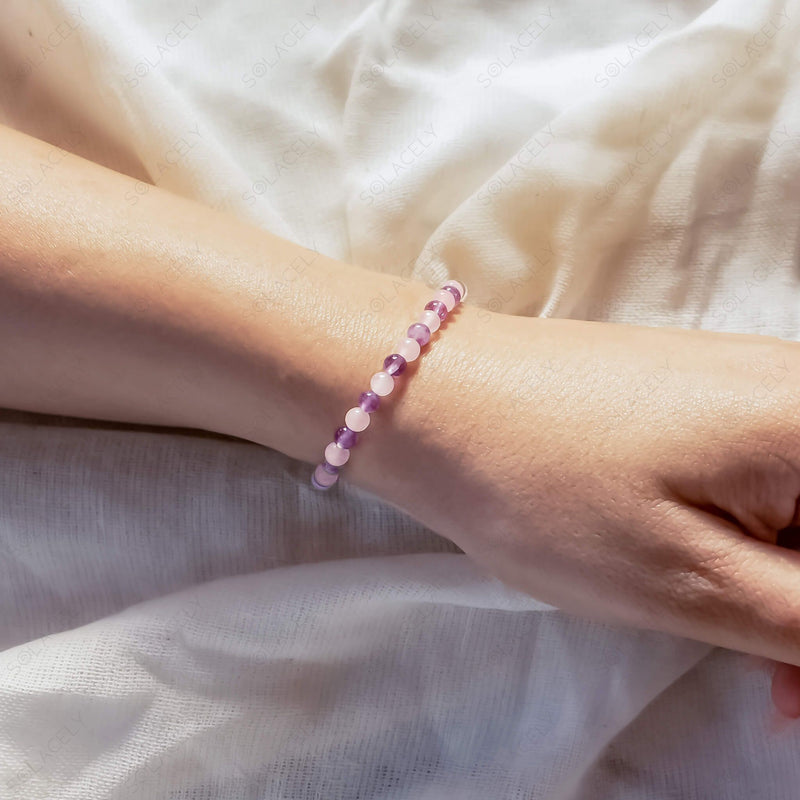
- Copper with amethyst for calm and clarity.
- Copper with citrine for abundance and confidence.
- Copper with malachite or turquoise for protection and grounding.
- Copper with clear quartz as a general 'amplifier of amplifiers.'
You will notice the intentions map neatly onto each crystal's own folklore, with copper cast as the connective thread. There is a real reason copper suits crystal jewellery so well, and it has nothing to do with energy: the soft metal bends easily into settings and wraps, takes a warm polish, and flatters most stones and a wide range of skin tones. That practical beauty is enough reason to choose it. For how these beliefs shape daily wear, see the spiritual benefits of wearing copper.
The real metallurgy behind the myths
Strip away the folklore and copper is still remarkable, just in evidenced ways. It is a chemical element, symbol Cu, atomic number 29, and one of the very few metals with a natural warm colour rather than a silvery grey. According to Britannica, it is an outstanding conductor of heat and electricity, which is why it underpins modern power, plumbing, and electronics.
Copper also matters inside the body, quietly. The US National Institutes of Health lists copper as an essential trace mineral, with adults needing roughly 900 micrograms a day, mostly from food like dals, nuts, seeds, and whole grains. It helps make energy, red blood cells, and collagen. That is the genuine 'power' of copper: steady biochemistry, not enchantment.
There is even a tested antimicrobial thread. In 2008 the US Environmental Protection Agency registered certain high-copper alloys as antimicrobial surfaces that kill many bacteria on contact. This is real and regulated, but it applies to solid alloy touch surfaces, not to a bracelet detoxing your blood. We separate proven from traditional in detail in the power of copper.
Seen this way, the myths make sense. A rosy, glowing, endlessly useful metal that conducts current and even resists some germs was always going to feel a little magical to people without a periodic table. The wonder was real. The explanation was just waiting to be found.
How copper is used in ritual and practice today
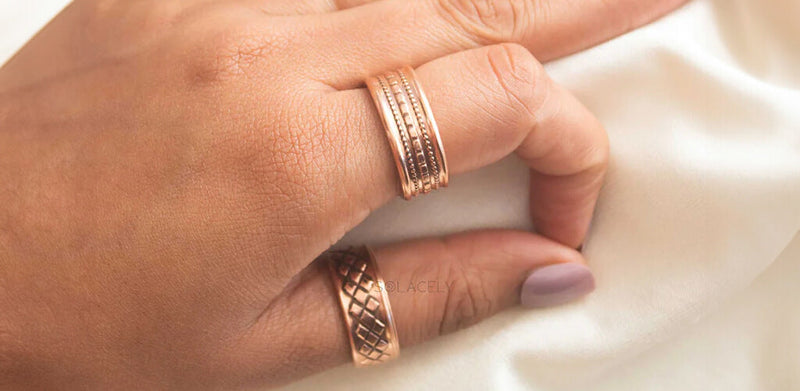
Modern spiritual practice keeps copper busy, and you can take part while staying clear-eyed. Common traditional uses include copper wands or rods said to 'direct energy,' copper wire wraps around crystals, copper rings and bracelets worn with an intention, and copper bowls or vessels used in cleansing rituals. Each is a practice with meaning, offered here as custom rather than proven method.
A simple, honest way to bring copper into a personal ritual:
- Choose your piece with intention, a ring, cuff, or wrapped stone that you find beautiful.
- Clean it gently with lemon and salt, both to shine it and to mark a fresh start.
- Set an intention in your own words, treating the object as a reminder, not a machine.
- Wear or place it where you will notice it, letting it prompt the mindset you chose.
- Re-clean when it tarnishes, using the moment as a small ritual of renewal.
The value here is psychological and aesthetic, and that is nothing to dismiss. A beautiful object you have charged with meaning can genuinely steady your attention and lift your mood, the way a wedding ring or a family heirloom does. That is intention at work, not the supernatural. Keep the framing honest and the practice stays healthy.
Caring for magical copper: keep it beautiful
Copper's one quirk is that it changes. Left to the air, it darkens and can develop a green patina, and worn on skin it may leave a harmless green mark where copper, sweat, and air react. None of this is spoilage or a bad omen, it is simple chemistry, explained fully in why copper turns your skin green. In folklore, some even read the shifting colour as the metal 'working.'
A short care checklist keeps ritual copper looking its best:
- Clean with lemon and salt or a little tamarind; rub gently, rinse, and dry fully.
- Store dry and away from long moisture, ideally wrapped in a soft cloth.
- Remove before swimming or bathing to slow tarnish.
- Expect patina on solid copper, and welcome it as character if you like.
- Choose lacquered pieces if your skin is sensitive or you dislike the green mark.
Price is part of copper's charm. Everyday copper jewellery and small vessels cost very little next to precious metals, with artisan cuffs and heavier vessels climbing above. That affordability, combined with its glow and its long tail of myth, is a real reason copper endures as both adornment and gift. For a fuller buyer's view, read copper jewelry benefits.
Sources
- Encyclopaedia Britannica — Copper (chemical element): properties, conductivity, and 10,000-year history of use. britannica.com
- National Institutes of Health, Office of Dietary Supplements — Copper fact sheet (essential trace element, ~900 mcg/day). ods.od.nih.gov
- US Environmental Protection Agency — Registration of copper alloys as antimicrobial materials (2008). epa.gov
- Encyclopaedia Britannica — Aphrodite (Venus) and the cult centre of Cyprus. britannica.com
Frequently asked questions
About the author


Written by Chetna Sharma, crystal healing practitioner and co-founder of Solacely. Chetna has worked with healing crystals for over a decade and curates Solacely's protective stone collection.