An indigo aura is the deep blue-violet colour some believe surrounds people who are strongly intuitive, sensitive, and inward-looking. In aura tradition it sits between blue (calm communication) and violet (spiritual insight), and is linked to the third-eye chakra, perception, and the 'indigo child' idea. It signals a quiet, perceptive nature.
Key Takeaways
- An indigo aura is a deep blue-violet aura colour associated, in aura tradition, with intuition, deep perception, and a sensitive, introspective personality.
- It is tied to the third-eye (Ajna) chakra, which n yogic tradition governs insight and inner sight, not to any measurable medical property.
- Indigo sits between blue and violet on the spectrum: blue leans toward calm and communication, violet toward spirituality, and indigo blends inward intuition with vision.
- The 'indigo child' idea, popularised in the 1970s-80s, describes children thought to be unusually intuitive or empathetic. It is a New Age belief, not a scientific diagnosis.
- Crystals traditionally paired with an indigo aura include lapis lazuli, amethyst, sodalite, and iolite. these bracelets and tumbles typically sit in the mid range.
What does an indigo aura mean?
An indigo aura is a deep blue-violet field that, in aura tradition, marks a person as highly intuitive, perceptive, and inwardly focused. Indigo is the sixth band of the visible spectrum, the colour Isaac Newton named between blue and violet, and aura readers borrow that 'in-between' quality to describe someone who bridges emotion and insight.
In this tradition, colour is read as a signal of temperament. Where a red aura is read as drive and a yellow one as optimism, indigo is read as depth. People with a dominant indigo tone are described as thoughtful, quietly observant, and drawn to meaning rather than surface. They notice what others miss.
None of this is a medical or scientific claim. An 'aura' here is a cultural and spiritual concept, a way of talking about personality and mood, not an energy field anyone has measured in a lab. Read the colour as a lens for reflection, the way you might read a birth chart or a personality type. For the calmer, more outward-facing cousin of this colour, our blue aura meaning guide is a useful companion.
Indigo aura personality traits
People with an indigo aura are traditionally described as intuitive, sensitive, and principled. The trait most consistently linked to the colour is intuition, a sense of knowing things without being told. Alongside it come deep empathy, a strong inner moral compass, and a tendency to feel misunderstood. These are archetypes, not fixed rules.
Aura literature tends to repeat a familiar cluster of qualities. Below is how those traits are usually framed, and the everyday form each one takes.
| Trait | How it is described | Everyday form |
|---|---|---|
| Intuitive | Reads situations and people quickly | Trusts a 'gut' call, senses mood shifts |
| Sensitive | Absorbs the emotions around them | Feels drained in crowds or conflict |
| Empathetic | Strong emotional intelligence | The friend everyone confides in |
| Justice-oriented | A firm inner sense of right | Quietly stands up against unfairness |
| Visionary | Sees possibilities others don't | Drawn to ideas, art, and the 'why' |
| Introspective | Prefers depth to small talk | Needs solitude to recharge |
There is a shadow side in the tradition too. High sensitivity can tip into overwhelm, feeling isolated, or taking on other people's stress. The same depth that makes an indigo personality perceptive can make everyday noise, harsh light, and conflict genuinely tiring. If you recognise a softer, more heart-led version of these traits, our violet aura guide covers the closely related spiritual temperament.
Intuition, perception, and the third-eye chakra
In aura tradition, indigo is the colour of the third-eye chakra, called Ajna in Sanskrit, which sits between the eyebrows and is said to govern intuition and inner sight. This is why the colour is so tied to perception: it borrows the third eye's symbolism of 'seeing beyond the obvious.' In yogic tradition, Ajna is one of the seven main chakras.
The link is symbolic, not anatomical. The third eye is a meditative and devotional concept n tradition, represented in the bindi and in the iconography of deities, long before New Age aura reading adopted it. Associating indigo with Ajna is a way of saying 'this person leads with insight.'
People described as strongly indigo often report vivid dreams, quick first impressions of people, and a pull toward meditation, art, or contemplative practice. Whether you read that as intuition or simply as a reflective personality, the practices tied to it, quiet, attention, stillness, are gentle and worth keeping. For the broader colour of insight and higher awareness, our purple aura guide sits right alongside this one.
The 'indigo child' idea (as belief, not diagnosis)
The 'indigo child' concept describes children thought to be born with an indigo aura, said to be unusually intuitive, empathetic, and strong-willed. It was popularised in the late 1970s and 1980s through the New Age writing of Nancy Ann Tappe and later Lee Carroll and Jan Tober. It is a belief system, not a recognised medical or psychological category.
The idea took hold because it offered a warm, affirming frame for sensitive or spirited children. In the tradition, indigo children are described as questioning authority, feeling out of place in rigid settings, and carrying an old-soul seriousness. Parents drawn to the concept often value its emphasis on empathy and independent thinking.
It is important to keep this in proportion. Mainstream psychology does not recognise 'indigo child' as a diagnosis, and traits attributed to it overlap with ordinary variation in temperament, giftedness, or conditions best assessed by professionals. Treat it as a hopeful cultural story about sensitive kids, never as a substitute for proper support or assessment. Read it the way you would a comforting piece of folklore.
Shades of indigo aura and what they suggest
Aura tradition treats shade as meaning: a bright, clear indigo is read differently from a murky or deep one. A luminous indigo is described as balanced intuition and clarity, while cloudier tones are read as overwhelm or a need for rest. These are interpretive gradations, not measured differences in any real light.
Here is how the common shades are usually described.
| Shade of indigo | Traditional reading |
|---|---|
| Bright, clear indigo | Balanced intuition, calm insight, alignment |
| Deep, dark indigo | Intense inner focus, strong perception, privacy |
| Indigo with violet | Spiritual seeking, devotion, higher awareness |
| Indigo with blue | Intuition paired with clear communication |
| Muddy or dull indigo | Overwhelm, emotional fatigue, need to recharge |
The practical takeaway is gentler than the labels suggest. When someone reads their indigo as 'cloudy,' the traditional advice, rest, solitude, time in nature, creative expression, is simply good self-care. Whether or not a colour is really shifting, slowing down when you feel over-stimulated is sound. For a grounded, heart-and-nature-led counterpoint, see our green aura guide.
Indigo vs blue vs violet: telling the auras apart
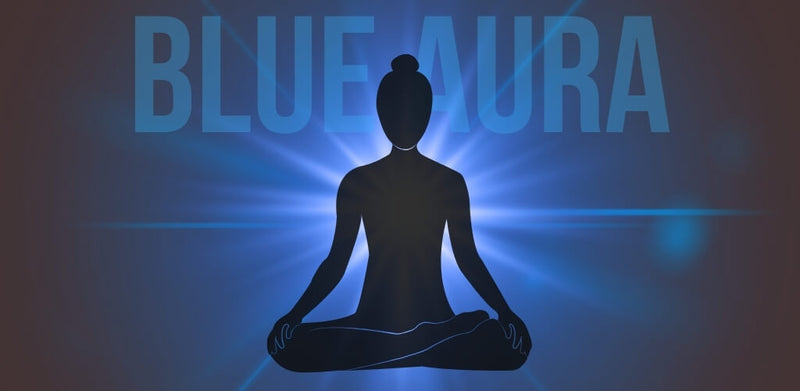
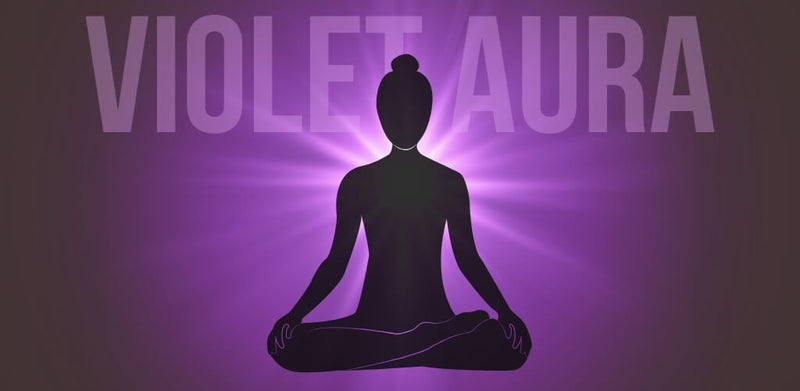
The three are easy to confuse because they neighbour each other on the spectrum. The simplest distinction: blue is about calm and communication, violet is about spirituality and imagination, and indigo sits between them as inward intuition and perception. Blue speaks, violet dreams, indigo senses.
Because these colours blend, many people are told they have a mix. The differences below are the ones aura readers lean on most.
| Aura | Core theme | Typical traits |
|---|---|---|
| Blue | Calm, communication, trust | Honest, articulate, peace-making, loyal |
| Indigo | Intuition, perception, depth | Sensitive, insightful, introspective, principled |
| Violet | Spirituality, vision, imagination | Idealistic, artistic, devotional, seeking |
A quick way to place yourself: if your instinct is to talk things out and keep the peace, that leans blue; if you feel and sense before you can explain why, that leans indigo; if you are pulled toward the mystical, the artistic, and the big questions, that leans violet. Most people carry two of the three. Our blue aura and violet aura guides go deeper on each neighbour.
Crystals associated with an indigo aura
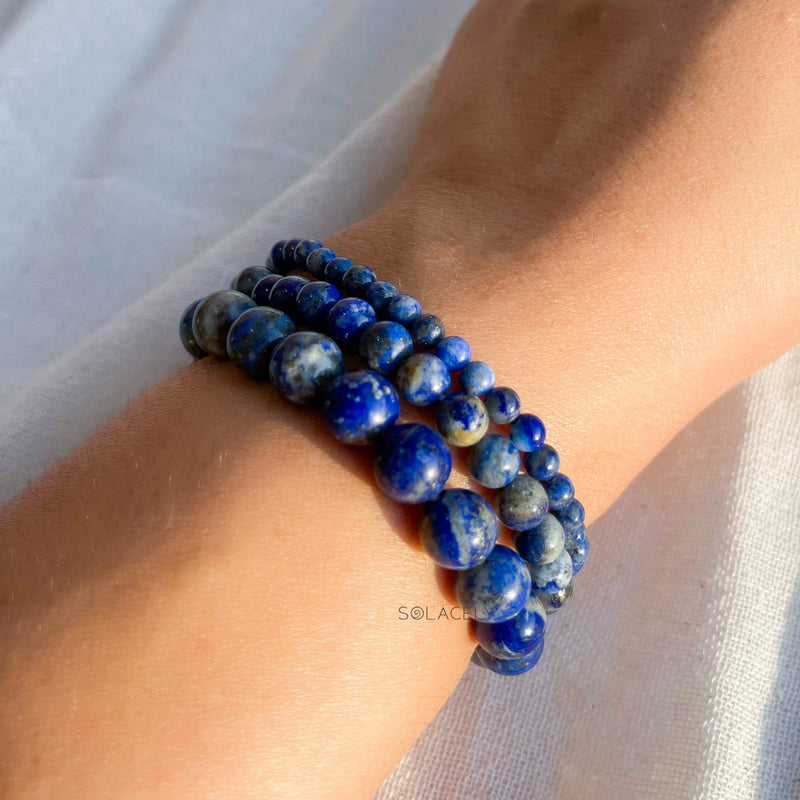
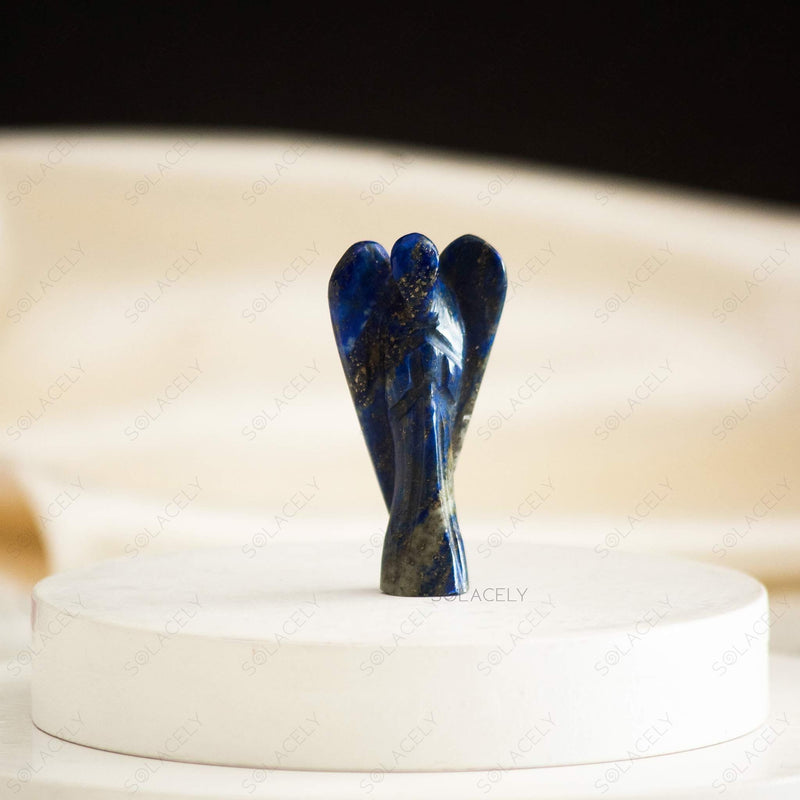
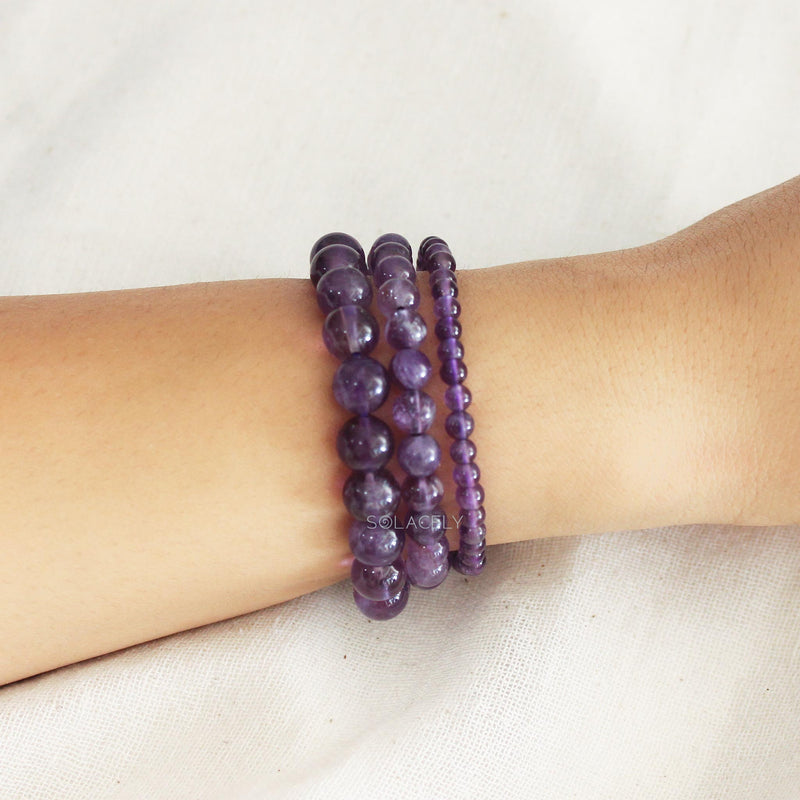
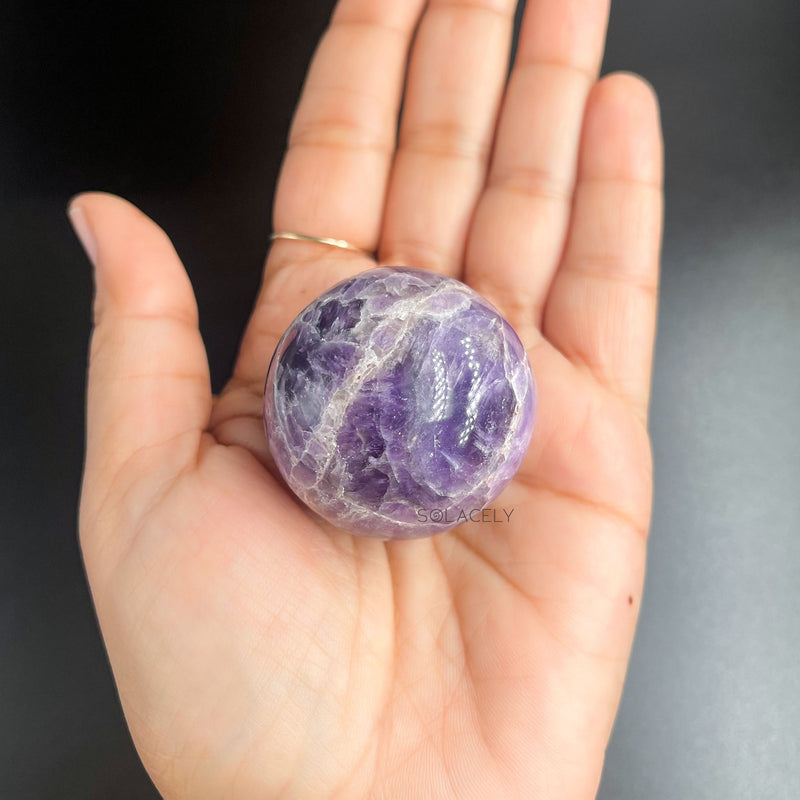
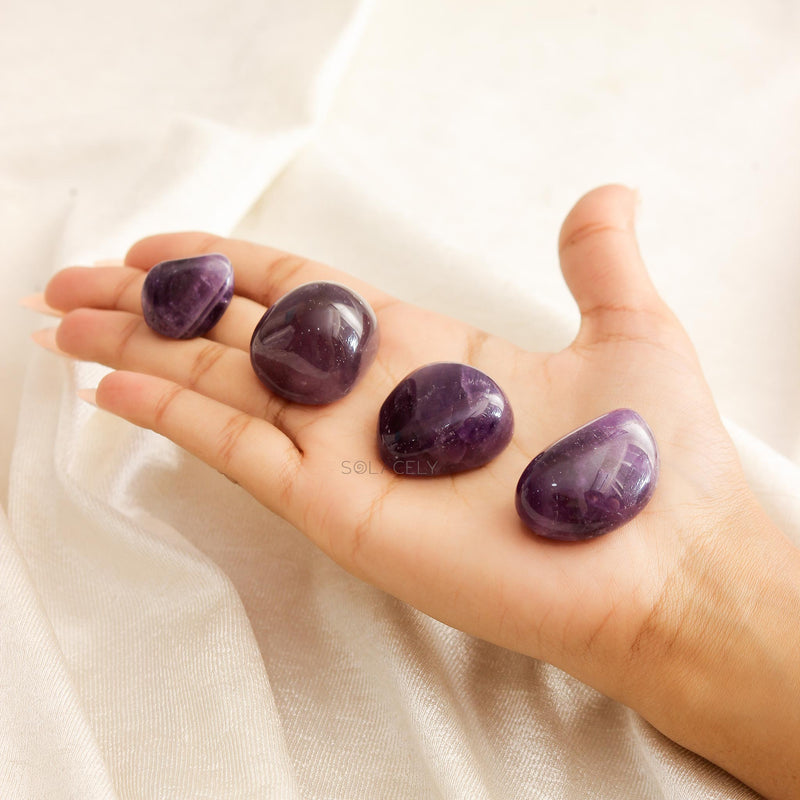
The crystals traditionally paired with an indigo aura are the deep blue and blue-violet stones linked to the third eye: lapis lazuli, amethyst, sodalite, and iolite. In this tradition they are kept for intention and reflection, not treatment. Their colour comes from real mineralogy: lapis, for instance, is coloured by the mineral lazurite.
According to the Gemological Institute of America, lapis lazuli is a rock prized since antiquity for its intense blue, and amethyst is the purple variety of quartz coloured by iron and natural irradiation. That deep blue-to-violet range is exactly why these stones became the traditional match for an indigo aura, the colour association is literal.
| Crystal | Colour | Traditional association |
|---|---|---|
| Lapis Lazuli | Deep blue with gold flecks | Truth, self-awareness, inner vision |
| Amethyst | Purple quartz | Calm, clarity, spiritual awareness |
| Sodalite | Blue with white veining | Emotional balance, self-acceptance |
| Iolite | Blue-violet | Intuition, inner guidance |
A short way to use them, framed as tradition rather than remedy:
- Keep one within sight, on a desk or bedside, as a small cue to pause and reflect.
- Wear it as a bracelet if you like a wearable reminder; blue-stone bracelets commonly sit around Entry.
- Cleanse it simply by wiping with a soft, dry cloth and leaving it in indirect light or moonlight, a traditional ritual, not a technical need.
- Pair by intention, amethyst for calm, lapis for clarity, rather than chasing every stone at once.
- Match the stone to the mood you want to hold, not to a promised effect.
If you prefer to browse the wider colour family first, our white aura and yellow aura guides round out the spectrum of aura meanings.
Balancing and caring for an indigo aura
Traditional advice for a 'balanced' indigo aura is really a set of calm, restorative habits: rest, solitude, creative expression, and time away from noise and screens. Because the indigo temperament is described as sensitive and easily overwhelmed, the guidance centres on protecting energy and making space to process. None of it requires anything you can't do at home.
The practices that recur across aura writing are gentle and low-cost. Meditation and slow breathing to settle an over-active mind. Time in nature to reset after crowded or draining days. Creative outlets, writing, music, painting, to move feeling outward. And clear boundaries, since the same empathy that makes indigo personalities caring can leave them carrying everyone else's stress.
Think of these less as fixing an aura and more as sensible self-care for a sensitive, perceptive person. If you tend to absorb the mood of a room, planned quiet, an unhurried morning, a walk, a screen-free hour, is genuinely steadying. Whether or not a colour brightens, you will feel the difference.
Sources
- Encyclopaedia Britannica - Indigo, the colour and its place in the visible spectrum: britannica.com/science/color
- Gemological Institute of America - Lapis lazuli description and history: gia.edu/lapis-lazuli-description
- Gemological Institute of America - Amethyst (purple quartz) colour and formation: gia.edu/amethyst
Frequently asked questions
About the author


Written by Chetna Sharma, crystal healing practitioner and co-founder of Solacely. Chetna has worked with healing crystals for over a decade and curates Solacely's protective stone collection.