In aura-reading tradition, a purple aura is linked with intuition, spiritual depth and imagination. People said to carry it are often described as thoughtful, sensitive and quietly magnetic, drawn to meaning over noise. This is a belief system, not a medical fact, but it offers a gentle language for self-reflection.
Key Takeaways
- Purple aura = intuition + spirit: traditionally tied to the crown chakra, wisdom and a rich inner life.
- Personality: empathetic, imaginative, calm on the surface, sensitive underneath.
- Shades matter: lighter lavender reads as gentle and idealistic, deep violet as intense and psychic (in belief).
- Purple vs violet: closely related, but violet is the higher, more spiritual octave; purple leans creative and regal.
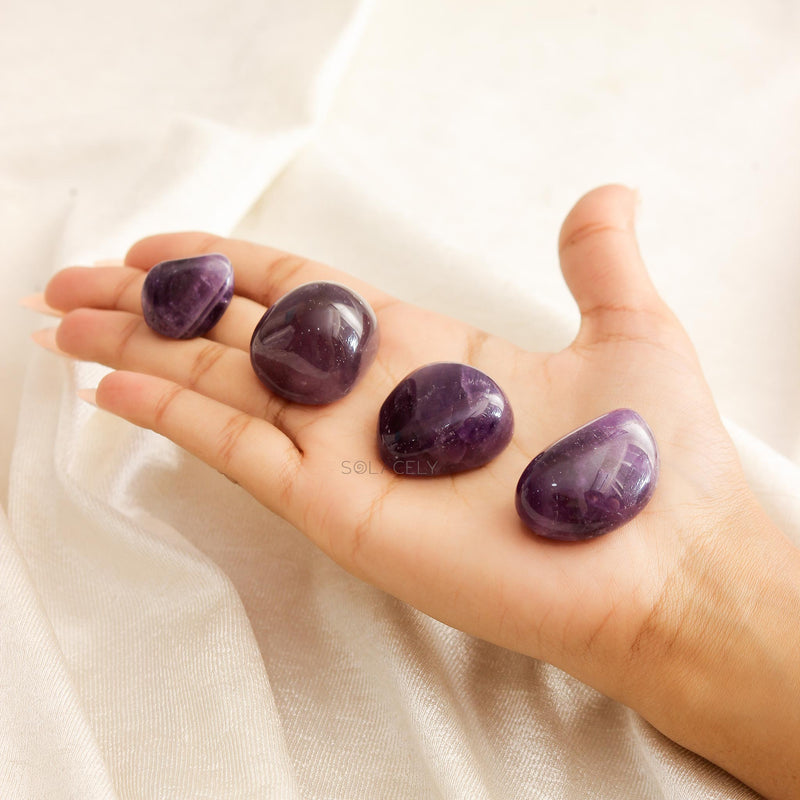
- Companion crystal: amethyst, the classic purple stone for calm, often paired with this aura. Amethyst pieces
- Aura colour is interpretation, not science, use it for reflection, not diagnosis.
What Does a Purple Aura Mean?
A purple aura, in aura-reading tradition, signals a person tuned to intuition, imagination and the search for meaning. Purple sits at the top of the visible spectrum, near the crown chakra, so readers link it with higher awareness and inner depth. It is a symbolic language of belief, not a measurable field.
The colour purple has carried weight for millennia. According to Encyclopaedia Britannica, Tyrian purple dye was so costly to produce from sea snails that it was reserved for royalty and high office across the ancient Mediterranean. That history of rarity and status seeped into how we read the colour. When aura practitioners describe someone as 'purple,' they are borrowing centuries of association: dignity, mystery, and a mind that reaches past the everyday.
In practical terms, a purple aura is often read as a sign of someone who feels deeply, dreams vividly, and needs space to process the world. Whether or not you take auras literally, the description gives many people a useful mirror.
Purple Aura Personality Traits
People described with a purple aura are traditionally seen as empathetic, imaginative and quietly perceptive. They tend to notice what others miss, feel emotions strongly, and prefer depth over small talk. This is a personality sketch drawn from belief, so treat it as a prompt for reflection rather than a fixed label.
Common traits attributed to a purple aura:
- Deep empathy. A knack for sensing how others feel, sometimes before words are spoken.
- Rich imagination. Drawn to art, writing, music and ideas that don't fit neat boxes.
- Calm surface, sensitive core. Composed in public, but affected by chaotic or tense spaces.
- Independent thinking. Comfortable with the unconventional, less swayed by the crowd.
- A pull toward meaning. Interested in the why behind things, from relationships to work.
There's a flip side. That same sensitivity can tip into overwhelm. Crowded, noisy or conflict-heavy settings can leave a purple-aura person drained, which is why many gravitate toward quiet homes, journals and time alone. If you see yourself here, the tradition suggests the fix isn't to toughen up but to protect your peace.
Purple Aura and Spirituality (as Tradition)
Aura tradition ties purple to the crown chakra and to what practitioners call heightened intuition or psychic sensitivity. The idea is that purple-aura people live close to their inner world and pick up subtle cues others overlook. These are cultural and spiritual beliefs, not clinical or scientific claims.
In Indian tradition, this instinct has a familiar name. That quiet nudge before a decision, the sense that something is off, the pull toward prayer or stillness, elders often call it inner knowing. Aura readers frame the purple aura as the visible shorthand for exactly that capacity. Meditation, breathwork and time in nature are the usual suggestions for staying balanced, not because they cure anything, but because sensitive people often steady themselves through calm and routine.
It helps to keep expectations honest. A colour cannot predict your future or replace medical, financial or emotional care. What the tradition offers is a vocabulary for introspection: a way to name your sensitivity and treat it kindly.
Shades of Purple: From Lavender to Deep Violet
Aura readers say the exact shade shifts the meaning. Soft lavender is read as gentle, idealistic and healing, while deep, dark violet is read as intensely intuitive or spiritually focused. Muddy or greyish purple is sometimes read as a sign of burnout or emotional overload. All of this is interpretive belief, not measurement.
| Shade | Traditional reading | Often linked with |
|---|---|---|
| Lavender / light purple | Gentle, idealistic, imaginative | Daydreamers, healers, artists |
| Bright purple | Confident intuition, creative drive | Visionaries, counsellors |
| Deep violet | Strong psychic sensitivity, spiritual focus | Seekers, meditators |
| Muddy / greyish purple | Overwhelm, need for rest | Sensitive people running low |
Nobody is a single fixed shade. In aura tradition the colour is thought to shift with mood, health and season. A stressful week might dull the tone, a restful holiday might brighten it. If you read auras this way, the shade is less a verdict and more a weather report on your inner state.
Purple vs Violet Aura: What's the Difference?
Purple and violet auras are close cousins, and many readers use the words interchangeably. Where they draw a line, violet is treated as the higher, more spiritual octave, the colour of deep connection and service, while purple leans toward creativity, dignity and a regal, magnetic presence. The distinction is subtle and belief-based.
Think of it as emphasis. A purple aura is often described as the artist and the old soul: imaginative, wise, drawn to beauty. A violet aura is described as the mystic: more focused on spiritual growth, healing and a sense of purpose beyond the self. In practice, one shades into the other, and a single person may be read as both on different days.
If you want the fuller picture, our companion guide on nurturing your violet aura covers that higher-octave reading in detail, while the indigo aura guide explains the deep blue-purple tone often confused with both.
How a Purple Aura Is Read
Aura readers claim to perceive a purple aura through practised intuition, sometimes aided by aura photography, though the images from such cameras reflect skin temperature and equipment, not a scientifically verified energy field. Most reading is subjective interpretation. It is best treated as a reflective exercise, not a diagnostic test.
A typical approach looks like this:
- Settle and soften focus. The reader relaxes and looks slightly past the person, not straight at them.
- Notice the first impression. Colours are said to appear as a felt sense or a faint tint, often strongest around the head and shoulders.
- Read the shade and clarity. Bright and clear versus muddy is interpreted as balanced versus depleted.
- Cross-check with the person. A good reader treats the colour as a conversation starter, asking how the person actually feels.
You can try a gentler self-version at home. Sit quietly, note your mood, energy and what you're drawn to lately, then ask which colour that feels like. It's journaling with a splash of colour theory. Nothing supernatural required, and nothing to take as fact.
Crystals Associated With the Purple Aura
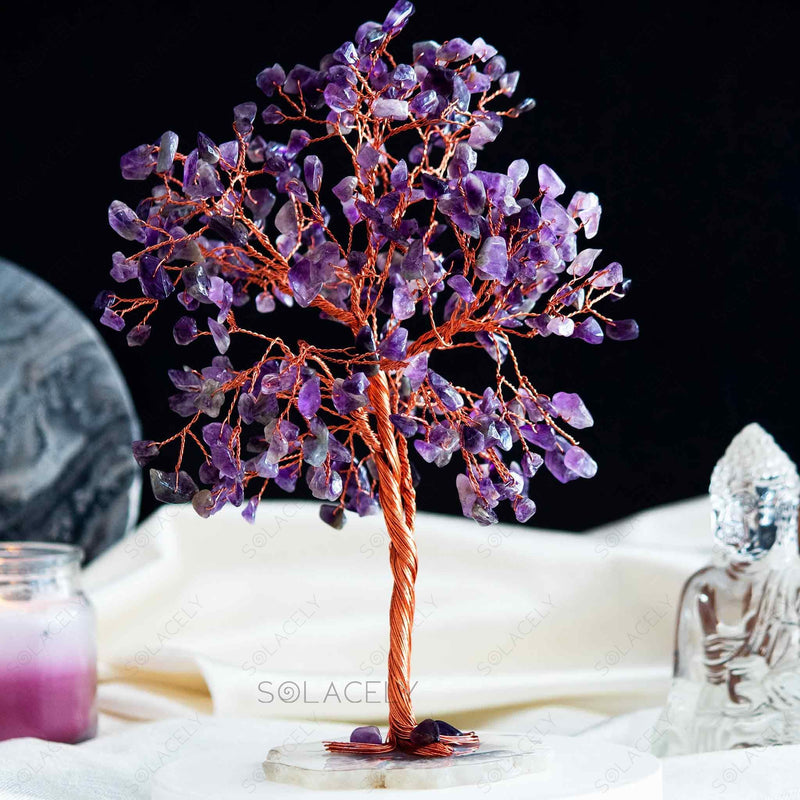
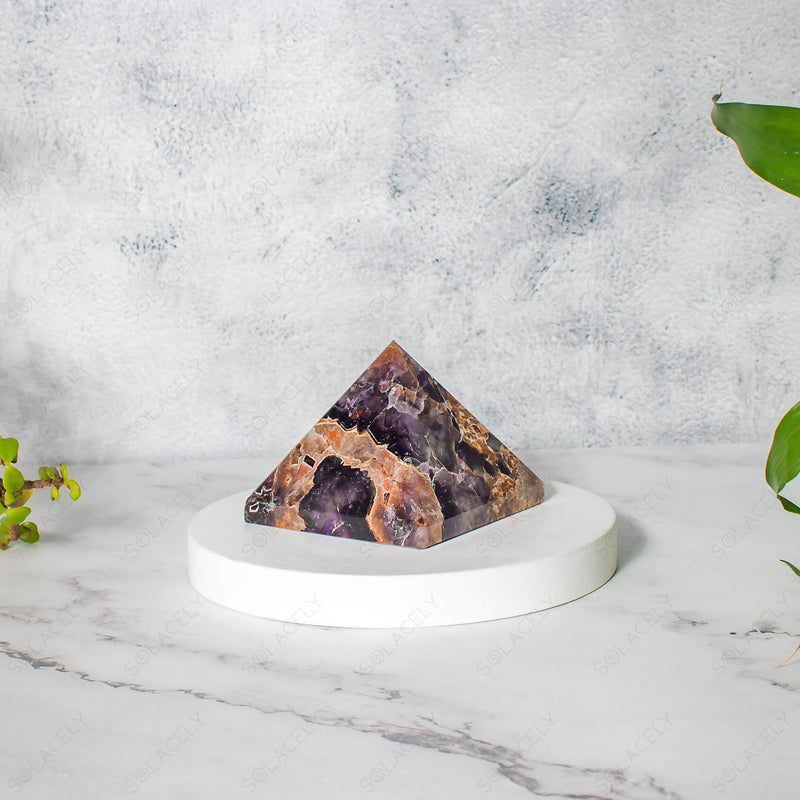
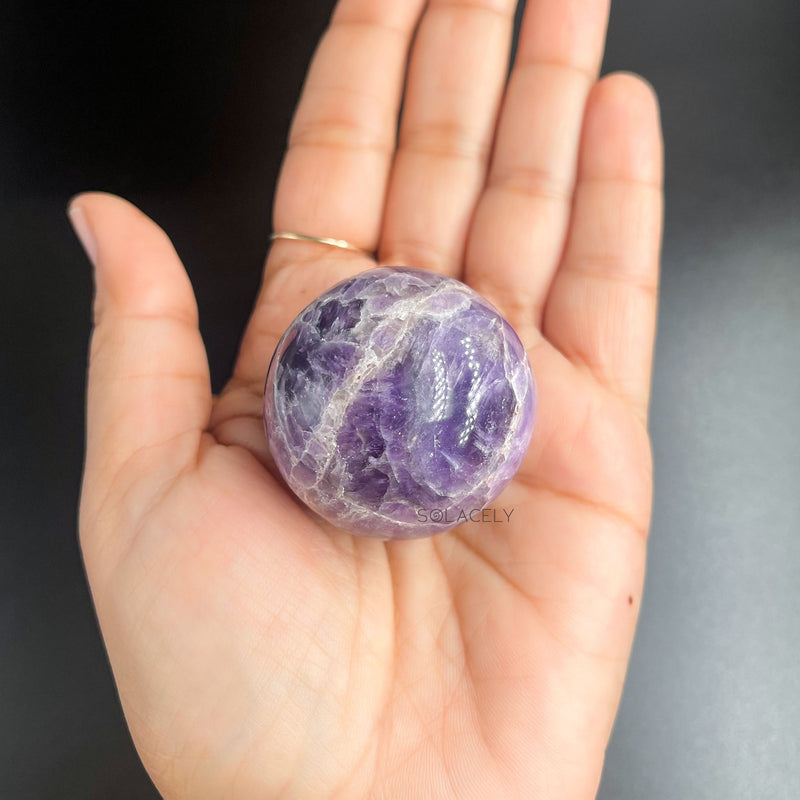
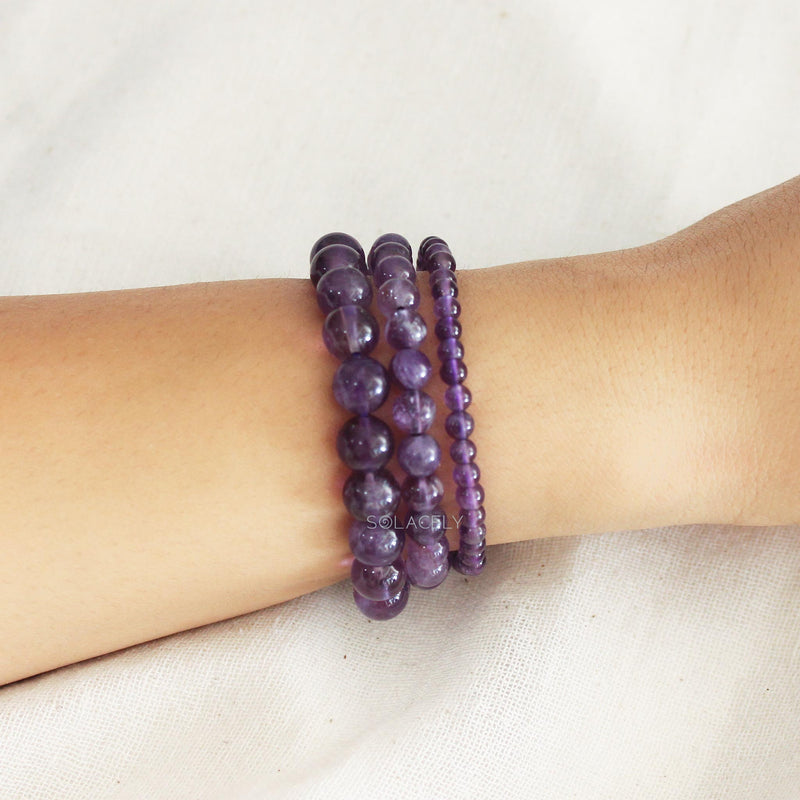
Amethyst is the crystal most often paired with a purple aura, valued in tradition for calm, clarity and restful sleep. Its violet colour comes from iron impurities and natural irradiation, according to the Gemological Institute of America (GIA). In belief, purple stones are chosen to support the sensitive, intuitive qualities linked with this aura.
A few purple-family stones people reach for:
- Amethyst, the classic, associated with calm and mental clarity. See our guide to amethyst tree benefits for how it's used at home.
- Lepidolite, a lilac stone traditionally linked with soothing frazzled nerves.
- Charoite, a swirling violet stone associated with transformation.
- Purple fluorite, valued in belief for focus and tidy thinking.
If you're new to crystals, one amethyst point is a calm, low-commitment place to begin.
How to Balance and Care for a Purple Aura
In aura tradition, a purple aura is kept 'clear' through rest, boundaries and creative outlets, since its sensitivity tires easily. The advice is simple lifestyle care, protect your energy, make things, spend time in calm places, not treatment. Read it as gentle self-care rather than a cure for anything.
Practical, low-effort habits many sensitive people find steadying:
- Guard your quiet. Ten unhurried minutes in the morning before screens and noise.
- Make something. Sketch, write, cook, sing. Creative flow is the classic purple-aura reset.
- Set boundaries kindly. It's fine to leave a draining gathering early.
- Get into nature. A park bench or a walk near water does real good for a busy mind.
- Keep a calm corner. A tidy spot with a candle, a plant or an amethyst can anchor your day.
The through-line is peace. Whether or not you believe in auras, protecting your attention and giving yourself space to create are sound habits. If green, growth and heart-centred balance appeal to you too, our green aura guide and the grounded blue aura guide sit naturally alongside this one, as does the white aura guide on purity and clarity.
Living With a Purple Aura Day to Day
Whatever you make of aura readings, the personality pattern they describe is a recognisable one: people who feel things early and deeply, who need quiet to think clearly, and who tire in crowded, noisy environments faster than others do. The practical advice that follows from that is worth having regardless of whether you accept the framework itself.
Protect your mornings if you can. Sensitive, reflective people generally do their best thinking before the day fills with other people's input, and giving that hour away is the fastest route to feeling scattered by afternoon. A short walk, a page of writing, or simply not opening a screen for twenty minutes does more than any object on a shelf.
Watch the tipping point between depth and withdrawal. The same instinct that makes someone reflective can quietly become avoidance, and the people most drawn to this aura's description are often the ones most likely to over-explain solitude to themselves. Stay in touch with a few people who can tell you the difference, and treat crystals and rituals as prompts for that, never as replacements for it.
Sources
- Encyclopaedia Britannica, 'Tyrian purple' (history of purple dye and royalty): britannica.com/art/Tyrian-purple
- Gemological Institute of America (GIA), 'Amethyst Description' (colour and formation): gia.edu/amethyst
Frequently asked questions
About the author


Written by Chetna Sharma, crystal healing practitioner and co-founder of Solacely. Chetna has worked with healing crystals for over a decade and curates Solacely's protective stone collection.