In metaphysical tradition, an aura is a subtle field of coloured energy said to surround a person, and each colour is read as a mood, trait, or state of mind. Red suggests drive, blue calm, violet intuition. These meanings come from belief and folklore, not science, but they map neatly onto the seven chakras and their colours.
Key Takeaways
- An aura is described in metaphysical belief as a coloured energy field around the body; there is no scientific evidence it can be seen or measured.
- Each aura colour carries a traditional meaning: red for energy and drive, green for healing, blue for calm, violet for intuition, white for clarity.
- The colours follow the same rainbow order as the seven chakras, red at the root through to violet or white at the crown, which is why the two systems are often read together.
- A brighter, clearer shade is read as balanced, while a muddy or dark version of the same colour is read as blocked or stressed.
- Seven-stone chakra bracelets are often used alongside aura work as a focus tool, one stone per colour.
What is an aura?
An aura, in metaphysical tradition, is a field of coloured light or energy said to radiate from a person, reflecting their emotions, personality, and state of mind. The idea appears across many spiritual cultures. It has never been detected by instruments or confirmed by science, so it is best understood as a belief system, a poetic way of describing how someone feels rather than a measurable fact.
The concept overlaps with the Indian idea of prana, or life force, and with the subtle-body model that also gives us the chakras. In that view, the body is more than flesh. It has an energetic layer, and the aura is imagined as the outermost expression of it, changing colour with mood the way a face flushes or pales.
Why does colour do so much of the work here? Because colour is the language people already use for feeling. We say we are 'green with envy,' 'feeling blue,' or 'seeing red.' Aura tradition simply formalises that instinct into a chart.
What do aura colours mean?
Each aura colour is read as a personality trait or a passing emotional state, running from grounded reds at one end to spiritual violets and whites at the other. Brighter, cleaner shades are read as healthy and balanced. Darker, muddier versions of the same colour are read as stress, fatigue, or a block. The table below gives the traditional meaning of each main colour.
| Aura colour | Traditional meaning | Muddy or dark version |
|---|---|---|
| Red | Energy, passion, courage, strong will | Anger, frustration, burnout |
| Orange | Creativity, sociability, warmth, adventure | Restlessness, over-indulgence |
| Yellow | Optimism, intellect, curiosity, playfulness | Anxiety, overthinking, tension |
| Green | Growth, healing, balance, love of nature | Jealousy, insecurity, resentment |
| Blue | Calm, honesty, clear communication, trust | Sadness, withdrawal, fear of speaking |
| Indigo | Intuition, depth, sensitivity, inner sight | Overwhelm, escapism |
| Violet | Spirituality, imagination, higher awareness | Feeling ungrounded or scattered |
| Pink | Love, tenderness, kindness, self-care | Immaturity, clinginess |
| White | Purity, clarity, high energy, protection | Rare; sometimes read as depletion |
These are traditional associations, not fixed rules. Most people who work with auras say a person shows several colours at once, with one dominant shade and others layered around it, shifting through the day as feelings change.
How aura colours relate to the seven chakras
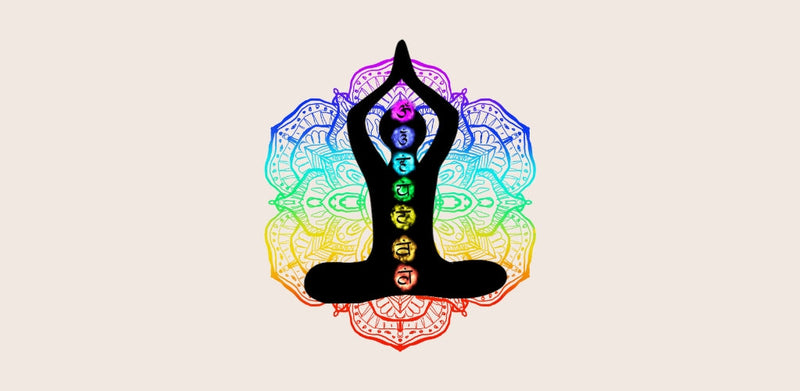
Aura colours and chakra colours share the same rainbow sequence, which is why the two systems are almost always read together. Each chakra sits at a point along the spine and 'owns' a colour: red at the base, violet or white at the crown. A strong colour in the aura is often taken as a sign that the matching chakra is active or open. For the full system, see our guide to the seven chakras explained.
The pairing is straightforward once you line the colours up. Red belongs to the root, the grounding centre; if you want to steady a fiery or scattered red, the practices in our root chakra healing guide are where tradition points. Orange belongs to the sacral centre of creativity and feeling, described in our piece on the meaning of the sacral chakra.
Yellow maps to the solar plexus, the seat of confidence and will, and a dull yellow is read as self-doubt, something our guide on how to unblock the solar plexus addresses. Green and pink both belong to the heart; if love or compassion is the theme, opening the heart chakra is the traditional focus.
Blue is the throat, honest expression, supported in practice by throat chakra mantras. Indigo is the third eye of intuition, covered in how to unblock the third eye chakra. Violet and white rise to the crown; the crown chakra definition explains that highest centre.
| Aura colour | Matching chakra | Chakra theme |
|---|---|---|
| Red | Root (Muladhara) | Safety, grounding |
| Orange | Sacral (Svadhisthana) | Creativity, emotion |
| Yellow | Solar plexus (Manipura) | Confidence, will |
| Green / Pink | Heart (Anahata) | Love, compassion |
| Blue | Throat (Vishuddha) | Expression, truth |
| Indigo | Third eye (Ajna) | Intuition, insight |
| Violet / White | Crown (Sahasrara) | Awareness, spirit |
The warm aura colours: red, orange, yellow
The warm end of the spectrum, red through yellow, is read in aura tradition as physical, active, and outward-facing, tied to energy, drive, and confidence. These are the colours of doing rather than reflecting, and they correspond to the lower three chakras that deal with survival, feeling, and personal power.
Red is the colour of vitality. A clear, bright red suggests someone energetic, brave, and full of drive, while a dark or muddy red is read as anger or exhaustion. Orange sits just above it, warm and sociable, linked to creativity and a taste for adventure. People with a strong orange are often described as easy company, quick to connect and slow to sit still.
Yellow is the sunniest of the three, tied to intellect, optimism, and curiosity. A bright yellow reads as a lively, playful mind. When it turns pale or tense, tradition reads it as worry or overthinking rather than joy, the same restless energy pointed inward instead of out.
The cool and higher aura colours: green, blue, indigo, violet
The cooler colours, green through violet, are read as calming, emotional, and spiritual, tied to the heart, throat, and head. Where the warm colours act, these colours feel and perceive. They correspond to the upper chakras and are often described as the shades of empathy, communication, and inner sight.
Green sits at the centre of the spectrum and is the colour of healing and balance. It is read as growth, compassion, and a love of nature, and a rich green aura is often linked to people in caring or teaching roles. Blue moves into communication and calm, the colour of honesty and trust. A clear blue is read as a person who speaks truthfully and stays composed under pressure.
Indigo and violet are the most spiritual shades. Indigo is tied to intuition and deep sensitivity, the sense of 'just knowing.' Violet rises higher still, linked to imagination, vision, and connection to something larger. Pink, though technically warm, is read alongside green as the softest heart colour: pure love, tenderness, and gentle care.
What white, black, and mixed auras mean
White is read as the purest, highest aura colour, a sign of clarity, protection, and spiritual openness, while dark or muddy patches are read as fatigue, stress, or a block rather than a colour in their own right. Most auras, in this tradition, are not one shade but a blend that shifts with mood and circumstance.
A white aura is considered rare and is associated with calm, honesty, and a protected, uncluttered mind. Some describe it as the colour of a person fully at ease. Black or very dark areas are usually read not as evil but as heaviness: grief, illness, or a need to shield oneself. Tradition treats them as a prompt to rest and restore, not a verdict.
Mixed auras are the norm. You might show a steady green base with flashes of yellow when you are thinking hard, or a calm blue that warms to pink around people you love. Reading an aura, in this view, is less about one label and more about noticing which colours dominate and how they move.
How tradition says to sense or read an aura
Aura reading is described in tradition as a mix of soft-focus seeing and intuitive feeling; there is no verified method, and photographs sold as 'aura cameras' measure skin response, not an energy field. Practitioners treat it as a contemplative skill, something felt rather than proven. Here is how the practice is usually taught.
- Soften your gaze. Sit someone against a plain, pale wall in even light. Look slightly past them, at the space around the head and shoulders, letting your eyes relax rather than stare.
- Watch the edges. Many describe first seeing a faint haze or shimmer at the outline before any colour. Blink naturally and keep the focus soft.
- Feel before you see. A large part of the tradition is intuitive. Some sense a colour or mood as a feeling or an inner impression rather than a visible light.
- Notice, don't force. Impressions are said to be fleeting. The advice is to note the first colour that comes to mind and let it go, rather than second-guessing.
- Start with your own hand. Beginners are often told to practise on their own hand against a white background before reading others.
It is worth being honest about the technology. So-called aura photography traces back to Kirlian photography, a technique that records a glow around objects placed in a high-voltage field. According to Encyclopaedia Britannica, Kirlian photography captures a corona discharge, an electrical effect influenced by moisture and pressure, not a spiritual aura. Modern 'aura cameras' read galvanic skin response and translate it into colour. The image is a fun keepsake, not evidence of an energy field.
None of this makes aura work worthless. As a reflective practice, it can be a gentle way to check in with how you or someone else is feeling. Colour genuinely affects mood and perception; according to Encyclopaedia Britannica's overview of colour, our response to different hues is well documented in psychology, even if the aura itself is not. Treat it as a mindful ritual, not a diagnosis.
Using crystals and colour with aura and chakra work
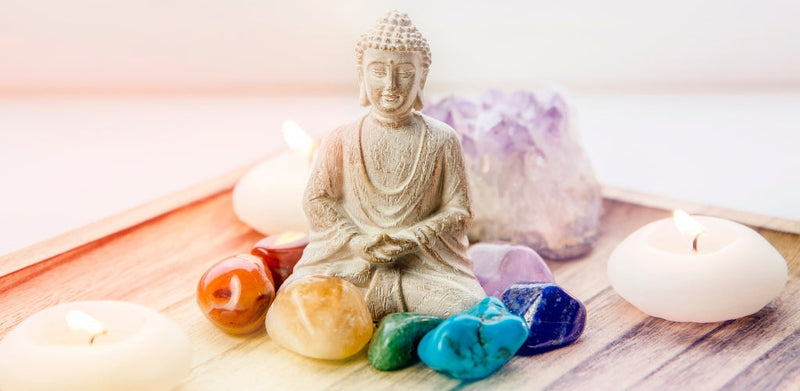
Coloured crystals are the most common tool paired with aura and chakra practice, chosen to match the colour a person wants to strengthen or steady. This is a focusing habit, not a treatment. A stone becomes a visual cue and a small ritual object, a reminder to pause and pay attention to a particular quality.
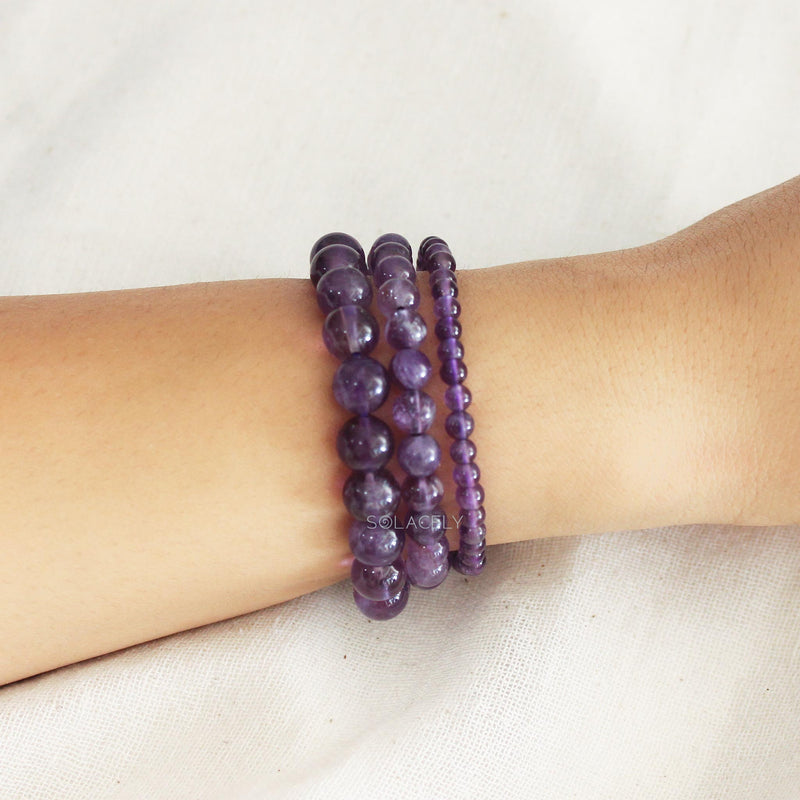
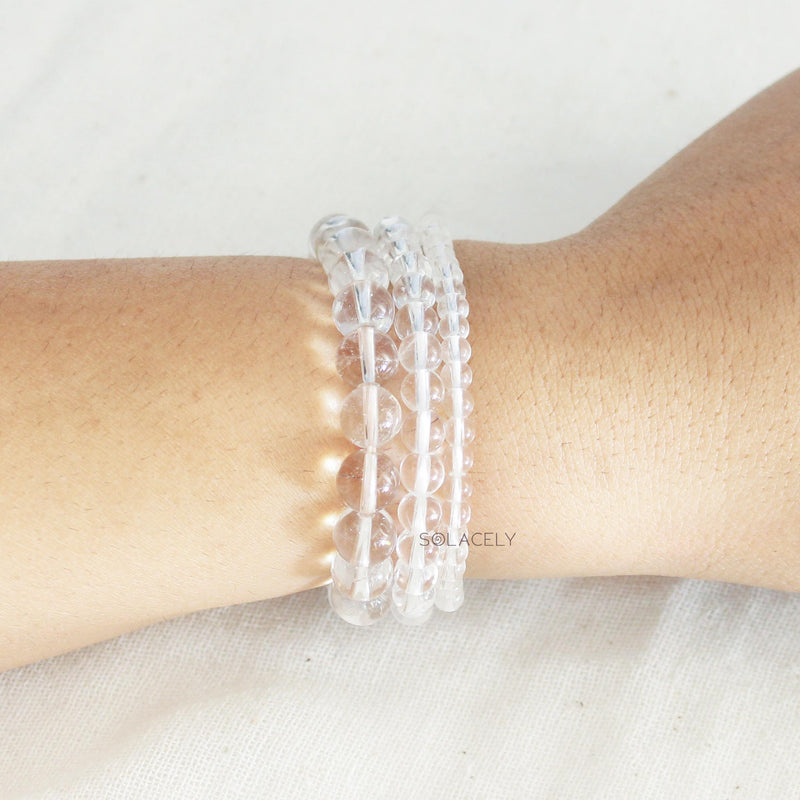
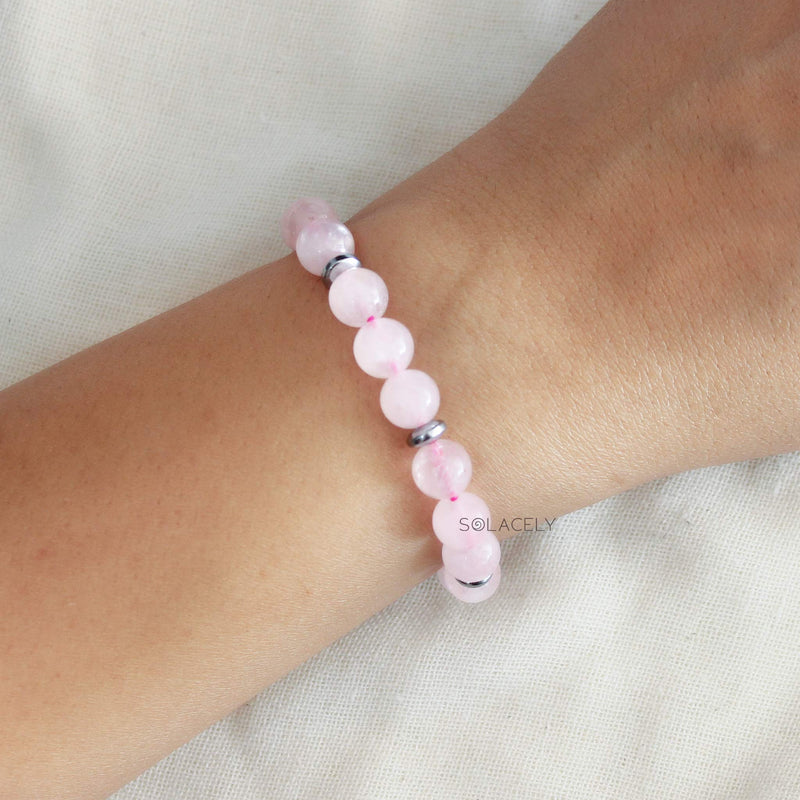
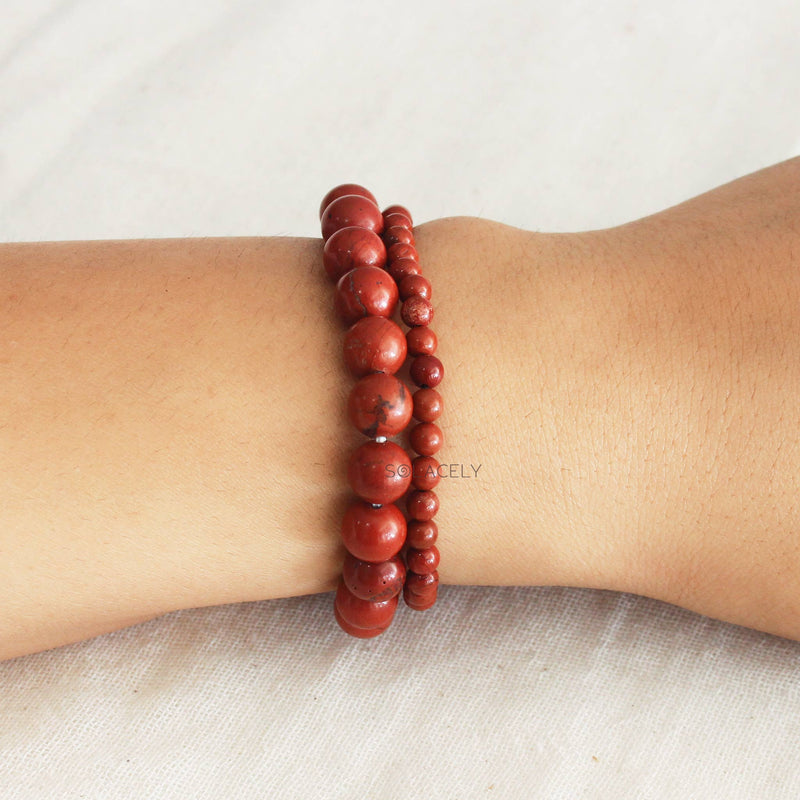
The pairings follow the same colour logic as everything above. Red jasper or black tourmaline for grounding a fiery red root, carnelian for a creative orange, citrine for a confident yellow, rose quartz for a loving pink or green heart, sodalite for a truthful blue throat, amethyst for indigo intuition, and clear quartz or selenite for a violet or white crown. A seven-stone chakra bracelet gathers the whole rainbow in one piece.
Worn or held during meditation, they work the way a mala or a candle does: as an anchor for attention. For a structured routine, our guide to chakra balancing techniques walks through how people combine colour, breath, and stones.
Sources
- Encyclopaedia Britannica, "Kirlian photography." britannica.com
- Encyclopaedia Britannica, "Colour" (perception and psychology of colour). britannica.com
- National Center for Complementary and Integrative Health (NIH), "Meditation and Mindfulness: What You Need To Know." nccih.nih.gov
Frequently asked questions
About the author


Written by Chetna Sharma, crystal healing practitioner and co-founder of Solacely. Chetna has worked with healing crystals for over a decade and curates Solacely's protective stone collection.